
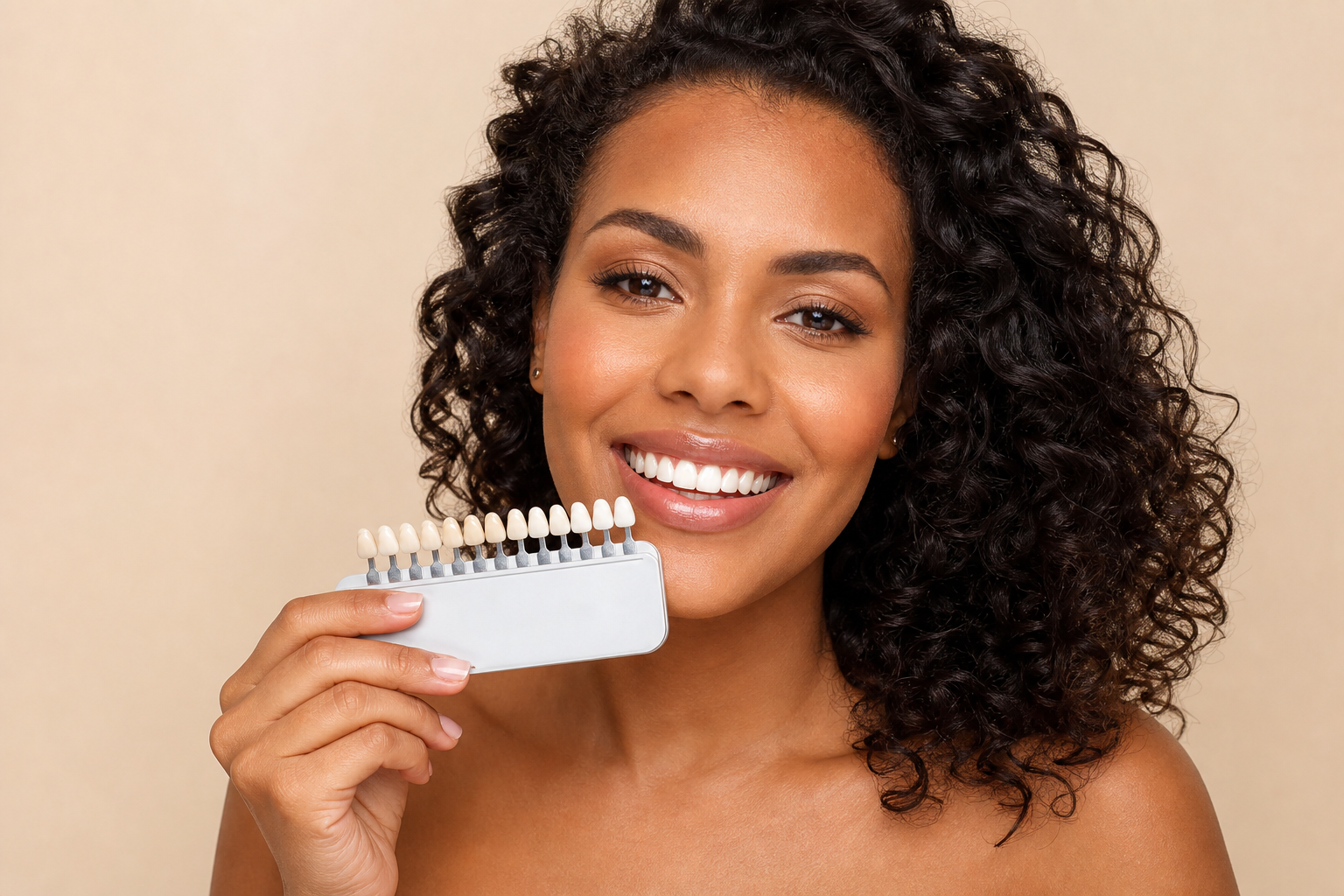
Whitening can lighten natural teeth, but teeth veneers, bonding, crowns, implants, and tooth-colored fillings cannot be expected to lighten with them. If a restoration currently matches your natural teeth, whitening the surrounding enamel could make the restoration look darker or warmer by comparison. That mismatch is possible, not guaranteed.
This distinction matters when comparing veneers before and after or broader teeth before and after photos. Dental veneers are restorations selected to a planned shade; requests for natural veneers usually concern their overall color, translucency, shape, and fit—not whether they can later be bleached like enamel.
Quick answer: Peroxide bleaches natural tooth structure. It does not reliably change the underlying shade of veneers or other dental restorations, so identify visible dental work before whitening.
What whitening can change
Whitening products commonly use hydrogen peroxide or carbamide peroxide to change the color of natural teeth. The American Dental Association’s whitening overview explains that restorations generally do not change color along with natural teeth.
This is different from removing surface stains. Toothpaste, professional cleaning, or polishing may affect deposits on a surface, but that is not the same as bleaching the selected or manufactured shade of a veneer.
| Smile surface | What whitening can change | Possible appearance result |
|---|---|---|
| Natural tooth | Peroxide may lighten its color, although results vary | The tooth may become lighter than nearby dental work |
| Porcelain or composite veneer | Should not be expected to bleach like enamel | The veneer may look unchanged next to lighter natural teeth |
| Composite bonding or filling | May show variable, minor material changes, but not reliable whitening | Bonding may no longer blend as closely |
| Crown or implant crown | Does not whiten like a natural tooth | A visible crown may appear warmer or darker by contrast |
Whitening is cosmetic, and tooth color is not a measure of cleanliness or oral health.
Do teeth veneers whiten at all?
The practical answer is no: do not expect veneers to whiten alongside natural enamel. Veneers are custom-made coverings placed over the front surfaces of teeth, and they may be made from porcelain or composite material. Their shade is selected when the dental work is created.
That does not mean every veneer will look darker after whitening. If your natural teeth change only slightly, or if most visible teeth have veneers, you may notice little difference. Lighting, translucency, lip position, and the starting shades also affect what you see.
Porcelain veneers should not be described as permanently white or completely stain-proof. Their visible appearance can be influenced by surface condition, material, underlying color, and surrounding teeth. Whitening gel still cannot be relied upon to reset their underlying shade.
What about whitening bonded teeth?
Composite bonding follows the same practical rule: it will not predictably lighten to match bleached enamel.
Laboratory research has measured some color changes in resin-based composites after bleaching, but those changes are variable and generally not considered a dependable cosmetic correction. One systematic review indexed by PubMed found that pooled color changes were not clinically significant.
In other words, a measurable material change is not the same as useful, even whitening in a real smile. Do not apply extra gel or bleach for longer in an attempt to make bonding “catch up.”
How to estimate the risk of a visible mismatch
Before choosing a whitening method, focus on what is visible when you smile:
- Location: A filling on a back tooth is less likely to affect the visible color balance than bonding or veneers on upper front teeth.
- Number of restorations: One crown surrounded by natural teeth may react visually differently from a symmetrical set of veneers.
- Current match: A restoration that blends closely now could become more noticeable if adjacent enamel lightens.
- Your goal: A subtle brightness change may be acceptable even if the shades are not identical. A highly uniform result requires more individualized planning.
- Condition of the dental work: Surface staining, wear, margins, translucency, and material aging can all affect appearance. You cannot identify the cause from color alone.
Natural teeth also respond differently from one person to another, so no product or professional treatment can guarantee a specific shade relationship in advance.
Check your smile before whitening
Use this sequence as an appearance check, not a diagnosis:
- List known dental work. Include veneers, bonded edges, crowns, implants, and tooth-colored fillings.
- Map what is visible. Pay particular attention to restorations on the front teeth and any that show when you speak or smile.
- Compare in ordinary daylight. Notice whether dental work is already lighter, darker, or warmer than nearby enamel.
- Separate stain from underlying color. A mark on the surface and the base shade of a restoration are different issues.
- Confirm anything uncertain. A dentist can help identify restored surfaces and discuss whether whitening may make their shade more obvious.
If you proceed with an at-home product, follow its directions exactly. Do not increase the frequency, extend contact time, stack whitening methods, or use abrasive and acidic DIY mixtures.
What to do if a mismatch becomes noticeable
Stop and reassess rather than applying more whitening. Additional bleaching may lighten the natural teeth further while leaving the restoration close to its existing shade, increasing the contrast.
A dentist can assess whether the visible difference relates to the restoration, surface deposits, surrounding enamel, or another cause. That assessment does not automatically mean the dental work needs to be replaced or redone. A stable cosmetic color difference is also separate from a health problem.
Speak with a licensed dentist before whitening if you have extensive visible restorations, persistent sensitivity, pain, cracked teeth, untreated decay, gum problems, pregnancy-related questions, or a newly dark or changing tooth. If a whitening product causes burning, significant irritation, or concerning symptoms, stop using it, follow the label’s safety guidance, and seek professional advice.
The most useful next step is simple: confirm which visible surfaces are natural and which are restored before deciding how much whitening, if any, fits your appearance goal.
