
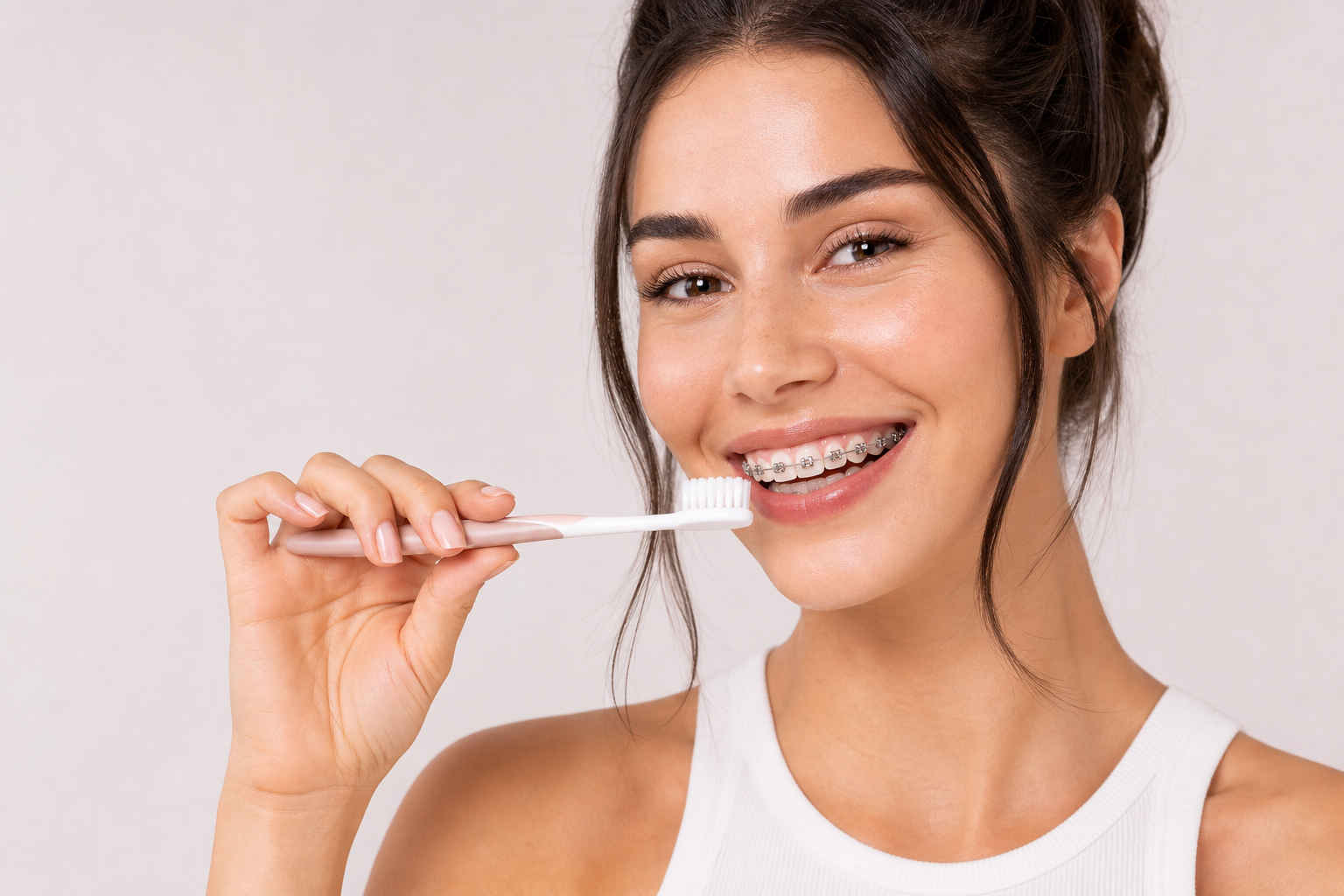
The safest way to maintain white teeth with braces is to focus on thorough cleaning and surface-stain control, not bleaching around fixed brackets. Carefully brushing every accessible angle, cleaning under the wire, rinsing after staining drinks, and keeping professional appointments can help your smile look brighter and more polished without promising a change to your natural tooth color.
For anyone asking how to get white teeth with braces or how to have white teeth with braces, the most dependable braces cleaning tips center on removing plaque and food around the appliance. Advice on how to whiten teeth with braces on should not ignore the risk of uneven results around bonded brackets. Preventing visible buildup and some external braces stains is the more realistic focus.
Quick answer: Keep fixed braces and visible enamel clean with fluoride toothpaste, daily interdental cleaning, and water rinses after food or colorful drinks. Ask your dentist or orthodontist before using whitening strips, gels, or trays.
Why teeth can look less white with braces
Brackets and wires create small spaces where plaque and food can collect. The materials can also cast shadows or change the contrast around your natural enamel, especially in photos and strong bathroom lighting.
Clear elastics may become discolored between appointments. Coffee, tea, colorful drinks, and some foods can leave residue or external stains, while trapped food can make the entire smile look duller.
This does not necessarily mean that the underlying tooth color has changed. According to the American Dental Association’s braces guidance, plaque accumulation around brackets can eventually stain or damage teeth, which is why consistent cleaning matters for appearance and oral health.
Follow this braces-friendly bright-smile routine
Your orthodontist’s appliance-specific instructions should take priority, but this simple sequence can help you cover the areas that are easy to miss.
- Rinse and inspect first. Swish with plain water to loosen food, then check around the brackets and gumline in a mirror. This is especially useful before your nighttime routine.
- Brush the gumline gently. Use a soft-bristled toothbrush and fluoride toothpaste. Angle the brush so you can reach the edge where the teeth and gums meet without aggressive scrubbing.
- Clean above and below every bracket. Work slowly across the mouth, reaching the exposed enamel on both sides of each bracket. Brush the bracket surfaces, chewing surfaces, and backs of the teeth too.
- Clean between teeth and under the wire. Use the flossing method or interdental tool demonstrated by your orthodontic team. An interdental brush may improve access, but it should fit comfortably and never be forced through a tight space.
- Check your work. Look for food around the bracket edges and under the wire. If one area is consistently difficult to reach, ask your orthodontist to demonstrate an appropriate technique or tool.
The ADA recommends brushing twice a day with fluoride toothpaste and cleaning between teeth daily. Your dental team may suggest additional cleaning based on your particular appliance and needs.
Use water as an easy daytime reset
You do not need to turn every coffee or meal into a full bathroom routine. When brushing is not practical, rinse well with plain water to clear visible residue from around your braces.
A small travel pouch can make on-the-go care feel less complicated. Depending on your orthodontist’s guidance, it might contain:
- A compact soft-bristled toothbrush
- An appliance-appropriate interdental tool
- A small mirror
- Flossing supplies you already know how to use
- A reusable water bottle
Water rinsing cannot guarantee that you will avoid stains or decay. It is simply a convenient reset until you can clean more thoroughly.
Can whitening toothpaste keep teeth white with braces?
Whitening toothpaste can remove some external surface stains, but it does not bleach the underlying tooth color. The ADA explains that stain-removing toothpaste and peroxide bleaching are different processes.
If you want to try a whitening toothpaste, prioritize a fluoride formula and ask your dentist or orthodontist whether it suits your enamel, sensitivity level, and appliance. Stop and seek advice if a product causes significant irritation or discomfort.
More scrubbing is not a shortcut to a brighter smile. Hard pressure or an overly abrasive routine can create problems without evenly changing tooth color.
Skip bleaching shortcuts around fixed brackets
Fixed brackets cover part of each tooth, so a strip, tray, or paint-on product may not contact the enamel evenly. Do not cut strips around brackets, improvise with peroxide, or extend a whitener’s contact time.
Ask your dentist or orthodontist before using any bleaching product while your braces are attached. Whitening can cause temporary sensitivity or gum irritation, and restorations such as fillings, crowns, veneers, implants, and bonding do not whiten like natural teeth.
Avoid charcoal, vinegar, lemon, acidic fruit scrubs, abrasive powders, household bleach, and homemade whitening mixtures. These are not reliable substitutes for ordinary cleaning or professionally guided cosmetic care.
Make small appearance adjustments if you want them
Sometimes the braces materials, rather than your enamel, are affecting what you see. If your elastics discolor quickly or create a contrast you dislike, ask your orthodontist which available colors may look fresher between visits. Do not change or alter orthodontic hardware yourself unless you have specifically been instructed to do so.
A cooler or blue-leaning lip color can also make teeth appear brighter in some lighting. That effect is subjective and temporary, but it can be an easy styling option for photos or events. Lipstick changes visual contrast, not enamel color.
Know when discoloration needs professional attention
Chalky white areas are not the same as successful whitening. The American Association of Orthodontists explains that white spots can be associated with enamel mineral loss, so they should be evaluated rather than scrubbed or bleached.
Contact your dentist or orthodontist about new white, brown, or dark areas, a changing single tooth, pain, persistent sensitivity, swollen or bleeding gums, repeated cleaning injuries, or loose hardware. Burning or significant irritation from a product also deserves prompt attention.
For now, make your next step simple: check the spaces around your brackets tonight, clean each accessible surface gently, and ask your dental team about any area or cosmetic product you are unsure about.
