
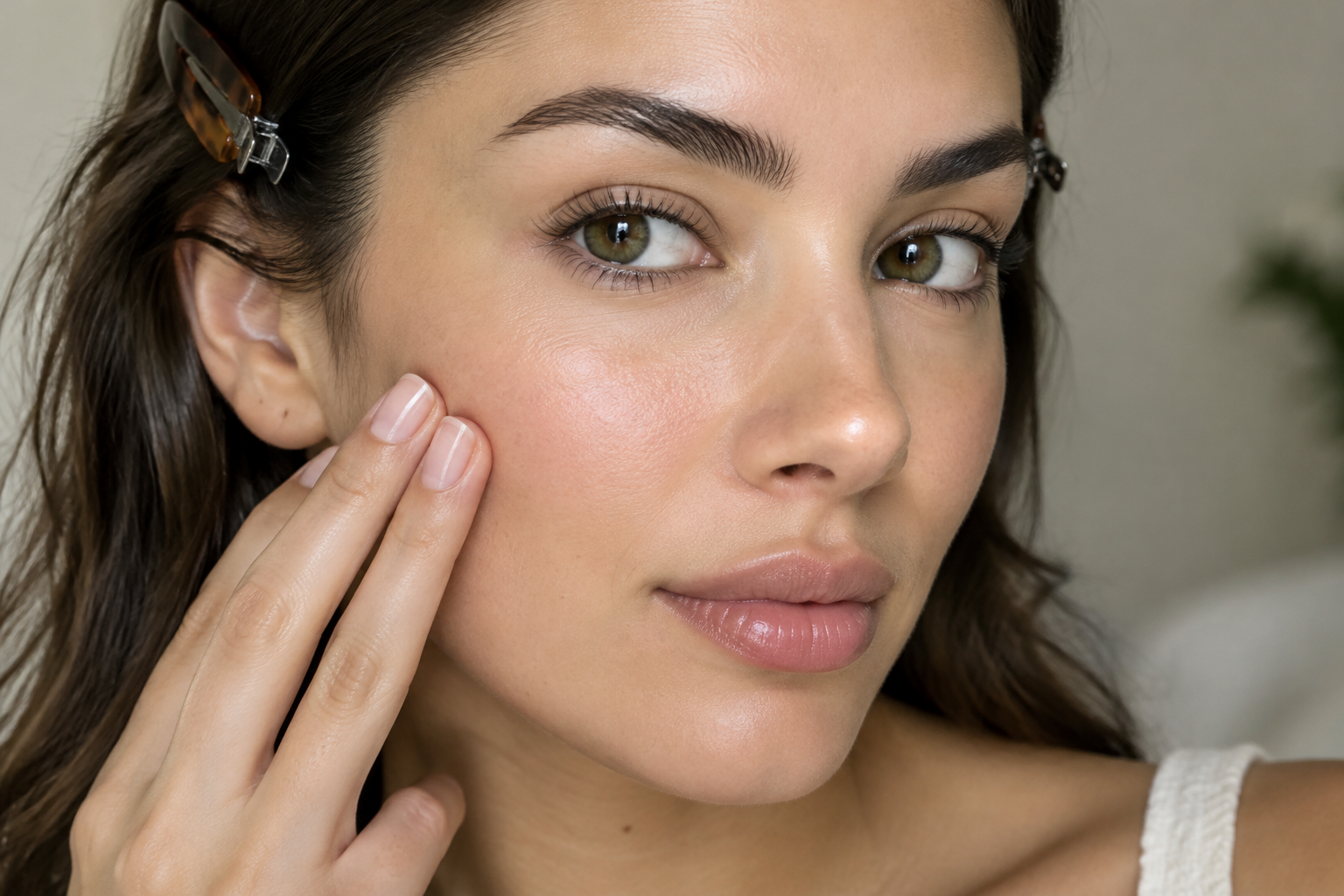
Your foundation starts blending beautifully, then little crumbs gather beside your nose. Another swipe creates more. Before you replace the foundation, change your skin prep before makeup: simplify optional layers, check product amounts, let prep settle, and try less repetitive blending.
Pilling can involve the products underneath your foundation, the way you apply it, or that particular combination. The trick is changing one thing at a time, not buying a whole new routine.
Quick answer: Keep needed moisturizer and daytime sunscreen, temporarily skip optional extras, and apply foundation with lighter pressure. Note when rolling first appears. Reduce unnecessary cosmetic excess, never your sunscreen coverage.
Check whether product is rolling or makeup is catching on texture
Pilling means product gathers into small balls or rolls as you apply or move it around. It isn't a sign that your skin is dirty, and it doesn't automatically mean your foundation is unsuitable.
Visible flakes that were already present before makeup are a different clue from crumbs that appear during blending, although both can happen together. Foundation settling into lines or separating into patches also isn't necessarily pilling.
The Ordinary's pilling guide identifies excess application, layering, settling time, and formula combinations as possible contributors. That's useful troubleshooting guidance, not a guarantee that one adjustment will work for everyone.
Look at your skin before prep, then after each layer without repeatedly rubbing to check it. If rolls appear before foundation, your base deserves a closer look before your makeup gets the blame.
Troubleshoot skin prep before makeup in this order
Try this on an ordinary morning rather than five minutes before you need to leave. Keep the products and technique you're not testing consistent.
Step 1: Give your routine a simpler starting point
Use gentle cleansing appropriate to your usual routine, moisturizer as needed, and sunscreen for daytime protection before makeup. Keep prescribed treatments as directed rather than changing them to accommodate foundation.
The American Academy of Dermatology's general application order places cleansing and treatments before moisturizer and/or sunscreen, followed by makeup.
For the trial, leave out optional extras such as facial oil, multiple serums, or primer. Don't remove moisturizer if your skin feels uncomfortable without it. Simplifying is an experiment, not a competition to use the fewest products.
Step 2: Check amounts before adding another layer
Follow each product's directions rather than using one universal “pea-sized” rule. If moisturizer is still spreading around, adding a second helping may leave more product for your foundation tool to move.
Where directions allow, concentrate moisturizer on areas that need it rather than automatically repeating a full-face layer. A dry cheek may need different attention from an already comfortable forehead.
Sunscreen is the exception to “try less.” Maintain adequate, label-directed application. Don't mix it into foundation or reduce coverage to make makeup behave. The AAD recommends broad-spectrum, water-resistant SPF 30 or higher.
Step 3: Let prep settle without chasing a completely dry feel
Instead of moving straight from sunscreen to foundation, do your brows or another getting-ready task. Then notice whether the surface still feels slippery or whether product visibly shifts with a light touch.
Some formulas remain tacky, so tackiness alone isn't a reason to keep waiting. Avoid rubbing your face repeatedly as a readiness test; that can create the rolling you're trying to observe.
Follow any product-specific timing instructions. There isn't a universal anti-pilling countdown, and sunscreen's directions about application before going outdoors aren't automatically a timer for applying foundation.
Step 4: Change your blending motion on one cheek
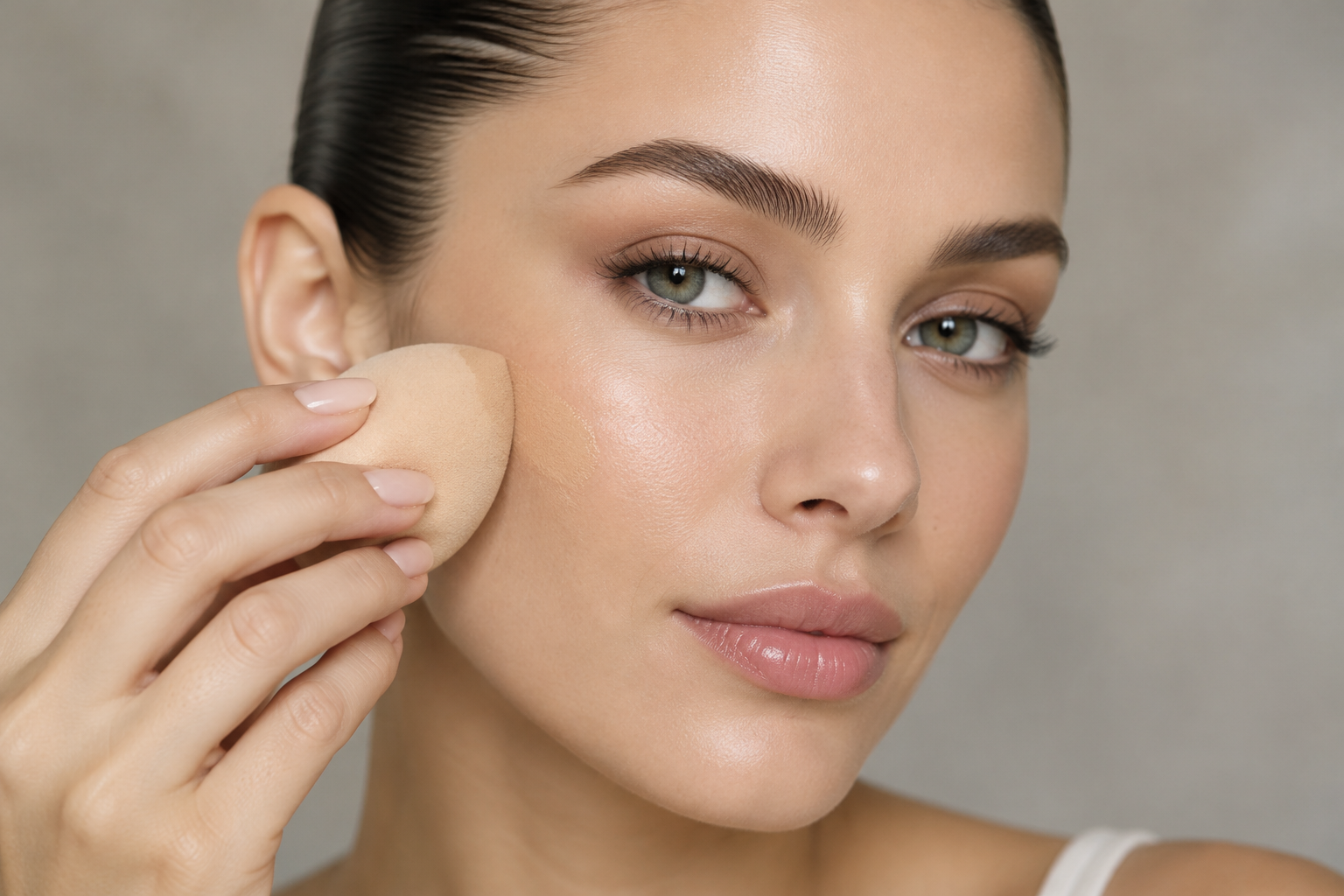
Use a small amount of foundation with your usual suitable tool. Try light press-and-lift motions on one cheek instead of repeatedly buffing the same spot in circles. Build coverage only where you want more.
With a sponge, lift between presses rather than dragging it along the cheek. With a brush, try fewer, lighter passes and stop revisiting an area once it's blended. This is a low-stakes comparison, not a promise that tapping prevents pilling.
Let the formula guide you, too. A quick-setting foundation may need blending in small sections; one with more working time gives you longer to adjust. Follow its directions rather than forcing every base into the same technique.
Step 5: Add optional products back individually
If the simpler routine behaves better, bring back one serum or primer on a later application while keeping everything else stable. Note whether rolling returns and at which step.
If you want primer only around the nose or across the center of your forehead, test it there rather than adding a full-face layer. Compare what happens in that area with the rest of your face.
A quick phone note is enough: “No primer, same foundation, lighter brush pressure.” It makes your next decision more useful than trying to remember which of several changes helped.
Don't let a “water versus silicone” rule do the shopping
Matching products by a supposed base type isn't a reliable compatibility guarantee. The first ingredient doesn't tell you everything about how a finished formula will behave with your moisturizer, sunscreen, primer, and application method.
Likewise, pilling doesn't prove that every silicone-containing product is wrong for you. A product may work well alone but roll when layered with something else.
If the problem persists after simplifying prep and adjusting technique, test a different pairing one product at a time. That gives you more useful information than replacing everything or building an ingredient blacklist.
When it pills mid-application, reset rather than add coverage
Once obvious rolls are scattered across a cheek, more foundation usually gives you more to blend around. Pause instead of chasing each crumb with another brush pass.
For a small patch, gently remove the affected makeup and redo that area with simpler prep and lighter application. If rolling is widespread, starting again may be less frustrating than repeatedly working over it.
If you remove or visibly disturb sunscreen, restore label-directed coverage before outdoor exposure. You can't judge the remaining protection by how smooth the makeup looks.
Don't reach for a scrub as an emergency fix. AAD guidance notes that exfoliation can irritate skin, especially alongside certain existing treatments. If a product causes irritation, stop using it; persistent or concerning skin symptoms deserve dermatology advice rather than more makeup experiments.
Your next-morning shortcut
Before buying anything, try one simpler application and note the first step where rolling appears. Keep sunscreen coverage intact, skip optional extras, and blend with less repeated friction. That small note can tell you far more than another hurried layer of foundation.
