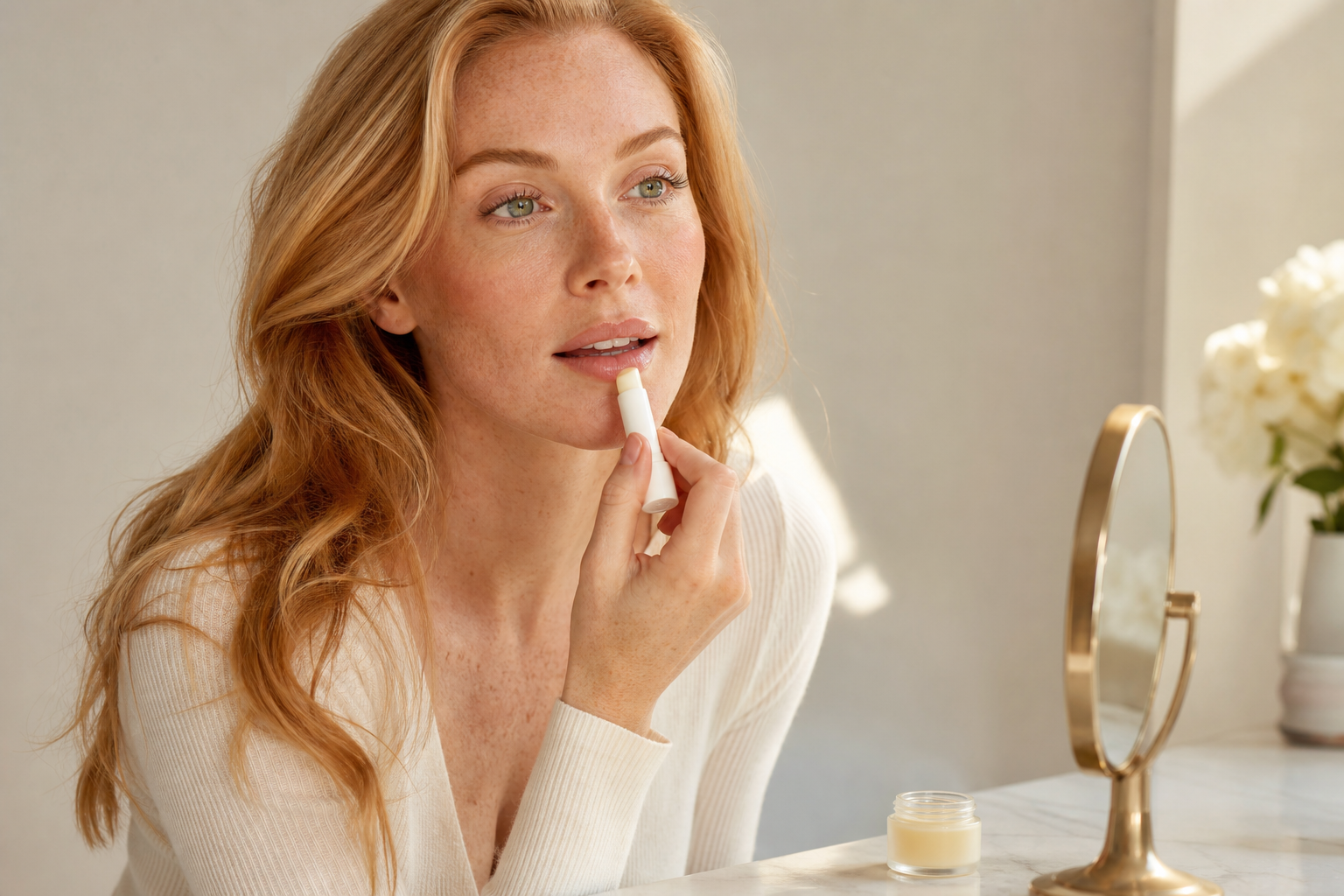
A simple lip care routine only needs to cover two main jobs: sun protection during the day and moisture at night. Start with a broad-spectrum SPF 30 or higher lip balm before outdoor exposure. At bedtime, gently remove any lip color and apply a plain, non-irritating balm or thicker ointment.
You do not need a separate scrub, serum, oil, plumper, and overnight mask to maintain comfortable lips.
Quick answer: Use an SPF 30+ lip balm by day, reapply it outdoors, and finish your nighttime routine with a bland balm or ointment.
Your morning lip care routine
Your lips are easy to miss when applying sunscreen, so make a lip-labeled SPF product the final step of your morning skin care.
- Check how your lips feel. If they are comfortable, continue with your regular routine. If they are cracked, peeling, or irritated, simplify your products and avoid picking at loose skin.
- Apply broad-spectrum SPF 30 or higher. Broad-spectrum protection covers both UVA and UVB rays. The American Academy of Dermatology Association recommends applying lip balm with SPF 30 or higher before going outdoors.
- Let the balm settle before makeup. If you plan to wear lipstick, give the balm a few minutes to sit. Lightly blot excess if a slippery layer would interfere with your lip color.
- Reapply while outdoors. Reapply at least every two hours and more often after swimming, sweating, eating, or whenever the product has worn away. Follow the product’s directions as well.
Lipstick, tint, and gloss only count as sun protection when they are specifically labeled with SPF. Color alone does not provide dependable coverage.
Keep lips comfortable during the day
Place your daytime balm somewhere you can realistically reach it, such as your bag or desk. Reapply a comfortable moisturizer whenever your lips feel dry, even when you are indoors and do not need another layer of SPF.
Try to replace lip licking with balm application. Saliva evaporates and can leave lips feeling drier, creating a cycle of licking and discomfort. Biting, pulling, or picking at flakes can also make irritation worse.
Most importantly, do not treat burning, stinging, cooling, or tingling as proof that a product is effective. The AAD notes that these sensations indicate irritation when lips are chapped. Stop using a product if it causes discomfort or worsening redness.
When your lips are irritated, temporarily avoid formulas containing fragrance, strong flavoring, menthol, camphor, eucalyptus, or salicylic acid. Individual reactions vary, so even a popular, expensive, or plant-based formula is not guaranteed to suit you.
Follow a gentle nighttime lip care routine
Nighttime care is less about adding treatments and more about leaving your lips protected while you sleep.
- Remove lip color gently. Use your usual gentle makeup remover rather than scraping or rubbing the lips. Long-wear color may take more patience, but aggressive friction is not the answer.
- Skip exfoliation on chapped lips. Sugar scrubs, toothbrushes, acids, and peeling products can aggravate cracked or inflamed skin. Leave flakes alone while your lips recover.
- Apply a plain moisturizer. Choose a non-irritating balm, or use a slightly thicker layer of an ointment such as white petroleum jelly. Ointments create a heavier barrier and are often practical for very dry lips.
- Address dry air if needed. A clean bedroom humidifier may help when indoor heating or nighttime mouth breathing contributes to dryness.
A basic ointment can do the same essential nighttime job as many products marketed as lip masks. The best texture is one you can apply consistently without irritation.
Buy for function, not the size of the routine
Effective lip care does not need to be expensive. A budget-conscious routine can be built with:
- One broad-spectrum SPF 30 or higher lip balm for daytime
- One plain, fragrance-free balm or ointment for nighttime
- Your existing gentle makeup remover, if you wear lip color
You can use a plain balm during the day when you are not outside, but it should not replace your labeled SPF product before sun exposure.
Lip oils, masks, glosses, and plumpers are optional cosmetic extras. They may alter shine, texture, or appearance temporarily, but they are not required for a complete routine. Smoother-looking lips are also a beauty preference, not a measure of health or attractiveness.
Know when dryness needs professional attention
Ordinary seasonal dryness may improve with consistent, non-irritating care. However, similar-looking lip symptoms can have several causes, and adding more beauty products may make the issue harder to identify.
Consult an appropriate clinician if chapping does not improve after about two to three weeks, or if you have recurring cracking, unexplained scaling, significant pain, bleeding, sores, blisters, crusting, or possible infection. Swelling or repeated reactions after using cosmetics, toothpaste, or sunscreen also deserve professional assessment.
Seek urgent help for severe swelling or symptoms that affect breathing.
For now, start with the two essentials: put an SPF lip balm where you will use it every morning, and keep a plain ointment beside your bed.