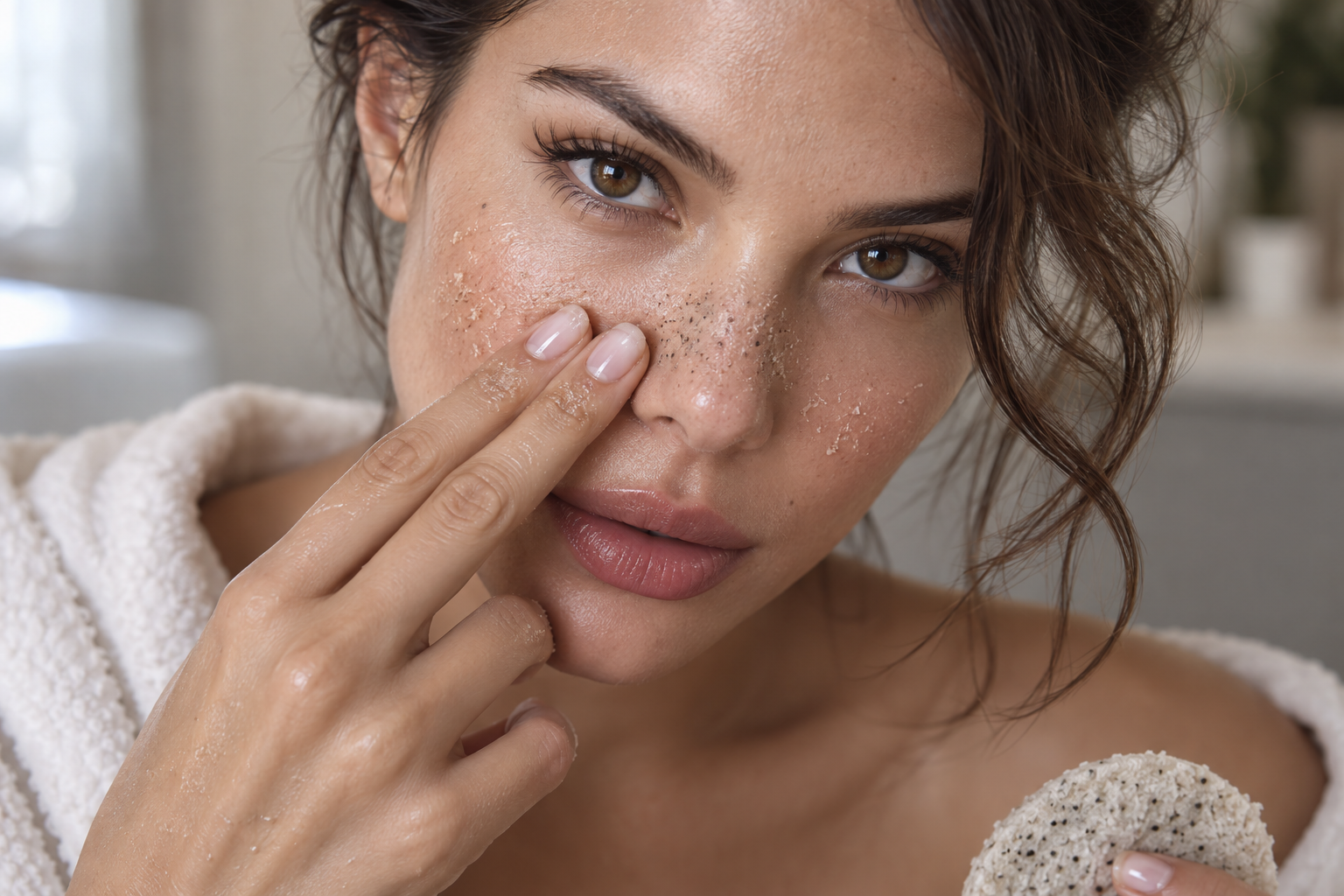
The dots on your nose are still there, but now your moisturizer stings and makeup catches on little flakes. That’s your cue to put the scrub down, not give it another pass. Skincare for blackheads needs a gentler approach when your skin already feels irritated: simplify cleansing and moisturizing first, then consider treatment once the discomfort settles.
Quick answer: Stop scrubbing and pause irritating exfoliants. Use a gentle cleanser, moisturizer, and sun protection. Don’t apply salicylic acid to irritated or broken skin; revisit blackhead treatment after your skin feels comfortable.
Why scrubbing leaves the dots behind
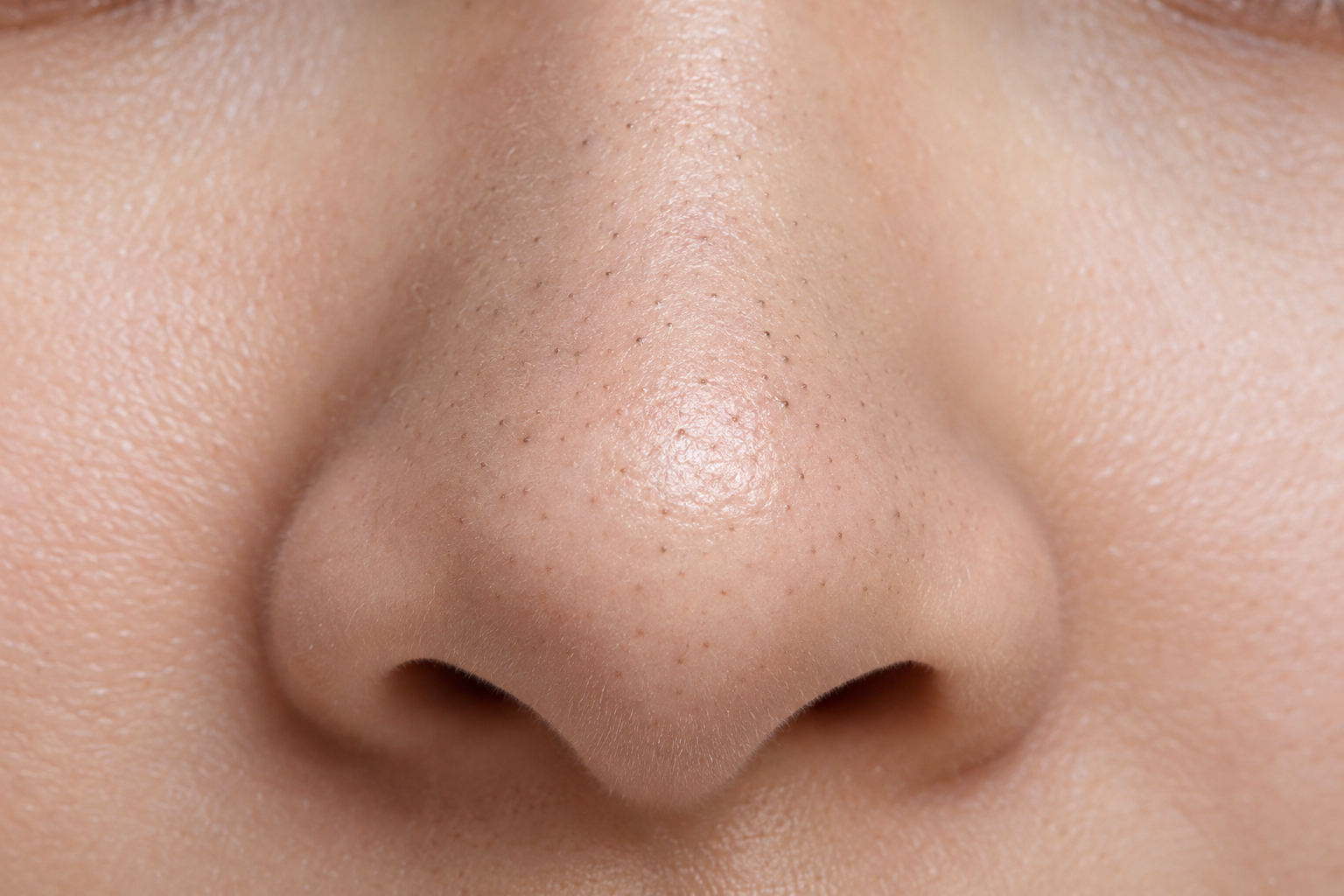
Blackheads are pores clogged with oil and dead skin cells that remain open at the surface. Their dark appearance isn’t dirt that needs polishing away. The American Academy of Dermatology (AAD) explains that scrubbing can irritate skin and worsen acne.
A scrub may make the surrounding skin feel temporarily smoother without resolving the clogged pore. Increasing pressure or repeating the step can leave you with the same visible dots plus tenderness and flaking.
That matters especially if inflammation tends to leave dark marks on your skin. The AAD cautions that aggressive exfoliation can contribute to dark spots, particularly in darker skin tones. Visible pores aren’t a cleanliness score, and a squeaky-clean feeling isn’t the goal.
What to change while your skin feels irritated
Remove friction from cleansing
Set aside grainy scrubs, cleansing brushes, sponges, and textured cleansing cloths. A gentle cleanser can still be part of a harsh routine if you work it in with an abrasive tool.
Use your fingertips to spread a gentle, nonabrasive cleanser without repeatedly rubbing the nose or chin. Rinse with lukewarm water and pat dry rather than buffing with a towel. The AAD’s acne-care guidance recommends fingertip cleansing, washing up to twice daily and after sweating, and avoiding scrubbing.
There’s no need to keep cleansing until your nose feels completely oil-free.
Make moisturizing the next step
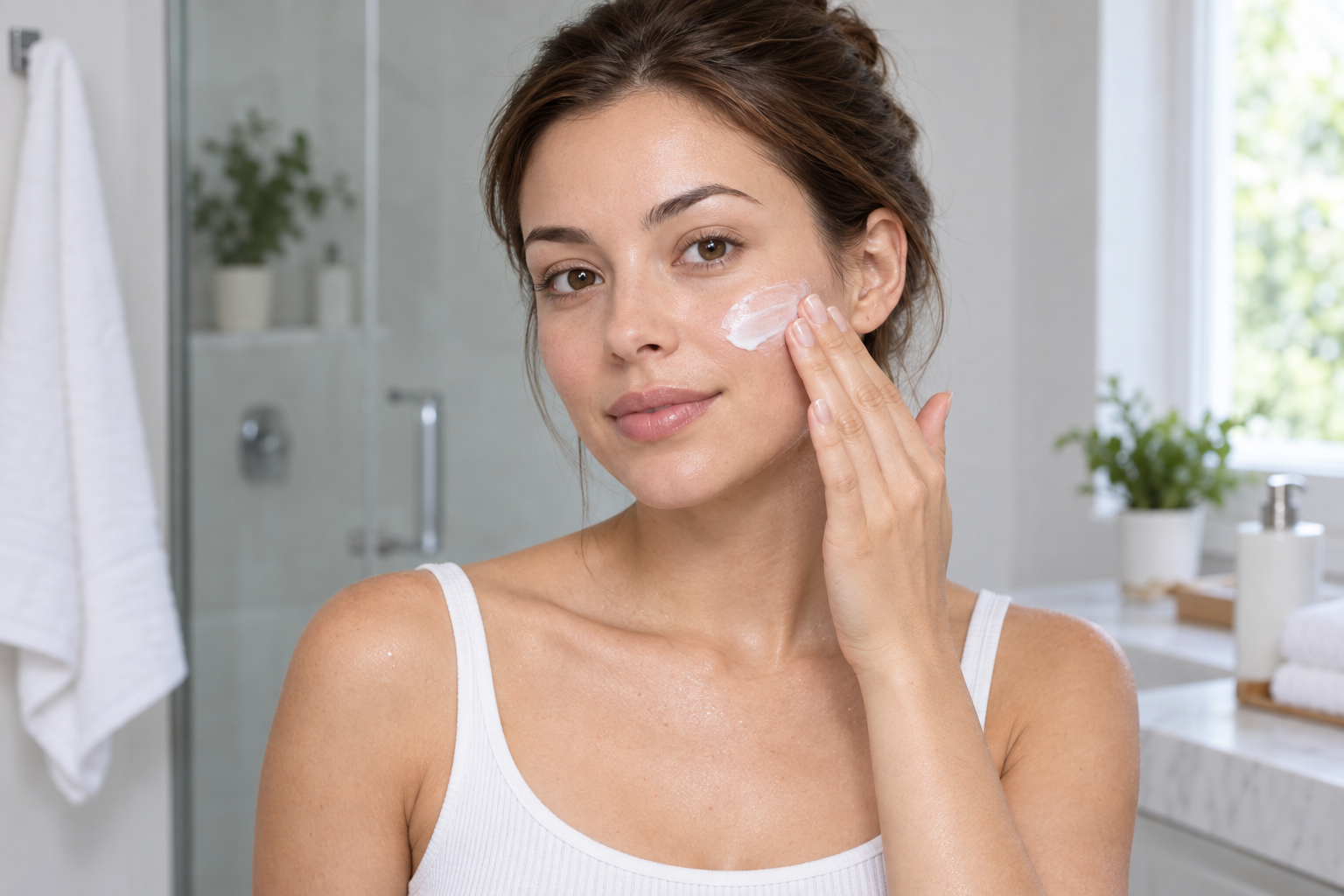
Choose a fragrance-free moisturizer labeled “non-comedogenic” or “won’t clog pores.” After cleansing, apply it while your skin is still slightly damp. The AAD recommends this timing to help retain moisture.
That damp-skin tip is for moisturizer, not a blanket instruction for acne medication. Medication may have different preparation directions.
Moisturizer won’t dissolve blackheads, but it can help with dryness and treatment tolerance. Keep daytime protection in place, too: use broad-spectrum, water-resistant SPF 30 or higher when outdoors.
Check for overlapping exfoliation
Look beyond the scrub. Your cleanser, toner, pads, and serum may contain acids, while retinol, prescription retinoids, or benzoyl peroxide may already be making skin more susceptible to irritation.
Pause optional exfoliating products rather than replacing the scrub with an acid that same evening. “Chemical exfoliation” doesn’t automatically mean gentle. If a prescribed treatment seems involved, contact your prescriber about adjustments instead of designing a replacement regimen yourself.
How to restart skincare for blackheads
Wait until the current irritation has settled before adding a blackhead treatment. There isn’t a universal three-day reset; ongoing stinging, tenderness, flaking, or broken skin means it’s time to reassess, not test something stronger.
Salicylic acid is one option because it helps unclog pores and targets blackheads and whiteheads. But MedlinePlus specifically advises against applying it to irritated, broken, swollen, red, or infected skin.
When your skin is comfortable enough to consider treatment:
- Introduce one treatment at a time. Don’t restart a scrub alongside a new medicated wash and leave-on acid.
- Read the formula’s directions. A rinse-off cleanser, pad, and leave-on treatment aren’t interchangeable. Don’t borrow a contact time or schedule from another format.
- Follow small-area testing instructions. Ask a pharmacist if the label is unclear or you’re already using acne medication.
Adapalene is another acne-treatment option, but it can also irritate. A pharmacist or dermatologist can help you choose rather than simply adding it to everything else. If you’re pregnant or planning pregnancy, get individualized advice before choosing acne medication.
Give a suitable, tolerated treatment time to work. The AAD suggests approximately six to eight weeks before judging improvement. That isn’t an instruction to tolerate burning or worsening irritation.
When a routine adjustment isn’t enough
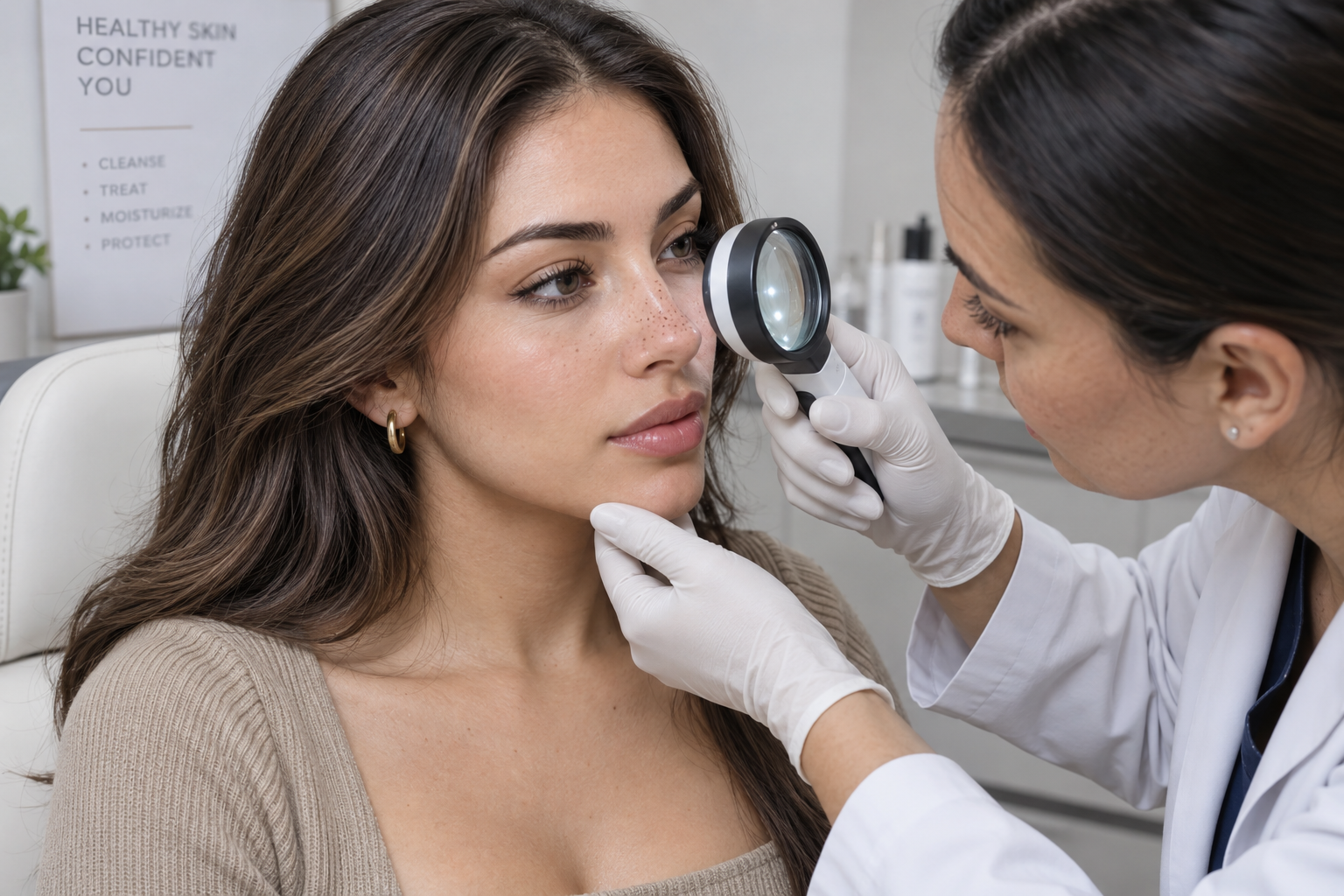
Seek advice from a clinician or dermatologist if irritation persists or repeatedly returns, or if you have deep painful acne, scarring, hot or swollen skin, or other possible infection signs. Blackheads that don’t improve with appropriate self-care also deserve a professional assessment rather than more squeezing.
If an acne product causes breathing difficulty, throat tightness, or facial, lip, or tongue swelling, stop using it and seek emergency help.
For tonight, keep the decision simple: leave the scrub out, cleanse with fingertips, and moisturize. Let comfortable skin, not a deadline for clearing every dot, guide when you revisit treatment.