
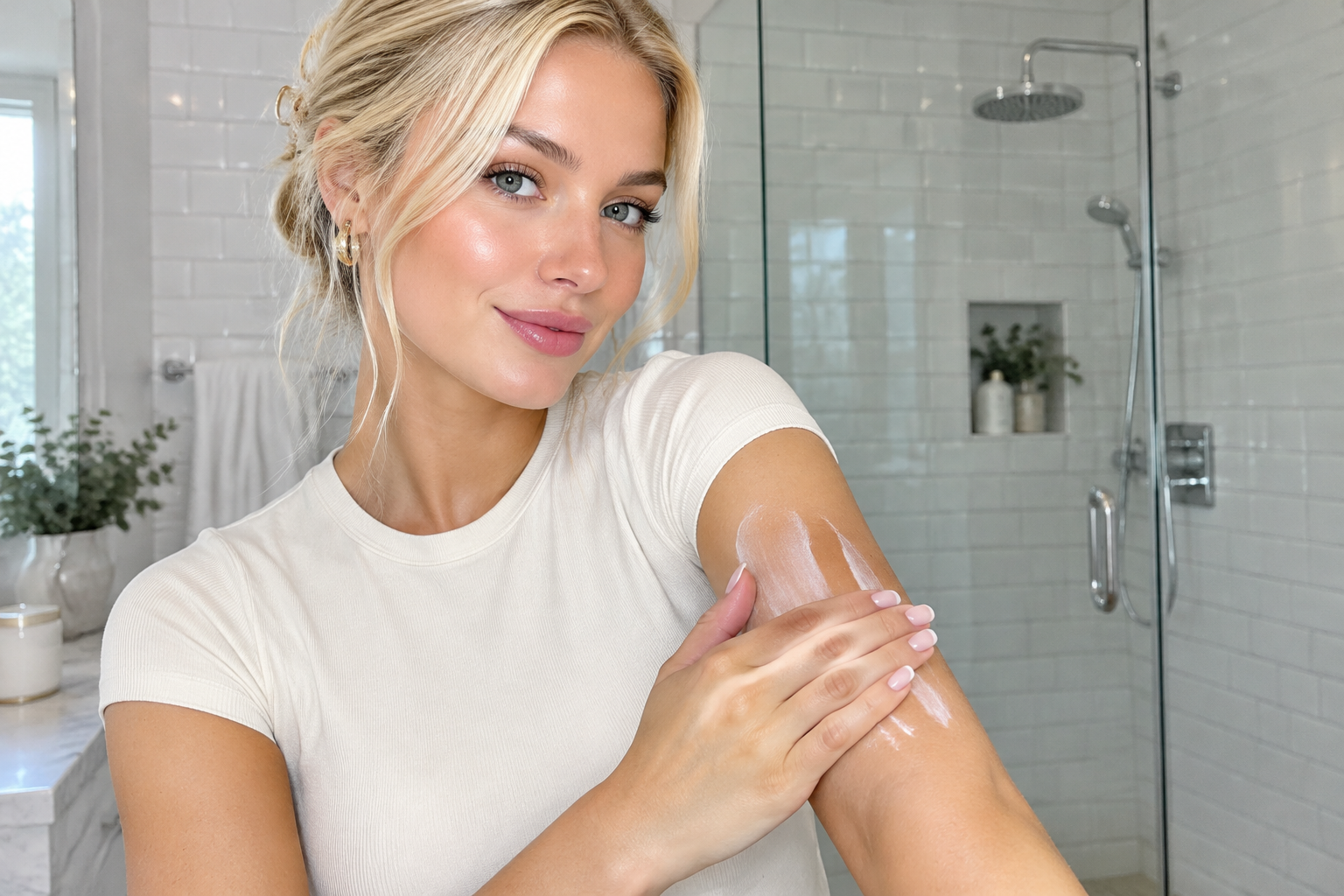
You’ve barely finished your shower, and your shins already feel tight. Meanwhile, the lotion is across the room, and getting dressed feels more urgent. A useful body skin care routine fixes that handoff: wash gently, shave only if you want to, pat away excess water, then moisturize while your skin is still damp.
Scrubs, body serums, and extra washes aren’t admission requirements. Start with comfortable skin and a routine you can repeat.
Quick answer: Take a short, warm shower, cleanse where needed, and moisturize promptly after patting dry. Shaving and exfoliation are optional. Add sunscreen to exposed body skin before going outdoors.
Your body skin care routine, in order
Keep your cleanser, towel, and moisturizer easy to reach. Having the basics ready makes it less tempting to turn a simple shower into a whole production.
Step 1: Make the water warm, not hot
If your skin tends to feel dry, aim for a five-to-ten-minute shower rather than a long, steamy soak. The American Academy of Dermatology’s dry-skin guidance recommends short, warm bathing to help limit dryness.
You don’t need to time every shower perfectly. The useful adjustment is turning down the heat and avoiding lingering under the water when your skin is already uncomfortable.
Step 2: Cleanse the areas that need it
Use a gentle cleanser, concentrating on areas such as your underarms, groin, and anywhere sweaty or visibly dirty. For dryness-prone skin, the AAD recommends using enough cleanser to remove dirt and oil without creating a thick lather.
You don’t need repeated full-body washes just because the first round didn’t feel dramatic. Clean isn’t the same as squeaky, and vigorous scrubbing isn’t a necessary finishing step.
Step 3: Shave here, if you choose to
Let the water soften your hair first, then apply shaving cream or gel. Follow the direction of hair growth and rinse your razor between strokes, as the AAD’s shaving guidance recommends.
Once you’re done, store the razor somewhere dry rather than leaving it in a wet shower puddle. If you’re not shaving, simply skip this step. Body hair doesn’t make the rest of your routine less effective.
Step 4: Pat off excess water
Use your towel gently instead of rubbing until every patch feels completely dry. The goal is slightly damp skin, not dripping legs or water pooling around your feet.
This is the easily missed moment: moisturize now, before getting dressed or starting another task. You don’t need an exact countdown; you just want to catch your skin before that dampness disappears.
Step 5: Smooth on moisturizer
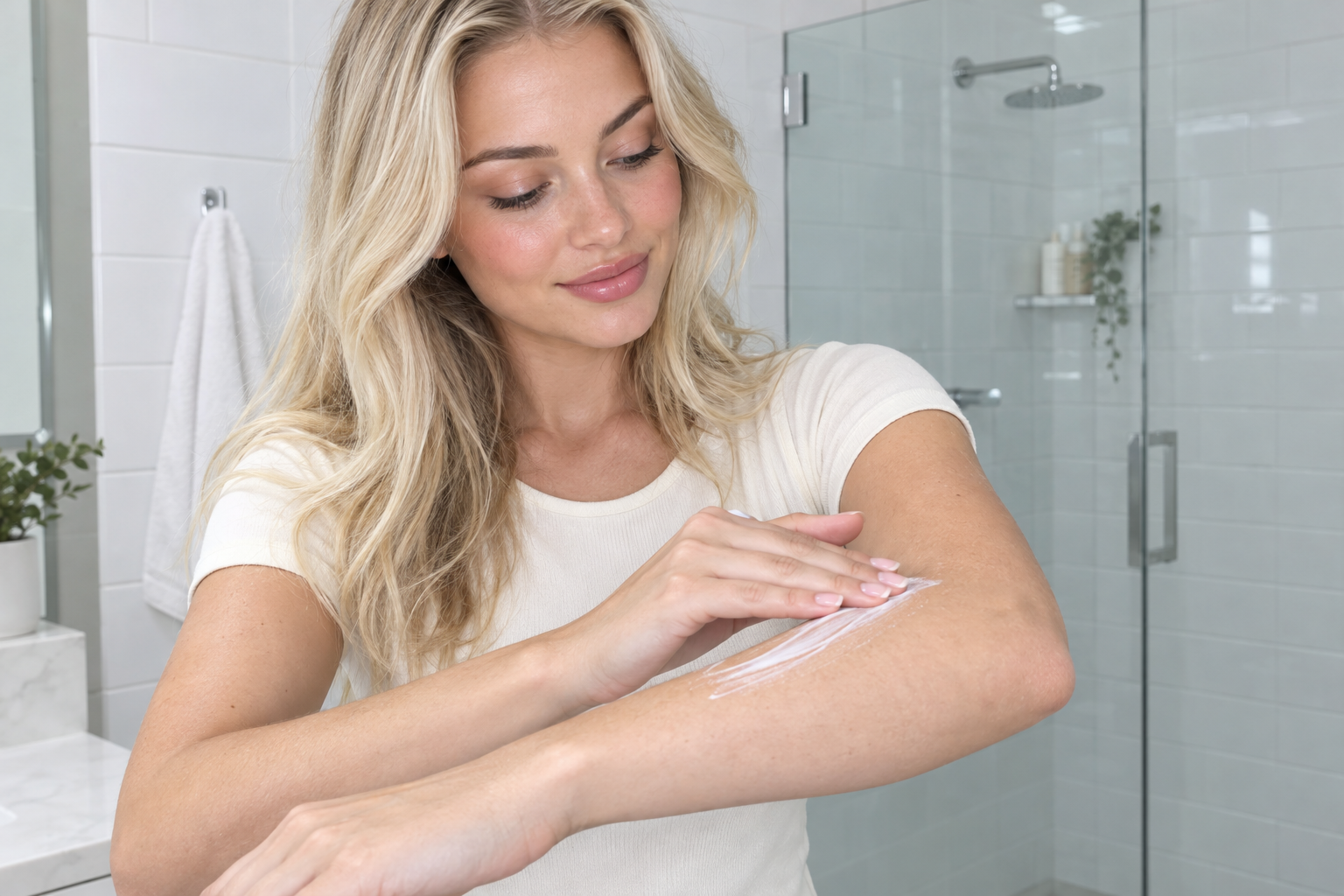
Spread it over the areas you’ve washed, paying attention to places that regularly feel tight or flaky. Apply enough to cover comfortably rather than chasing a universal pump count.
For emollient creams and ointments, the NHS recommends gentle smoothing in the direction of hair growth. On your shins, follow the way the hairs lie instead of briskly rubbing back and forth. Give the product a chance to settle before pulling on snug clothing.
Choose moisturizer by dryness and how it feels to wear
The best texture for your routine is one that suits your skin and feels manageable to use. A rich formula isn’t automatically better everywhere.
- Lotion: Spreads easily and usually feels lighter. It can be a practical choice when you prefer less residue or don’t have much dryness.
- Cream: A richer option for areas that keep feeling dry, such as your lower legs or elbows.
- Ointment: Offers a heavier, greasier texture that may suit very dry patches, but can feel less convenient under daytime clothes.
You can use a lighter texture over most of your body and something richer only where needed. There’s no need to buy a separate formula for every limb.
For dry or sensitive skin, look for fragrance-free, not just “unscented.” The AAD notes that unscented products can still contain ingredients used to mask odor.
If your chest or back breaks out, choose non-comedogenic or oil-free products for those areas. The AAD’s back-acne advice also favors gentle washing rather than scrubbing.
Treat exfoliation as an optional extra
Exfoliation is a choice about appearance and feel, not a test of cleanliness. You can have a complete routine without a scrub, exfoliating mitt, or acid lotion.
If you want to try it, choose one method and follow its directions. A rinse-off scrub and a leave-on exfoliating lotion are different products: rinse the first as directed, and don’t automatically wash off the second.
There’s no single daily or weekly schedule that suits everyone. The AAD’s exfoliation guidance warns that aggressive exfoliation can cause irritation and dark spots, particularly in skin prone to post-inflammatory marks.
Skip exfoliation over wounds or sunburn. Be especially cautious if you already use retinoids or benzoyl peroxide, and avoid piling exfoliation onto skin that feels tender after shaving. More smoothing steps aren’t necessarily more useful.
Add sun protection when body skin will be exposed
If you shower at night, sunscreen doesn’t belong in that bedtime sequence. Add it before outdoor exposure instead.
Choose broad-spectrum, water-resistant SPF 30 or higher for skin not covered by clothing. Remember the spots your outfit leaves exposed, including shoulders, forearms, the backs of your hands, lower legs, and the tops of your feet.
The AAD recommends applying sunscreen before going outdoors and reapplying every two hours outdoors, plus after swimming or sweating according to the label. Clothing and shade are useful parts of protection, too.
Let comfort guide your next adjustment
After your routine, check how your skin feels rather than how glossy it looks.
- Still tight or flaky? Shorten hot showers, reduce unnecessary lathering, and try a richer moisturizer on dry areas.
- Stinging after an extra step? Stop that product rather than adding another scrub or active ingredient.
- Breaking out after sweaty days? Shower and change clothes after sweating, and keep cleansing gentle.
Persistent dryness despite gentler care, repeated burning with products, or deep, painful body acne deserves dermatologist advice. If you use prescribed skin treatments, follow your clinician’s instructions about order and spacing rather than squeezing them into a generic routine.
For your next shower, put moisturizer beside the towel. That small setup makes the most useful sequence easier to remember: gentle wash, gentle towel, moisturizer while damp. Everything else earns its place only if you want it and your skin tolerates it.
