
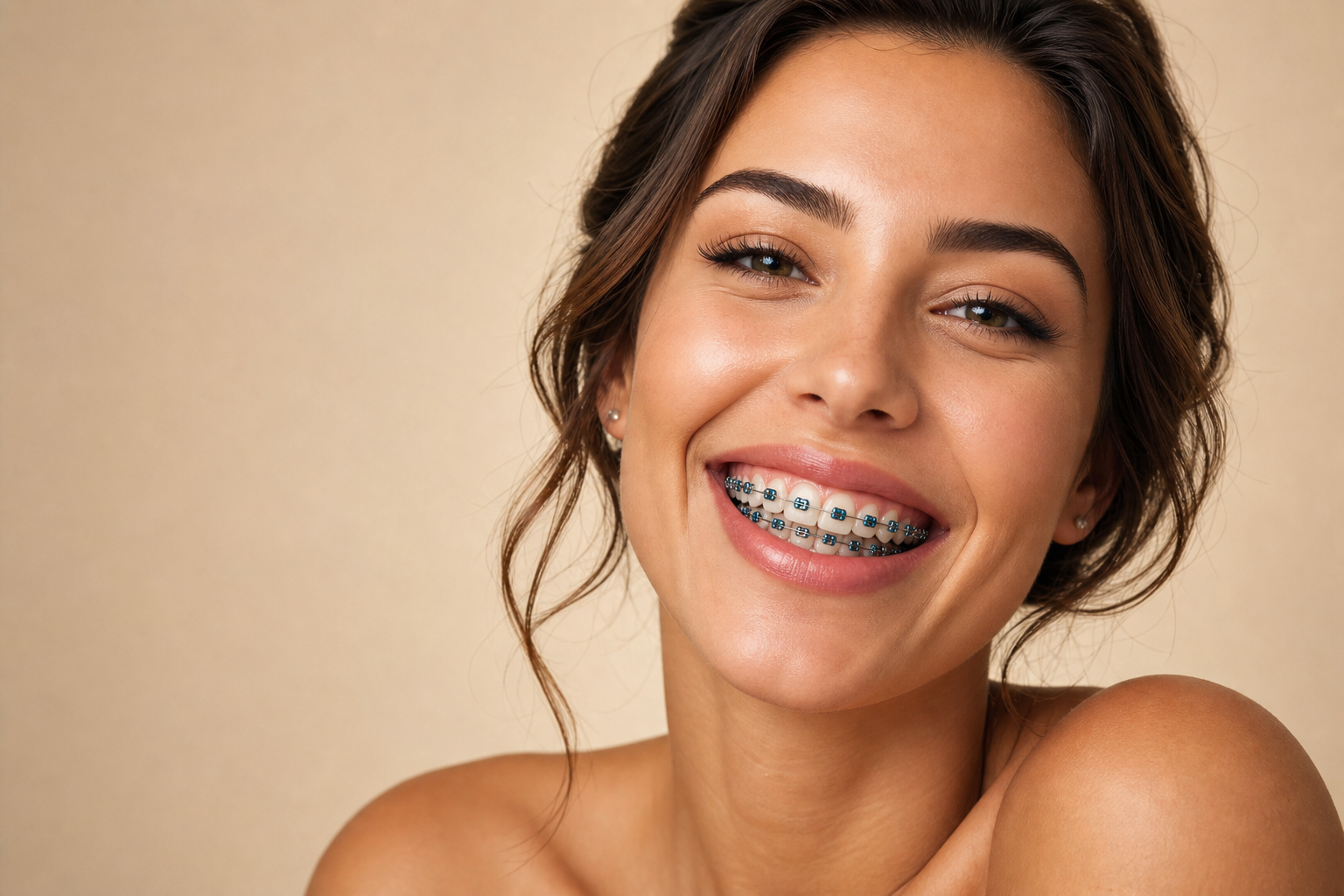
The best braces colors that make teeth look white are usually navy blue, royal blue, deep purple, and dark teal. These rich shades create contrast beside your teeth, which can make natural enamel look brighter. They do not bleach teeth or change their actual shade, and the effect will vary with lighting, tooth color, and the exact elastic color available at your orthodontist’s office.
If you are deciding what color braces make teeth look white, think in terms of contrast rather than a guaranteed effect. Searches for braces colors for white teeth, braces that make your teeth look white, or braces colors to make teeth look white often lead to the same practical rule: compare deeper elastic shades beside your own smile before choosing. The appearance of white teeth with braces remains an optical effect, not a color change.
Quick answer: Start with navy blue for dependable contrast, deep purple for a richer pop of color, or dark teal for a bright but wearable look. Choose a medium-to-dark shade rather than a pale version.
The best braces colors for brighter-looking teeth
Darkness matters more than the color name. Deep plum and pale lavender are both “purple,” for example, but they create very different levels of contrast.
| Braces color | Why it can work | Tradeoff |
|---|---|---|
| Navy or deep blue | Creates noticeable contrast without looking as stark as black | Very dark navy may look almost black in dim lighting |
| Deep purple | Offers strong contrast with a colorful, polished finish | Pale lavender will produce a softer effect |
| Dark teal | Adds color while remaining deep enough to frame the teeth | Muddy or yellow-green versions can resemble trapped food |
| Black | Produces some of the strongest contrast | It can look severe or resemble debris from a distance |
| Silver or smoky gray | Coordinates naturally with metal brackets for a subtle result | It usually creates less brightening contrast than navy or purple |
Navy is the easiest starting point if you want one straightforward recommendation. Deep violet or plum works well when you want something more expressive, while blue-leaning teal sits between classic and colorful.
Black can make teeth look lighter by comparison, but it is a definite style choice. Silver is less dramatic, yet it can look tidy and intentional while blending with the hardware.
Why dark braces colors can make teeth look whiter
Your eyes judge lightness partly in relation to nearby colors. Vision research shows that surrounding visual context can change how light or dark an unchanged surface appears. A dark elastic next to a lighter tooth may therefore make that tooth seem brighter.
This is a contrast effect, not literal color correction. Blue or purple ties do not cancel discoloration inside enamel, remove surface stains, or alter tooth structure.
Actual whitening is a separate cosmetic process. The American Dental Association’s MouthHealthy guidance explains that peroxide bleaching changes the appearance of natural teeth by breaking stains into less concentrated components. Choosing an elastic color does none of that.
Natural enamel also comes in many healthy shades and levels of translucency. A warmer tooth color does not mean that your teeth are dirty or unhealthy.
Braces colors to approach carefully
If maximum contrast is your goal, white, clear, pale yellow, gold, and very light pastels are less dependable choices.
White ties can create an especially bright reference point beside natural enamel, making the teeth look warmer by comparison. Clear and pale ties may also show discoloration from coffee, tea, richly colored sauces, or other foods between appointments. That does not necessarily mean your teeth changed color.
These shades are not wrong. Clear ties may still be your preference if you want your braces to look less noticeable, and pale colors can suit the overall look you want. The tradeoff is simply that they may not deliver the strongest brighter-looking effect.
Green depends heavily on the exact shade. A dark blue-green can look crisp, while olive, yellow-green, or a muted shade may be mistaken for food around the brackets.
How to choose at your next adjustment
Color charts on a phone may not match the elastic ties used by your orthodontic office. Use the actual selection in front of you whenever possible.
- Confirm which part can be customized. Colored O-rings are small elastic ligatures that hold the archwire in the brackets. They are different from prescribed orthodontic elastics used to move teeth or align the jaws.
- Shortlist three dark shades. Ask to see navy, deep purple, and dark teal before considering the full color wheel.
- Compare the real samples. Look at them in neutral light if your orthodontic office allows it. Color names and palettes are not standardized.
- Think beyond the appointment day. A saturated medium-to-dark shade may keep a more consistent appearance than white, clear, or very pale ties.
- Take an unfiltered photo afterward. Use it as a personal reference when choosing your next color, since phone filters and flash can distort both tooth and elastic shades.
- Wait for your orthodontic team to change them. Do not remove or replace ligatures, power chains, or prescribed elastics yourself.
The American Association of Orthodontists notes that colored O-rings are generally replaced during adjustment appointments. Your options may differ if you have ceramic braces, self-ligating brackets, or a power chain.
Color cannot replace braces care
A dark tie can change the visual framing of your smile, but it cannot conceal or correct plaque, cavities, gum inflammation, or enamel changes. Brackets and wires create extra areas where food and plaque can collect, so follow your dental team’s directions for brushing and cleaning between teeth.
Contact your dentist or orthodontist about pain, swelling, persistent sensitivity, bleeding gums, chalky white areas around brackets, or a tooth that develops a new brown, gray, or dark area. Ask them before considering any whitening treatment during orthodontic care.
For your next appointment, choose two deep shades you genuinely enjoy and compare them using the office’s real color samples. Navy is the safest first pick, but the best final choice is the one that gives you the contrast and personal style you want to wear until your next adjustment.
