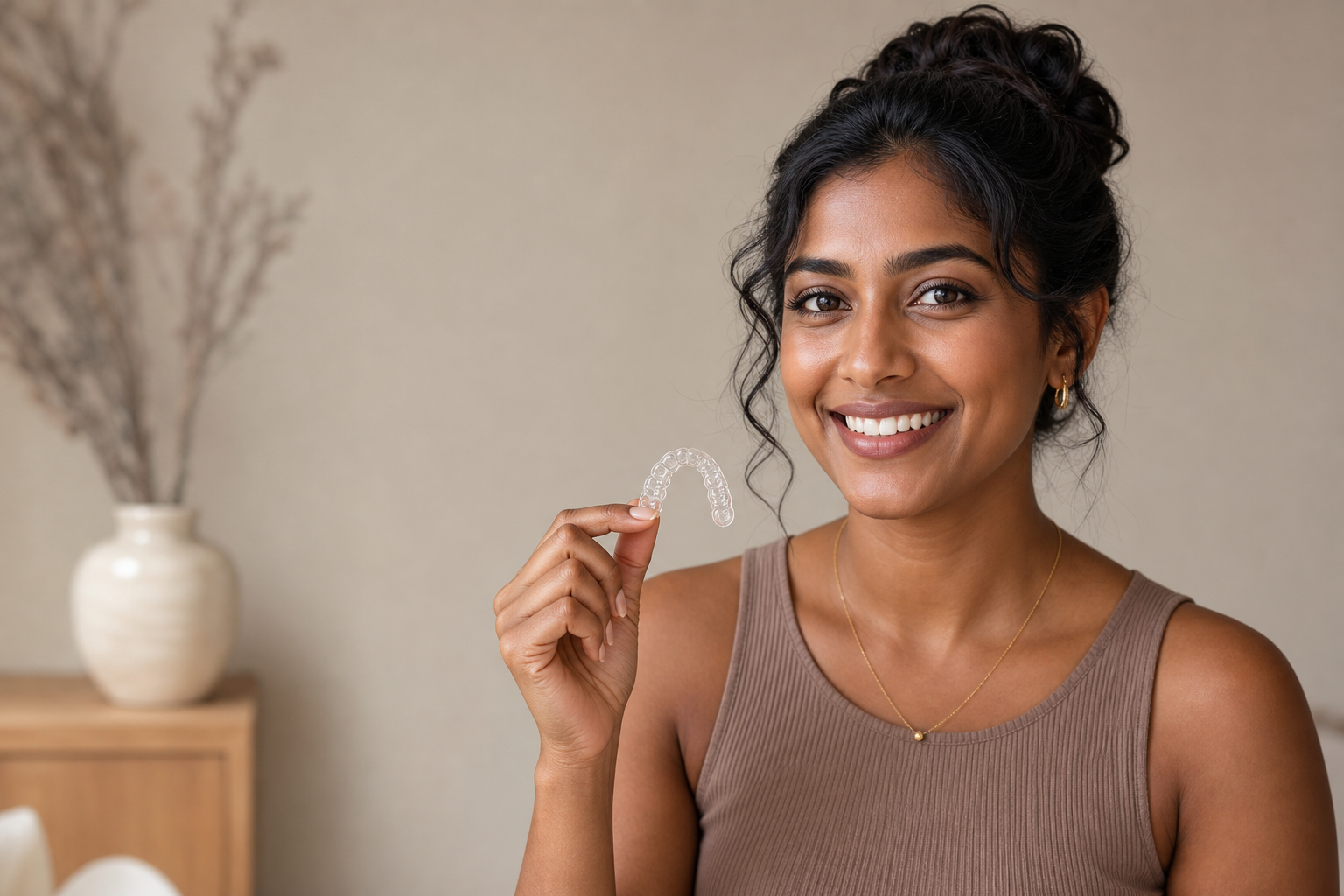
If you already know you want a dentist involved, the dentist take-home whitening vs in-office whitening decision comes down to where the whitening happens and who handles it. Custom take-home trays let you whiten at home on your dentist's schedule. In-office whitening puts gel application in a professional's hands while you sit in the chair.
Neither format is automatically better. Both use peroxide to lighten natural teeth, both can cause sensitivity, and neither will change the color of fillings, bonding, or crowns.
Quick answer: Take-home trays suit you if you can follow a home routine consistently and like whitening around your own life. In-office suits you if you would rather not manage application yourself. Either way, your dentist's exam decides what is suitable. Neither option guarantees zero sensitivity or a specific shade.
What both options have in common
Both start with a dentist checking your teeth and gums, as the NHS explains. That check is a health step, not an upsell. It is how your dentist decides whether whitening suits your mouth at all.
Both rely on peroxide bleaching, which changes the color of natural teeth. The American Dental Association separates this from surface stains, which sit on the outside of the tooth and are a different issue from underlying tooth color.
Both can cause sensitivity and gum irritation. The ADA describes these as common and usually temporary, but they are side effects, not a sign the treatment is "working."
Neither whitens restorations. MouthHealthy notes that crowns, veneers, bonding, and fillings keep their color, so they may not match your natural teeth afterward.
It also helps to keep expectations grounded. Natural teeth are not paper white, and they are not all one shade. In a study of 640 young adults, canines tended to be darker and more yellow than front teeth. Whitening is cosmetic, and tooth color is not a score for health or cleanliness.
How dentist take-home whitening trays work
Your dentist provides closely fitted trays made for your teeth, plus instructions for using them at home. The NHS notes that the dentist also reviews how the trays fit.
That custom fit is the main advantage. The ADA points out that a close fit limits how much gel touches your gums, while a poor fit can contribute to irritation.
A quick clarification: custom trays from your dentist are not the same as prefilled, one-size trays sold as a separate format. This article means dentist-made custom trays.
What trays ask of you:
- Applying the gel and placing the trays yourself, exactly as directed
- Never extending wear time, increasing frequency, or adding other whitening products
- Cleaning the trays as instructed. One tray manufacturer's FAQ specifies a soft brush and warm, not hot, water, but follow your own tray's instructions and your dentist's direction
- Going back for a fit check if the trays rub, pinch, or feel loose
What happens with in-office whitening
With in-office whitening, the gel is applied in the dental chair under supervision. The NHS describes protective barriers placed over the gums and eye protection during treatment.
The ADA lists in-office gel as applied with or without a light. So don't assume a light is what makes it work, and don't treat a light used in a clinic as evidence that at-home LED gadgets do anything.
In-office whitening takes application off your plate. It does not remove the possibility of sensitivity or irritation. Ask your dentist how many appointments they expect for your teeth, since that varies from person to person.
Dentist take-home vs in-office whitening at a glance
| Take-home trays | In-office whitening | |
|---|---|---|
| Where it happens | At home | In the dental chair |
| Who applies the gel | You, following instructions | A dental professional |
| Gum protection | Custom fit limits gum contact | Protective barrier applied |
| What it asks of you | Consistent home use and tray cleaning | Attending your appointment(s) |
| Sensitivity or irritation | Possible | Possible |
| Fillings, crowns, bonding | Will not whiten | Will not whiten |
| Cost question to ask | Are trays, gel refills, and follow-ups included? | Are the assessment, visits, and touch-ups included? |
Which fits your life?
- You like a routine. Trays may suit you if you can stick to your dentist's timetable without improvising.
- You want it handled. In-office may suit you if a home routine feels like one more thing to manage.
- You have an event coming up. Tell your dentist the date at your first visit so they can advise which format, if either, is realistic. Neither comes with a guaranteed timeline.
- You already have sensitive teeth. Mention it upfront. Neither method avoids sensitivity, so your dentist needs this information to advise you.
- You have front-tooth restorations. Ask how your fillings, bonding, crowns, or veneers might look next to whitened natural teeth before you choose.
- You have white spots, including marks after braces. Manufacturer information notes that white spots can look more noticeable during whitening. A systematic review found the evidence too weak to support or refute bleaching for post-braces white spots. Have them assessed first.
- Budget matters. The ADA notes that over-the-counter options usually cost less. Between these two professional formats, compare what each quote includes rather than assuming one is cheaper.
How well bleaching works also depends on the type of discoloration, and that is something your dentist assesses, not something to self-diagnose.
Questions to ask before you book
- Which format do you recommend for my teeth, and why?
- What exactly is included in the price for each option?
- How many appointments, or how many days of tray wear, do you expect for me?
- How might my existing restorations look afterward?
- What should I do if sensitivity or gum irritation shows up?
Raise anything that might affect suitability before you start. That includes pain, existing sensitivity, gum problems, cracked teeth, a single dark or changing tooth, or pregnancy-related questions. This is not a diagnosis list, just useful context for your dentist.
If you notice burning, significant irritation, or sensitivity that does not settle during either method, stop and contact the dentist who provided your treatment.
Your next step
Book an assessment, bring this question list, and share your timeline and comfort level honestly. The right format is the one your dentist agrees suits your mouth and the one you will realistically follow.