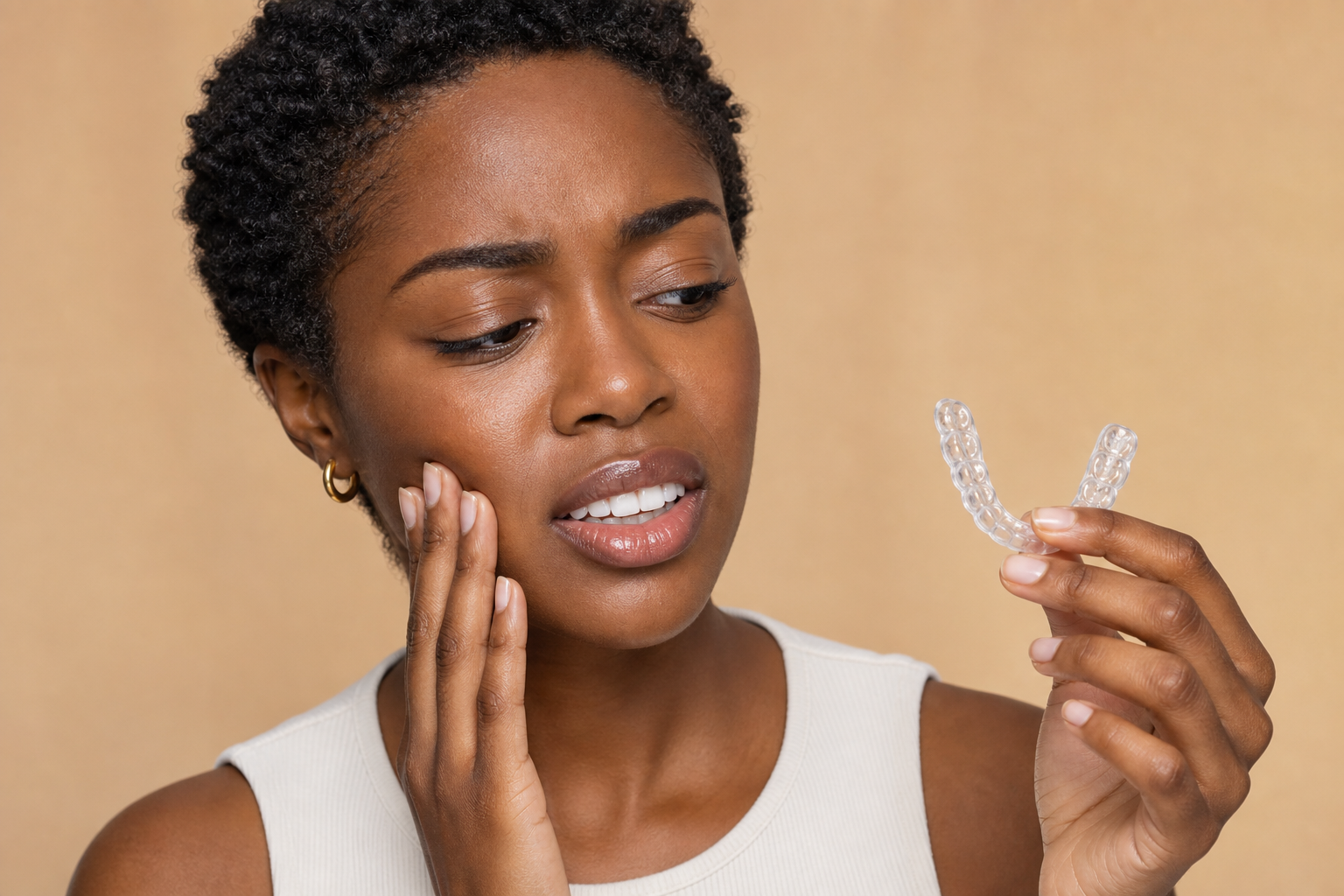
The most commonly reported teeth whitening side effects are temporary tooth sensitivity and irritation of the gums or mouth. They can happen with strips, gels, trays, and professional bleaching. Mild symptoms may settle after you stop, but pain, burning, swelling, or persistent sensitivity should not be treated as proof that whitening is working.
Quick answer: If whitening causes painful sensitivity, burning, or significant gum discomfort, stop the application, follow the product’s removal directions, and check its label before using it again. Seek dental advice for severe, worsening, or persistent symptoms.
What whitening sensitivity can feel like
Whitening sensitivity may feel like brief “zingers,” generalized tenderness, or a stronger reaction to cold air, drinks, or food. According to the American Dental Association’s whitening overview, temporary tooth sensitivity and gum inflammation are the most common adverse effects of bleaching natural teeth.
Peroxide-based whiteners can move through the tooth and temporarily affect sensitive structures inside it. Concentration and contact time may influence the reaction, but neither can predict exactly how your teeth will feel.
Sensitivity reported in research is often mild and temporary. However, the evidence does not support one universally comfortable format or schedule. A Cochrane review of home whitening also found that sensitivity and oral irritation were common adverse effects, with limited certainty about which approach is best for every user.
Pain focused in one tooth deserves extra attention. Lingering temperature pain, biting pain, throbbing, or pressure can have causes unrelated to whitening and should not be self-diagnosed as a routine reaction.
Why whitening can irritate your gums
Gum irritation often happens when whitening gel overlaps the gumline or spreads onto other soft tissue. Excess gel in a tray, an inaccurate application, or a tray that does not fit properly can increase contact.
You might notice tenderness, a sore area, or a temporarily pale patch where the product touched the tissue. Burning or significant discomfort is a signal to stop, not a reason to wait for the session to end.
Do not keep applying a product that repeatedly reaches or rubs the gums. Avoid cutting or modifying a strip or tray unless its instructions or a dental professional specifically direct you to do so.
What to do when teeth whitening side effects start
Your product’s label matters because wear times, frequency, warnings, and restart directions vary. Do not borrow a pause schedule from another brand or whitening format.
- Stop the current application. Remove the strip or tray if you feel burning, painful sensitivity, or significant gum discomfort.
- Clear away the remaining product. Follow the label’s directions for removing or rinsing away excess gel.
- Read the complete instructions. Check the warnings and stop-use guidance before deciding whether another application is appropriate.
- Wait for symptoms to settle. Do not whiten through discomfort or assume you must stay on schedule to preserve the cosmetic result.
- Do not compensate later. Never double the next session, extend the contact time, increase the frequency, or sleep in a product unless its label specifically permits it.
- Avoid stacking whiteners. Combining strips, gels, trays, pens, and abrasive whitening products can increase exposure rather than create a controlled shortcut.
- Ask a dentist when symptoms concern you. This is especially important if the reaction is painful, persistent, worsening, or repeatedly returns.
The ADA’s consumer guidance on teeth whitening emphasizes following product directions because overuse may harm teeth or gums.
Discomfort does not prove whitening is working
Tingling, sensitivity, and burning are adverse effects, not measures of effectiveness. Leaving a whitener on longer because it “feels strong” raises exposure without guaranteeing a better or more even result.
Whitening is also optional and cosmetic. Tooth color is not a reliable measure of cleanliness or oral health. Whitening toothpaste mainly removes external surface stains through polishing, while peroxide bleaching changes the appearance of natural tooth color.
Crowns, veneers, implants, fillings, and bonding do not bleach like natural teeth. Continuing treatment to chase an even shade around dental work may increase discomfort without changing the restoration.
When to contact a dentist
Stop whitening and contact a licensed dentist if you experience:
- Painful, severe, worsening, or persistent sensitivity
- Burning or significant irritation of the gums or mouth
- Swelling, sores, bleeding, or irritation that does not settle
- Lingering pain after hot or cold exposure
- Pain when biting, throbbing, or pressure
- Symptoms concentrated in one tooth
- A cracked tooth or one tooth that is becoming darker
- A reaction that conflicts with the label’s stop-use instructions
The American Association of Endodontists notes that ongoing tooth pain can have several possible causes, including decay, a crack, or infection. Whitening should not be used to explain away these symptoms.
Seek urgent dental or medical care for facial swelling, trouble breathing or swallowing, uncontrolled bleeding, or severe pain.
It is also sensible to ask a dentist before whitening if you have untreated decay, gum problems, recession, existing sensitivity, recent dental work, extensive restorations, or uncertainty about a discoloration. Pregnancy-related questions about elective whitening also belong with a dentist or appropriate clinician.
Your practical next step is simple: let comfort and the product’s directions guide your decision, not a whitening deadline. If stopping does not resolve the concern, get professional advice before restarting.