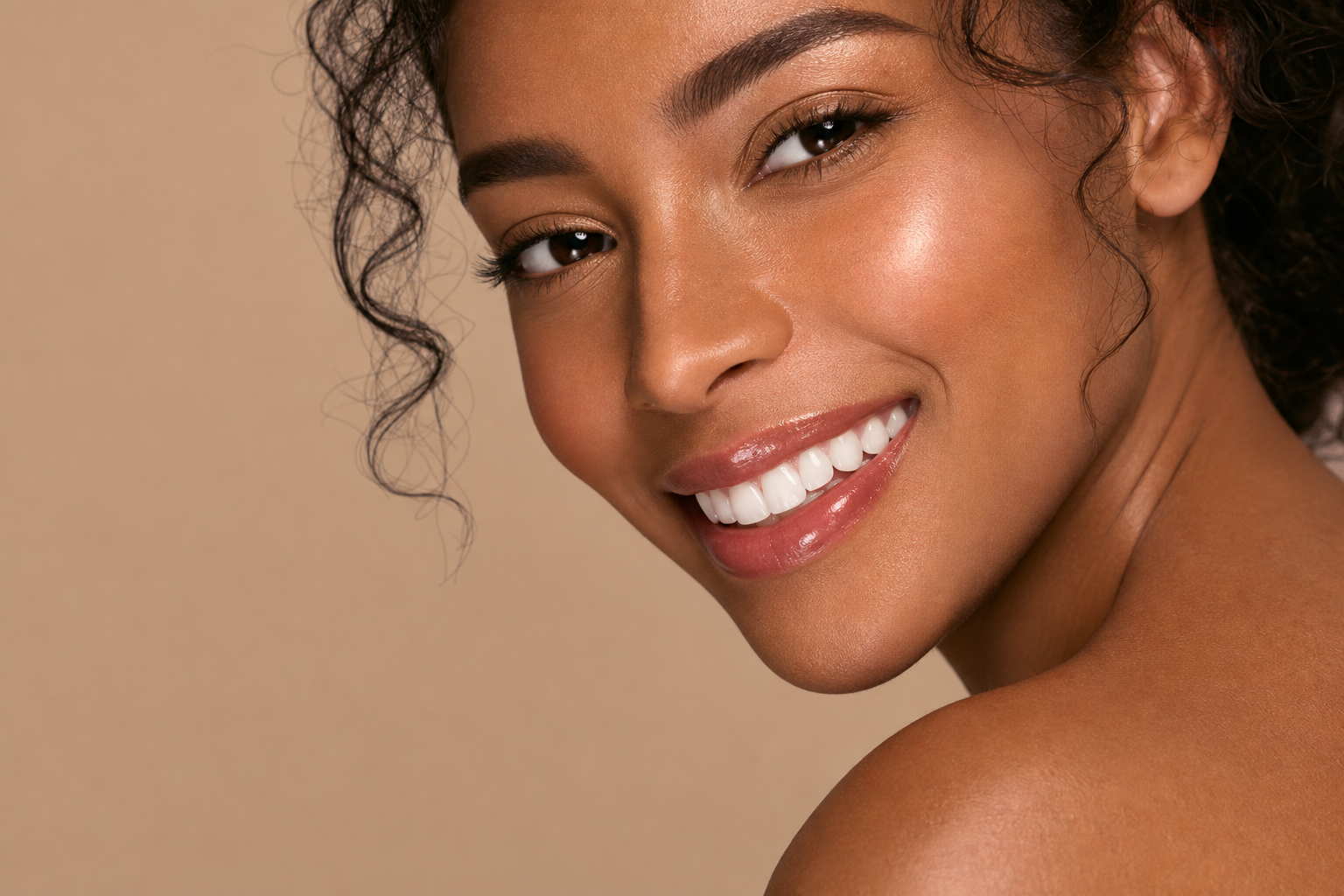
Lip gloss can make teeth look brighter in some lighting, but it does not whiten them. Shine adds reflective highlights to the lips, changing the visual frame around your smile. The result depends on more than glossiness, though. Tint, opacity, your natural lip color, tooth shade, and lighting can all affect the contrast you see.
Quick answer: Gloss may support a brighter-looking smile, but lip color and lighting usually matter more than shine alone.
Why glossy lips can change smile contrast
You perceive gloss through bright highlights and differences between light and shadow. Research on how people see glossy surfaces shows that lighting, surface shape, surrounding context, and image processing can all influence how shiny something appears.
On lips, those highlights can add dimension and draw light toward the mouth. This may make the entire smile look more luminous, especially in soft directional light. It does not mean the teeth themselves have changed color.
Color surrounding the teeth matters too. A small photo-based study on lipstick and perceived tooth color found that observers gave different whiteness ratings depending on the lipstick shade. However, the study did not isolate shine from color, opacity, or undertone. It supports the importance of the lips as a visual frame, not the claim that gloss alone makes teeth look whiter.
Which lip gloss finish is most flattering?
There is no universal lip gloss for white teeth because each finish changes the smile differently. Consider what the gloss adds besides shine.
- Clear gloss: Reflects light while leaving your natural lip color visible. It may brighten the lip area, but it creates little new color contrast.
- Tinted gloss: Changes both shine and the color around your teeth. A deeper tint can create stronger light-dark contrast, although it may also make warmth or uneven coloration in the teeth more noticeable.
- Milky or pale gloss: Creates a lighter frame around the smile. On some people, that reduced contrast can make natural cream or ivory tones in the teeth stand out more.
- Fine pearl: Produces scattered highlights rather than a completely smooth wet look. Its effect can change significantly under flash or overhead lighting.
- Visible glitter: Draws attention to the lips, but it does not necessarily create a cleaner or brighter-looking border around the teeth.
Gloss over lipstick will preserve much of the lipstick’s existing color effect. Clear gloss over bare lips depends more on your natural lip pigmentation. This is why a finish that works beautifully for one person may have a different effect on another, without either result being wrong.
How to test lip gloss for whiter-looking teeth
A quick side-by-side test is more reliable than a universal “brightening” label. Keep your makeup, camera settings, and lighting consistent so you can judge the gloss rather than unrelated changes.
- Start with bare lips. Look at your smile from conversational distance instead of using an extreme close-up.
- Add one thin layer of clear gloss. Notice whether the reflected light makes the smile look brighter or simply makes the lips shinier.
- Try a tinted option. Compare both its color contrast and its finish with the clear gloss.
- Check indirect daylight. Stand near a window without using a filter or beauty mode.
- Repeat in your usual indoor light. Overhead bulbs, restaurant lighting, and bathroom lighting can place highlights differently.
- Take a flash photo if relevant. For an event, an unfiltered flash test can reveal glare, scattered shimmer, or a washed-out tint.
- Remove inner-lip excess. A controlled layer reduces the chance of gloss transferring onto your teeth.
Judge the overall effect rather than searching for a dramatic shade change. Naturally warm, ivory, or cream-toned teeth are normal, and tooth color is not a measure of cleanliness or attractiveness.
Gloss versus actual teeth whitening
Lip gloss creates a temporary optical effect. It cannot remove stains or bleach teeth.
According to the American Dental Association’s whitening overview, whitening toothpaste primarily removes external surface stains, while peroxide-based bleaching can change the color of natural teeth. Crowns, veneers, implants, fillings, and bonding do not whiten in the same way, so bleaching may leave a visible mismatch.
Makeup also cannot explain or correct a tooth that has become dark, painful, cracked, or noticeably different from nearby teeth. A licensed dentist should assess that kind of change. Ask a dentist before bleaching if you have pain, untreated dental problems, extensive restorations, persistent sensitivity, or uncertainty about a discoloration.
Choose comfortable shine
Flaking can make gloss catch light unevenly, but a shiny product is not treatment for persistently dry or sore lips. If your lips are chapped, a simple, non-irritating product may feel better than a fragranced, flavored, or plumping formula.
Burning, stinging, and tingling are signs of irritation, not proof that a product is working, according to the American Academy of Dermatology. Stop using a gloss that causes marked irritation, swelling, or sores. Persistent cracking, bleeding, swelling, or recurring sores deserve professional advice.
For the most useful answer, test your gloss in the lighting where you will actually wear it. Choose the combination of tint, shine, and comfort that gives you the smile contrast you prefer.