
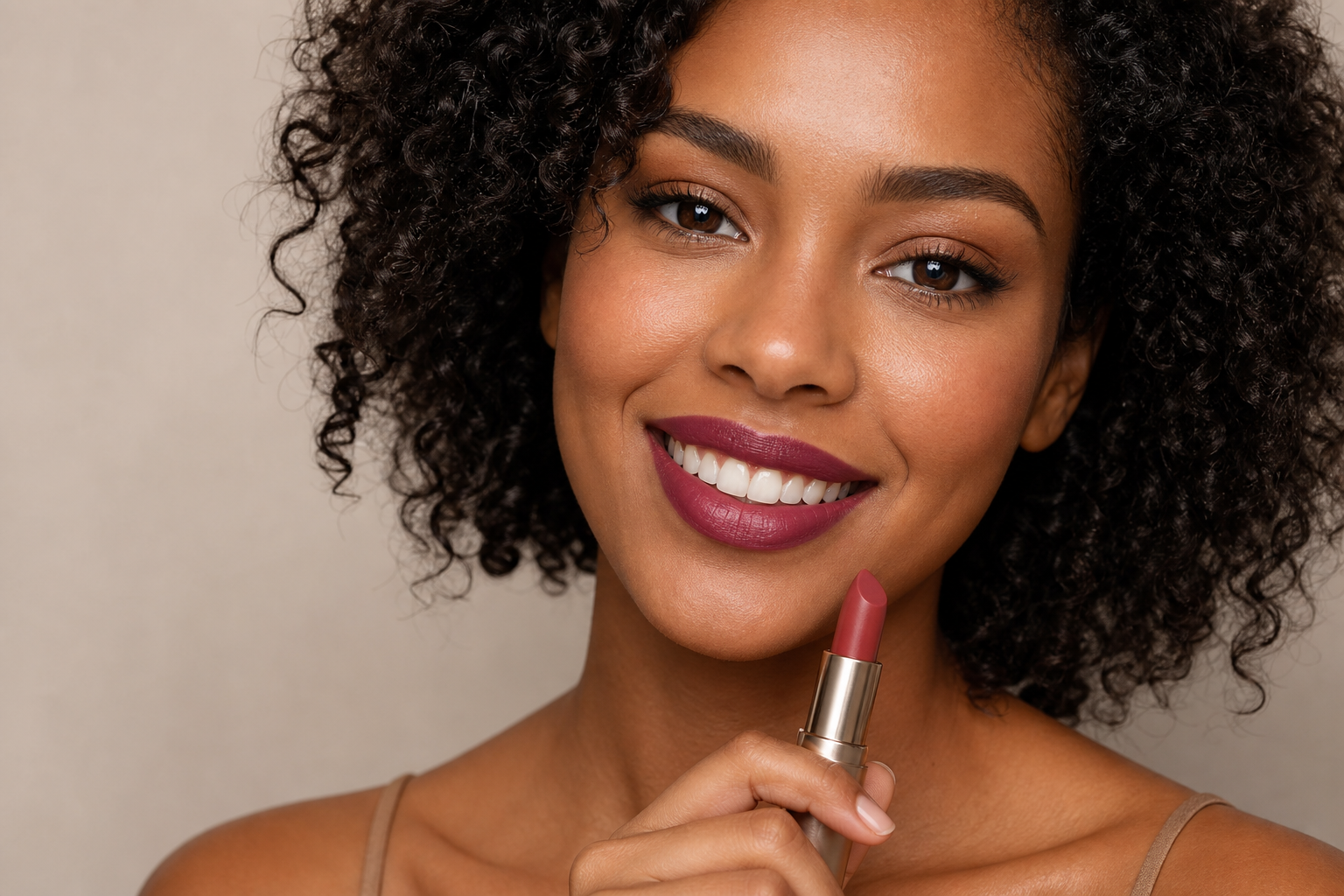
To make teeth look whiter with lipstick, start by comparing a cool berry, violet, wine, or blue-red shade with a warmer version of the same color family. Cooler and more saturated colors can create brighter-looking contrast beside teeth, but they do not actually whiten them. The result depends on your natural lip color, tooth shade, lighting, and the lipstick’s depth and opacity.
Quick answer: Try a cooler or richer version of a lipstick color you already enjoy, then compare it with a warmer version directly on your lips. Judge the full smile in realistic lighting, not the tube or a hand swatch.
How the lipstick white teeth effect works
Lipstick becomes part of the visual background surrounding your teeth. Changing that background can influence how light, warm, or bright your teeth appear, even though their actual color stays the same.
A small 2023 study of lipstick and perceived tooth color found that observers generally rated teeth as whitest beside bright red, followed by dark red and violet. Beige received the lowest ratings among the five colors tested.
That finding makes richer reds and violet-leaning colors useful starting points, not guaranteed winners. The study used photographs of only four women, five lipstick colors, and a limited observer group. It did not cover the full range of skin tones, natural lip pigmentation, finishes, lighting conditions, or personal makeup styles.
Contrast can matter as much as the shade’s undertone. A deep warm red may create more apparent brightness than a very pale cool nude because it provides a stronger edge between lips and teeth.
Which lipstick colors should you compare?
Begin within a color family you already feel comfortable wearing. You do not need to switch to a dramatic red if you usually prefer softer pinks or muted neutrals.
Useful side-by-side comparisons include:
- Blue-red versus orange-red
- Berry pink versus peach pink
- Wine versus terracotta
- Cool rose versus warm beige
- Violet plum versus caramel brown
- Magenta versus coral
A cooler shade usually looks more berry, pink, blue-red, violet, or wine-leaning when placed next to a warmer shade. The warmer option may look more orange, peach, coral, brick, terracotta, or yellow-brown.
Shade names are not standardized, so a lipstick labeled “cool rose” may not look cool once applied. Compare the actual colors rather than relying on packaging descriptions.
Warm lipstick is not automatically unflattering, and cool lipstick does not always make teeth look whiter. Your best option is the shade that gives you the overall balance you want across your lips, complexion, and smile.
Test lipstick beside your own smile
Use this quick comparison before buying a full-size lipstick or choosing an event shade:
- Pick two related colors. Keep the general color family similar while changing one feature, such as cool berry-red versus warm orange-red.
- Apply each shade to your full lips. A tube, hand swatch, or online photograph cannot show how your natural lip pigmentation will affect the color.
- Smile from a normal distance. Look at your overall face rather than judging your teeth in an extreme close-up.
- Check indirect daylight. This gives you a relatively clear look at the undertone and contrast.
- Repeat in your real setting. Check office lighting, restaurant lighting, or the venue lighting you expect for an event.
- Take an unfiltered photo. Disable beauty mode, automatic whitening, and color filters so your phone does not make the decision for you.
- Change one variable if needed. If neither shade works, try adjusting undertone, depth, or opacity rather than replacing everything at once.
Lighting matters because it can change how lipstick color is perceived. Research on lipstick under multiple lighting conditions did not measure tooth whiteness, but it supports the practical value of checking color under more than one light source.
Why the same shade looks different on different people
Natural lip pigmentation can make a sheer lipstick appear warmer, cooler, deeper, or more muted than it looks in the package. An opaque formula may show its packaged color more clearly, while a gloss or tint allows more of your lips to show through.
Teeth also have natural variations in color and translucency. Visible crowns, veneers, implants, fillings, or bonding may reflect color differently from surrounding teeth.
Cameras add another variable. Automatic white balance, flash, filters, and beauty settings can shift both lipstick and tooth color, so a shade that looks effective in one photo may look different in person.
Prepare lips without irritating them
Smooth application can make your comparison easier, but aggressive scrubbing is unnecessary. If your lips are dry, use a bland, non-irritating moisturizer and give it time to absorb before applying color.
Burning, stinging, or tingling does not mean a lip product is working. The American Academy of Dermatology recommends stopping products that irritate chapped lips. Persistent cracking, bleeding, sores, swelling, or recurring discomfort should be assessed by an appropriate clinician.
Remember that contrast is not whitening
Lipstick changes perceived contrast only while you are wearing it. It does not remove surface stains or bleach enamel. The American Dental Association’s whitening overview explains that stain removal and peroxide bleaching are separate processes, and restorations do not whiten like natural teeth.
If one tooth becomes newly dark, changes noticeably, hurts, or appears damaged, do not try to disguise the change with makeup or assume it is only cosmetic. A licensed dentist can evaluate the cause. Otherwise, choose two lipstick shades from the same family and let a realistic side-by-side test decide which one gives you the look you prefer.
