
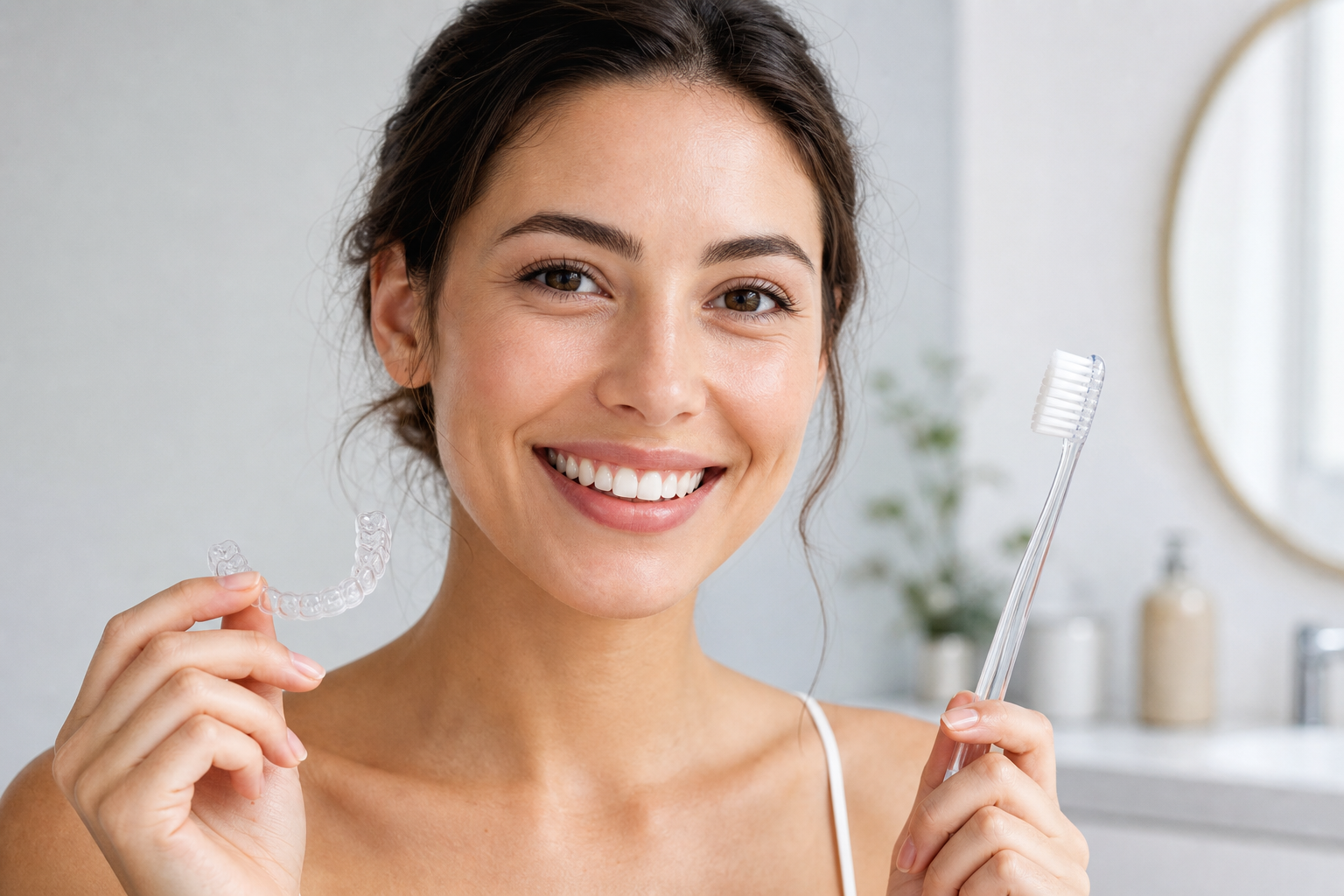
If you wanted white teeth with braces and now wear a retainer, treat your teeth and appliance as two separate surfaces. Brush your natural teeth with fluoride toothpaste, but clean a removable retainer with a dedicated soft brush and mild soap or an approved appliance cleaner. A retainer keeps teeth in position. It does not whiten them and should not automatically be used as a whitening tray.
Quick answer: Clean your teeth and retainer separately, remove the appliance for food and colored drinks as directed, and ask your dentist or orthodontist before starting whitening after braces.
First, find out what actually looks stained
Clear retainers sit directly over your teeth, so cloudiness or yellowing in the plastic can make your entire smile look different. Check the two separately before changing your routine.
Remove and rinse the retainer, then look at your clean, bare teeth in neutral light. Next, inspect the appliance for cloudy patches, hard deposits, scratches, odor, or embedded discoloration.
You may be seeing one or more of these issues:
- Surface stains on natural teeth from coffee, tea, tobacco, or other sources
- Cloudiness or discoloration in a clear plastic retainer
- Plaque or debris around a fixed retainer wire
- Uneven tooth color, white marks, or a single dark tooth
- A restoration, such as bonding or a filling, that differs from nearby enamel
Tooth color is cosmetic and is not a reliable measure of cleanliness or oral health. However, pain, gum inflammation, hard buildup, or a tooth that is becoming darker should not be treated as an ordinary beauty concern.
Use a two-part daily care routine
The goal is to clean the teeth effectively without scratching, warping, or chemically damaging the retainer.
- Remove the retainer as directed. Take out a removable appliance for meals, colored drinks, brushing, and cleaning unless your orthodontist gave you different instructions.
- Brush and clean between your teeth. Use fluoride toothpaste on your teeth and clean carefully around any bonded retainer wire.
- Rinse the removable retainer promptly. Cool or lukewarm water helps prevent saliva and debris from drying onto it.
- Brush the appliance gently. Use a separate soft brush with mild soap or a cleaner approved for your retainer material.
- Rinse thoroughly and store it properly. Put it in its case when it is not in your mouth, keeping it away from heat and direct sunlight.
The American Association of Orthodontists advises against hot water, bleach, alcohol-based mouthwash, harsh chemicals, and toothpaste on retainers. Toothpaste may be appropriate for your teeth, but its abrasives can roughen or cloud some appliance materials.
Do not improvise with vinegar, charcoal, acidic fruit, abrasive powders, boiling water, or household bleach. Follow the instructions from your orthodontist and the appliance-cleaner label because retainer materials vary.
Know what cleaning can and cannot fix
Routine cleaning can remove soft buildup and may improve the appearance of a retainer that has collected debris. It cannot reliably reverse scratches, aging plastic, embedded discoloration, warping, or every hard deposit.
A newly cleaned retainer may look clearer over your teeth, creating a brighter visual effect without changing the shade of your enamel. Retainer cleanser cleans the appliance. It does not bleach your teeth.
Contact your orthodontic team if the retainer remains cloudy, rough, discolored, or odorous after appropriate cleaning. You should also get advice if it is cracked, warped, painful, loose, sharp, or no longer seats completely. According to the American Association of Orthodontists, you should not force a painful or incompletely fitting retainer into place.
Whitening after braces is a separate decision
Whitening toothpaste and peroxide bleaching do different jobs. Whitening toothpaste primarily helps remove external surface stains, while peroxide bleaching changes the color of natural teeth. The American Dental Association notes that whitening can also cause temporary sensitivity and gum irritation.
Crowns, veneers, implants, fillings, and bonding do not whiten like natural enamel. Lightening the surrounding teeth may make an existing shade difference more noticeable.
Although clear retainers can resemble custom whitening trays, they may differ in material, fit, edge design, and space for gel. Do not put whitening gel, strips, toothpaste, or mouthwash inside an orthodontic retainer unless your dentist or orthodontist has specifically approved that appliance and given you directions.
There is no universal waiting period for teeth whitening after braces in the reviewed orthodontic guidance. Timing depends on your teeth, gums, sensitivity, restorations, recent treatment, and prescribed retainer schedule. Do not skip required retainer wear to make room for a cosmetic routine.
When to ask before whitening
Speak with a licensed dentist or orthodontist before whitening if you have pain, untreated decay or gum problems, cracked teeth, persistent sensitivity, extensive restorations, unexplained discoloration, a single dark tooth, or pregnancy-related questions.
If you do whiten, use a product intended for that purpose and follow its directions exactly. Do not extend the contact time, increase the frequency, or combine multiple whitening methods. Stop and follow the label or seek professional advice if you experience burning, significant irritation, severe pain, or other concerning symptoms.
Your practical next step is simple: remove the retainer, clean it separately, and inspect both the appliance and your bare teeth. If discoloration remains, your dental or orthodontic team can help determine whether you need professional appliance cleaning, a replacement retainer, surface-stain care, or a separate whitening plan.
