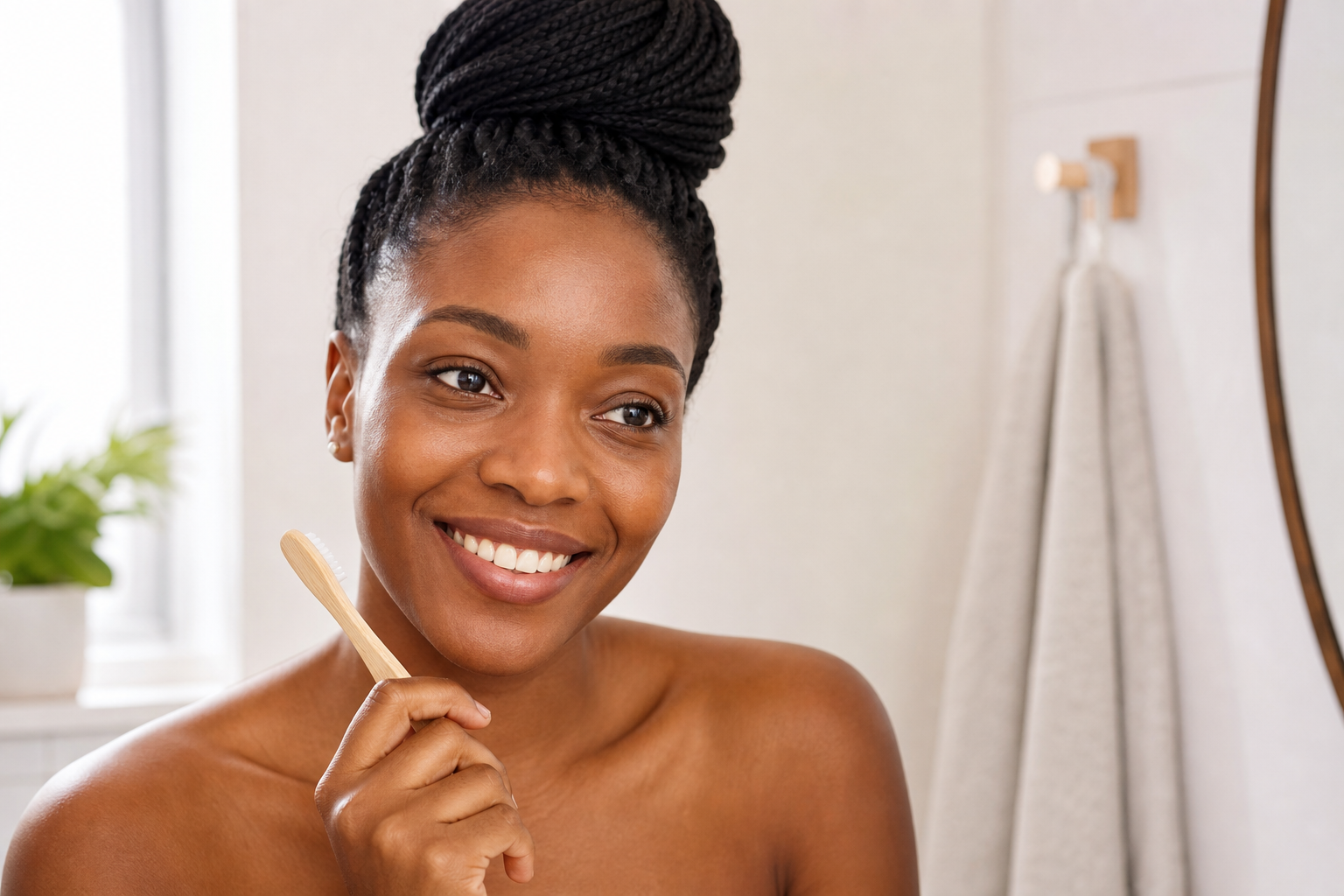
If you're seeing yellow teeth despite brushing every day, that shade alone does not tell you that you're doing anything wrong. Brushing cleans your teeth and helps manage surface buildup and stains, but it can't change the natural shade of a tooth. Natural teeth aren't paper white, and their colour varies from person to person and even from tooth to tooth.
So the shade you see in the mirror isn't a hygiene grade. It's a mix of your natural colour, your habits, and time.
Quick answer: Brushing removes surface buildup but doesn't change your teeth's underlying natural colour. A yellow or off-white shade doesn't mean your teeth are dirty, and a whiter shade doesn't mean they're healthier. If you'd like a lighter shade, peroxide bleaching is what changes the colour of natural teeth, and a dentist can check whether it suits you first.
Why your teeth can look yellow even when you brush daily
Tooth colour is naturally varied. According to the American Dental Association's MouthHealthy guide to teeth whitening, brushing doesn't make every natural tooth bright white, and several everyday factors can change how teeth look.
Those factors include:
- Age. Tooth appearance can change as you get older.
- Pigmented drinks. Coffee, tea, and other deeply coloured drinks can affect the shade you see.
- Tobacco. Smoking and other tobacco use can change tooth appearance.
Your teeth may also not match each other. One study of 640 young adults aged 18 to 22 found that canines (the pointed teeth beside your front teeth) tended to be darker and more yellow than the front incisors. That's one sample, not a rule for every mouth, but it's a useful reminder that a single uniform shade isn't the norm.
Surface stains vs your natural tooth colour
This is the distinction that explains most of the confusion. The ADA's whitening overview separates stains on the surface of a tooth from the tooth's underlying colour.
- Surface stains sit on the outside of the tooth. Brushing and professional cleanings help manage these.
- Underlying colour is the tooth's own shade. Brushing doesn't reach it. Peroxide bleaching is what changes the colour of natural teeth.
You can't reliably tell which one you're seeing just by looking, and neither can a photo. MouthHealthy notes that how teeth respond to whitening depends on the type of discoloration, which is exactly why a dentist's view is worth having before you spend money.
What to avoid when brushing does not change your shade
When brushing doesn't deliver the result you hoped for, it's tempting to try harder. Before changing your routine, consider these limits:
- Scrubbing harder. More pressure doesn't reach your underlying shade. Brush to keep your mouth clean, not to chase a colour.
- A whitening rinse as a shortcut. The ADA explains that mouthrinse functions vary by formula. A whitening label doesn't mean a rinse replaces brushing, cleaning between your teeth, or a dentist's assessment.
- Charcoal. The ADA says there isn't enough evidence that charcoal whitening products are adequately safe or effective. Skip it, along with any viral DIY mixture.
If you want a brighter-looking smile
Wanting a lighter shade is a valid cosmetic choice, and so is loving your smile exactly as it is. If you're curious about whitening, here's the honest shape of it.
Peroxide bleaching is the category that changes the colour of natural teeth, per the ADA. The main formats include:
- Over-the-counter options such as strips, painted-on gels, and trays. These usually cost less.
- Dentist-supervised options such as custom-fitted take-home trays or in-office treatment.
The ADA notes that a custom fit can limit how much gel touches your gums. Price isn't the only difference, so compare what's actually included, like an exam, a fit check, or follow-up.
A few realities to factor in:
- Sensitivity and gum irritation are common. The ADA and the NHS both list them as possible side effects. They're usually temporary, but they aren't a sign the product is working.
- Results aren't guaranteed. Response depends on the type of discoloration, so no product can promise a specific shade or timeline.
- Restorations don't whiten. Fillings, crowns, veneers, and bonding keep their colour, which can leave a visible mismatch with your natural teeth afterward.
If a product causes burning, significant irritation, or anything that worries you, stop, check the label, and get professional advice.
When to check with a dentist first
The NHS describes a dentist checking your teeth and gums before whitening, and MouthHealthy recommends talking through suitability and symptoms with a dentist. It's especially worth booking a visit if you notice:
- pain or ongoing sensitivity
- one tooth that looks different, darker, or seems to be changing
- gum problems or possible untreated decay
- a cracked tooth
- fillings, crowns, veneers, or bonding in your smile
- white or uneven patches you're unsure about
- pregnancy-related questions about whitening
- any uncertainty about what's causing the colour
This isn't a diagnosis checklist. It's a list of moments when a professional opinion makes your next step clearer and safer.
Your next step
Keep brushing for your oral health, not your shade. Notice your pattern without judging it: is the colour fairly even, have your habits changed, does anything feel off? Then, if a brighter-looking smile is something you want, book a dental check before choosing a whitening method, so the option you pick actually fits your teeth.