
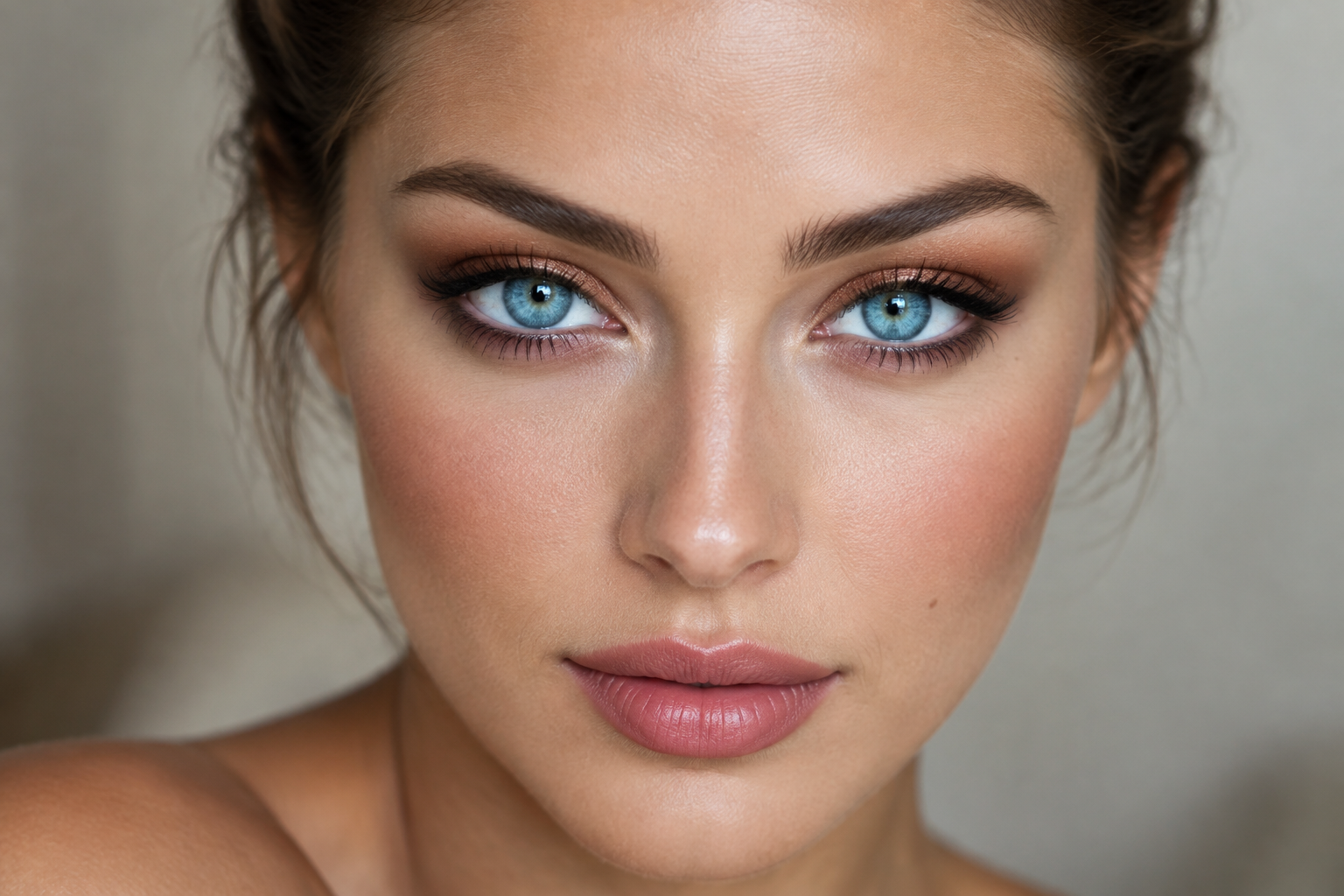
That copper shadow can look gorgeous in the palette, then feel surprisingly orange once it covers your whole lid. The trick with makeup for blue eyes isn't finding one supposedly perfect shade. It's choosing a color direction you enjoy, then controlling where the color and definition sit.
Bronze and warm brown offer contrast; peach and rose-brown feel softer; gray and charcoal give cooler definition. A light lid wash, concentrated outer-corner shading, and slim upper liner let you try each without overwhelming the eye.
Quick answer: Try bronze for warm contrast, rose-beige for a softer look, or gray-taupe for cool definition. Keep the darkest color near the outer corner and upper lashes, then check your placement with your eyes open.
Choose your makeup for blue eyes by the effect you want
You don't need a palette labeled for your eye color. Start with one main shadow and a deeper shade you already own. These combinations give you a useful direction, not a dress code.
Warm contrast: bronze, muted copper, and brown
Warm shades create a noticeable color contrast beside blue. For a wearable starting point, put bronze over the moving part of your lid, warm brown on the outer third, and a fine brown line along the upper lashes.
Muted bronze is an easier first experiment if bright copper feels too orange. If you love copper but want less of it, press a small accent onto the center of a neutral lid instead of taking it from lash line to crease.
Soft definition: peach, rose-beige, and taupe
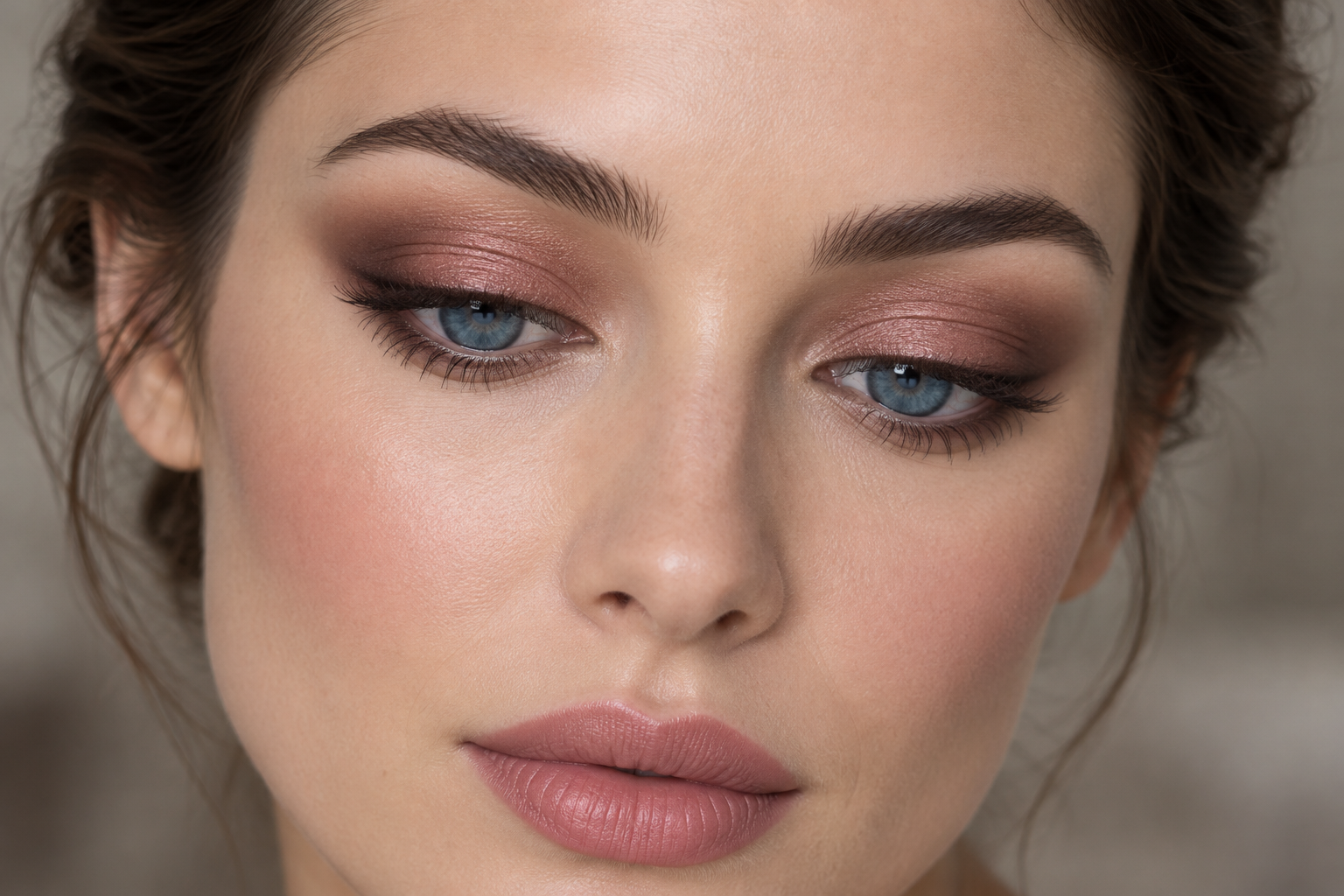
For a quieter everyday look, try peach or rose-beige on the lid, taupe at the outer corner, and brown liner. Choose a main shade that shows against your skin without looking much paler than you intended.
On deeper skin, a richer peach-brown or rose-brown can give the same soft effect without a chalky-looking base. On lighter skin, start with a sheer layer if the shade looks stronger than expected. “Soft” is about the contrast you create, not how pale the shadow is.
Cool definition: gray-taupe, charcoal, and navy
If warm colors aren't your thing, use gray-taupe on the lid and a little charcoal at the outer corner. Navy or charcoal liner keeps the look cool; a small silver accent adds reflection if you like shimmer.
This is also a useful starting point for blue-gray eyes, without treating them as a separate set of rules. Blue shadow isn't off-limits either. Try a muted blue close to the upper lashes with a neutral lid before committing to a full blue wash.
Use this placement routine with any color combination
The arrangement matters as much as the shade. Keep the broadest area relatively light, then add depth in smaller zones.
Place your main shade on the mobile lid.
This is the part that moves when you blink, below the crease. With powder, use a small flat brush to press color into place, then soften the upper edge with a clean blending brush. For a blendable cream, use the applicator its directions allow and soften the edge before it sets.
Add the deeper shade to the outer third.
Tap on a little, then blend slightly inward and upward. Keep most of the depth near the outside rather than sweeping it across the entire lid. You should still be able to see your main color through the center.
Draw a narrow upper-lash line.
Work in short strokes just above the lash roots, beginning around the middle and moving outward. Then connect toward the inner corner if you want. Brown gives gentler definition; black creates a stronger frame. Neither is automatically better for blue eyes.
Look straight ahead before adding more.
Relax your brows rather than lifting them to reveal the lid. Check how much shadow and liner is actually visible. A look that seems delicate with your eyes closed can become mostly eyeliner once they're open.
Finish with mascara, if you like.
Then assess the whole look in ordinary lighting. If you want more definition, deepen the outer corner or slightly strengthen the liner, rather than making every area darker.
With a smudgeable pencil, soften the liner's top edge using a small brush while it still moves. With a formula that sets quickly, shape one eye at a time according to its directions. Smudging isn't necessary for a polished result.
Use products intended for the eye area, not a lip pencil pressed into eyeliner duty. The FDA advises stopping an eye cosmetic that irritates, seeking medical advice if irritation persists, and avoiding application over an eye infection or inflamed surrounding skin.
Adjust the part that isn't working
You rarely need to remove everything and start again. First identify whether the issue is warmth, depth, or placement.
If copper feels too orange
Use less surface area, not just less product. A sheer orange-toned wash can still look very warm when it covers the entire lid.
Try taupe or neutral brown as the base and add copper only to the center. With powder, press on the accent and blend its edges without sweeping it across the lid. With cream, follow its blending directions. If you still dislike the warmth, switch to rose-brown or gray-taupe.
If the shadow disappears when your eyes open
Keep your eyes open and brows relaxed while checking the upper edge. Add a little matte or satin shadow just above the fold where it remains visible, then soften it into the surrounding skin.
Build that visible edge gradually. You don't need to take the color all the way toward your brow or compensate with a thicker wing. Keep any shimmer accent on the lid if that's where you want the reflection.
If liner takes over the look
Stop widening it and check the outer half first. Often, that section provides enough definition without a heavy line across the whole eye.
For your next application, try dark shadow pressed along the upper lashes with a small angled brush. It gives a softer boundary than a crisp liquid line. Leave the lower lash line bare initially; you can add a little shadow to its outer third later if you want a smokier finish.
Make your next try a small one
Before buying another palette, try one combination with what you have: a main lid shade, a deeper outer-corner shade, and a fine upper line.
Check it with your eyes open in familiar lighting. Then change only one thing: swap copper for bronze, reduce the liner width, or move the blended shadow edge slightly higher. That way, you'll learn whether it's the color or the placement you prefer, without auditioning your entire makeup bag at once.
