
Your nose feels coated in moisturizer, but your cheeks still feel tight. Switching to an oil-control cleanser might tame the shine while making those cheeks even less comfortable. The answer isn't necessarily another shelf of products.
A useful combination skin routine keeps gentle cleansing and sun protection consistent, then adjusts moisturizer by area. Start with one comfortable formula and change where you apply it before buying a second.
Quick answer: Cleanse gently morning and evening, give dry areas more moisture than oily ones, and apply broad-spectrum SPF 30 or higher across exposed skin each morning. Extra treatments are optional, not part of the combination-skin entry fee.
Notice where your skin needs something different
Combination skin means you have both oily and dry areas. The forehead, nose, and chin, often called the T-zone, commonly feel oilier, but your face doesn't have to follow that exact map.
Notice how each area feels during your normal day: tight after cleansing, comfortable under moisturizer, or shiny by lunchtime. Shine is an appearance detail, not evidence that your face needs another wash. Combination skin also isn't automatically acne-prone skin.
Keep your observations simple. You don't need to classify every pore; you're looking for places that consistently need a lighter or richer approach. Revisit that map when the weather changes rather than treating your skin-type label as permanent instructions.
Build your morning combination skin routine
Three steps make a useful starting point.
Cleanse without chasing a squeaky finish.
Use a gentle, nonabrasive cleanser, lukewarm water, and your fingertips. Work over the whole face without scrubbing the shiny center, then pat dry with a soft towel. The American Academy of Dermatology's face-washing guidance recommends gentle washing morning and evening and after heavy sweating, rather than repeatedly washing away oil.
Moisturize while skin is slightly damp.
Begin on the areas that feel dry, then use a lighter layer elsewhere if needed. A lightweight lotion may be comfortable across your whole face; you don't have to introduce separate textures immediately. Applying moisturizer to damp skin is part of the AAD's simple, budget-conscious skin-care advice.
Finish with sunscreen before makeup.
Choose broad-spectrum SPF 30 or higher, with water resistance when you'll be swimming or sweating. Apply it generously according to the label over exposed skin, including your nose, ears, and neck. The AAD recommends this protection in its skin-care guidance for adults in their 20s.
Moisturizer placement can vary; sunscreen coverage shouldn't. If your nose looks shiny, don't solve that by applying less sunscreen there. Look for a more comfortable sunscreen texture instead.
A moisturizer with broad-spectrum SPF 30 or higher can simplify the morning if it suits your skin and you apply the labeled sunscreen amount. Don't mix separate sunscreen into moisturizer. The FDA advises reapplying at least every two hours outdoors, following swimming and sweating directions, and using shade and protective clothing too.
Keep the evening routine equally manageable
At night, focus on removing the day's products and leaving your skin comfortable, not adding steps simply because there's no makeup going on afterward.
Remove makeup and cleanse gently.
If your cleanser removes your makeup effectively, a second cleansing step isn't automatically necessary. When a separate remover is needed, use it as directed, then cleanse without extra scrubbing. Waterproof mascara doesn't need to turn into a whole-face deep-cleaning project.
Give dry areas the moisture they need.
Apply moisturizer to slightly damp skin, concentrating on tight areas. If your usual lotion isn't enough for your cheeks, a richer cream there is an option. You don't need to spread that same rich layer across an already-comfortable forehead.
Keep treatments concern-led.
Toner, exfoliating acids, serums, and retinoids aren't required just because your skin has mixed needs. If you use a prescribed treatment, follow your clinician's directions rather than changing its placement or order to match a generic routine.
The evening goal is comfort, not a completely matte face. A little surface sheen from moisturizer isn't a reason to wash again.
Adjust moisturizer placement before changing everything
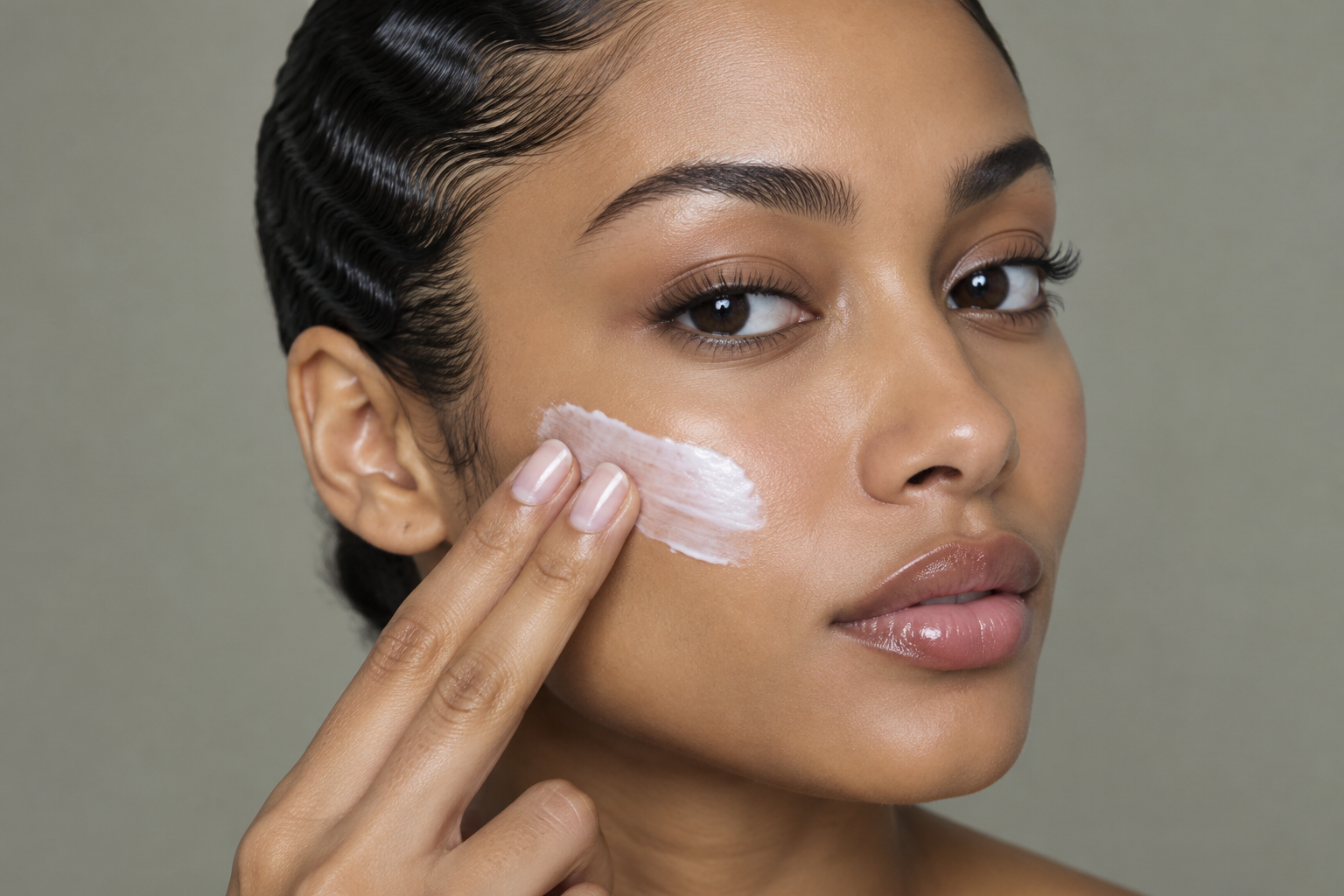
The most useful experiment is also the least glamorous: apply the moisturizer you already tolerate more deliberately.
Place it on your dry cheeks first and spread it over those areas. Then apply a lighter layer to the forehead, nose, or chin only where needed, rather than automatically distributing the same amount everywhere.
If the cheeks still feel uncomfortable, consider a richer texture there. Gels generally feel lighter, while creams tend to feel richer, but texture names aren't a complete description of a formula. A gel that suits your nose may not provide enough comfort for dry cheeks.
The AAD's combination-skin moisturizer guidance allows some oily areas to go without a separate moisturizer, while its broader advice recommends moisturizing oily skin. Practically, don't make either skipping your nose or coating your whole face a rigid rule. Use a light layer where it helps and adjust if an area feels coated.
This is about matching comfort, not promising to “balance” oil production. Buying two moisturizers is optional; using one thoughtfully is a sensible place to start.
Handle midday shine without restarting your routine
If shine bothers you, try a targeted cosmetic touch-up rather than another cleanse.
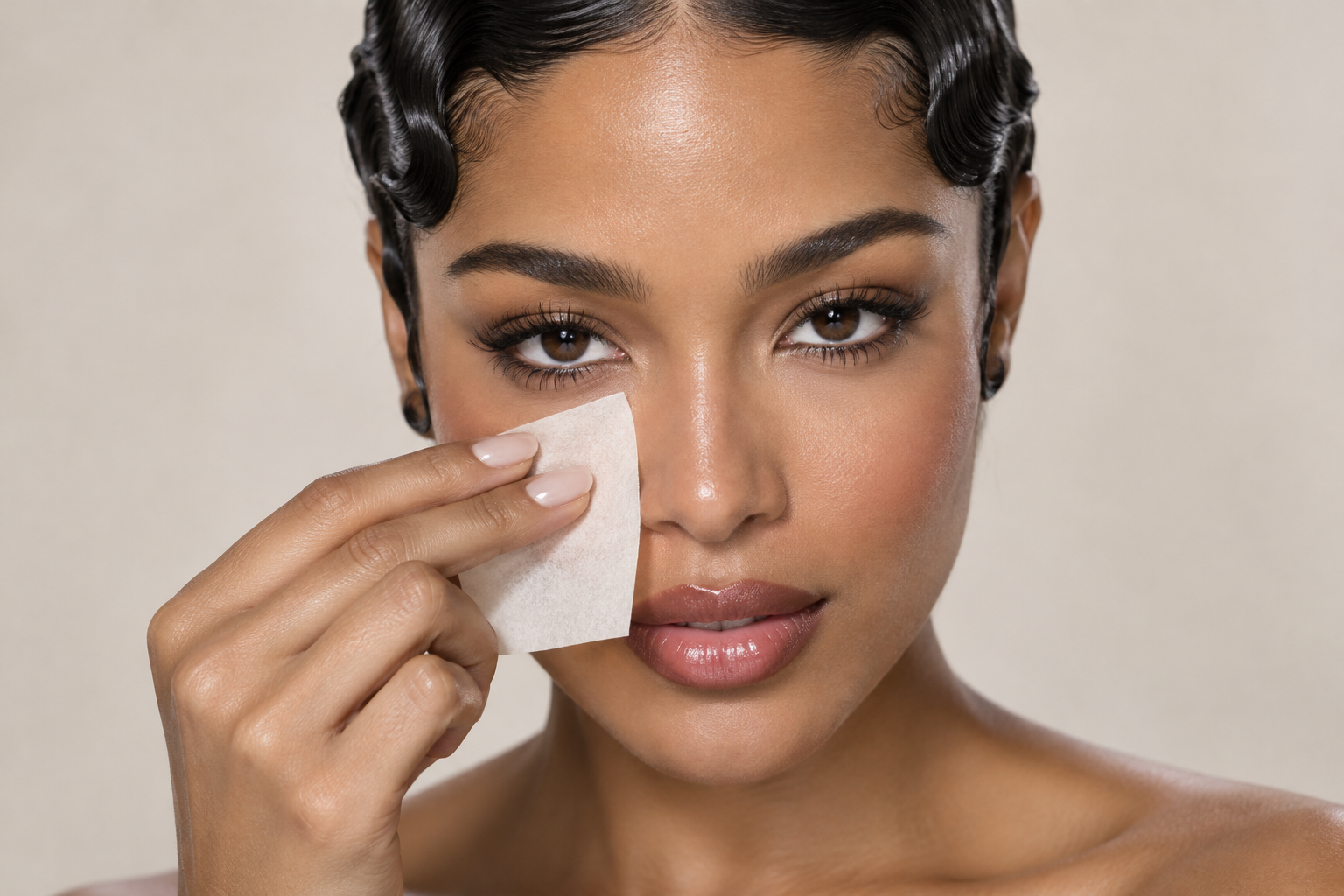
Press blotting paper against the shiny area, hold briefly, and lift. Don't rub it across your cheeks or drag it over your whole face. The AAD recommends this press-and-hold approach in its oily-skin care guidance.
Leave comfortable, non-shiny areas alone. Blotting doesn't treat acne or replace sunscreen reapplication, and you shouldn't assume your sunscreen remains undisturbed afterward.
Oil-control acids are optional and can irritate. If you're considering one for a specific concern, follow its label rather than automatically applying it to dry cheeks too. Flakes aren't a cue to scrub harder.
Choose new products slowly, and know when to stop
Before adding anything, ask what your current routine is missing:
- Cheeks feel tight: Adjust moisturizer placement or try a richer texture there.
- Center feels coated: Consider a lighter texture or less separate moisturizer in that area, not less sunscreen.
- Breakouts influence your choices: Oil-free or noncomedogenic labels can help narrow options, but they don't guarantee a breakout-free experience.
- Something stings or causes a rash: Stop experimenting with layers and address the suspect product.
Change one variable at a time so you can judge the difference. For a new product, the AAD suggests testing a quarter-sized area on the arm or elbow twice daily for seven to 10 days, respecting the product's normal contact time. This doesn't guarantee facial tolerance.
Wash off and discontinue a nonprescription product that causes a reaction. Persistent or worsening dryness, painful cracking, bleeding, recurring rash, or significant reactions deserve a dermatologist's advice, not another “combination skin” purchase.
For your next routine, keep the basics steady and start moisturizer on the driest area first. See what that placement change does before giving another bottle a spot on your shelf.
