
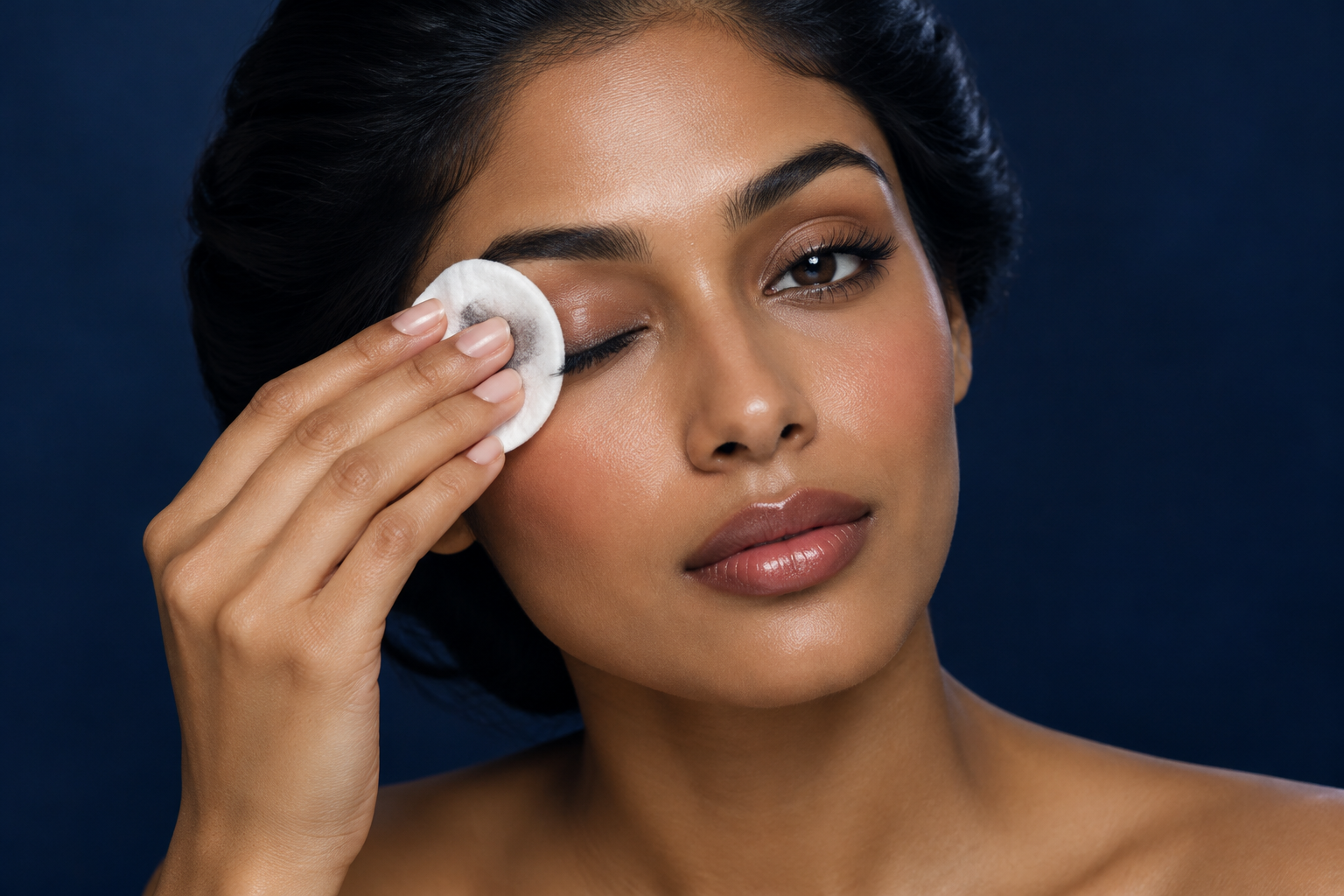
You’ve washed your face, but there’s still mascara under your eyes, and your cheeks feel tight. The answer isn’t another round of scrubbing. A useful night skin care routine starts with removing makeup gently, cleansing, and moisturizing. Once those basics feel comfortable, you can decide whether a treatment deserves a place.
“Then choose your extras” is about priorities, not literal layering: many treatments go before moisturizer, while some drying retinoids may call for moisturizer first.
Quick answer: Remove makeup if you’re wearing it, cleanse gently, and moisturize. On treatment nights, follow the treatment’s directions, usually between cleansing and moisturizer. Extra bottles aren’t required.
Start with a simple night skin care routine order
Think of your evening routine as a short sequence, with one optional slot:
- Remove makeup, including eye makeup, with a suitable remover.
- Cleanse gently to wash away remaining residue.
- Apply a planned treatment, if you use one, following its directions.
- Moisturize, adjusting the order if your treatment instructions require it.
The American Academy of Dermatology’s general layering guidance puts medication or treatment after cleansing and before moisturizer. Prescription instructions take priority over any generic routine.
On a foundation-only night, skip step three. That’s a complete routine, not the unfinished version.
Remove stubborn makeup without making your skin do the work
Long-wear foundation and waterproof mascara need a removal method suited to their formulas. If makeup remains after washing, reconsider the remover rather than pressing harder with a towel.
Micellar water, cleansing balms, and oil-based cleansers are possible options, but they don’t all work the same way:
- Micellar water: Use it as directed, typically with a saturated pad. A dry, scratchy pad makes gentle removal harder.
- Balms and cleansing oils: Check whether the formula starts on dry skin and whether you should add water before rinsing. Don’t assume every balm has identical directions.
- Eye-makeup remover: Choose one labeled for the eye area and suitable for the makeup you’re wearing. Keep it out of your eyes and avoid tugging at the lids.
Include the places that are easy to miss: the hairline, sides of the nose, and jawline where foundation may have been blended. You’re removing residue, not polishing the skin beneath it.
The AAD advises removing makeup before bed and following with a gentle cleanser. Its oil-free remover recommendation is specifically for acne-prone skin, not proof that every oil-based remover causes breakouts.
Wipes can be a fallback when needed, but they’re not the ideal everyday substitute for gentle cleansing.
Cleanse gently, then stop
Use lukewarm water and apply a gentle, non-abrasive cleanser with your fingertips. Rinse thoroughly, then pat with a soft towel rather than rubbing. These are the essentials of the AAD’s face-washing guidance.
Pay attention to the edges of your face when rinsing. Cleanser can linger near the hairline or jaw even when the center of your face feels rinsed.
You don’t need a brush, scrub, or repeated washing to make the step count. Tight, squeaky skin isn’t the finish line.
A separate removal step is useful when makeup needs it, but double cleansing isn’t compulsory on every bare-faced evening. Cleveland Clinic notes that extra cleansing can dry skin and isn’t routinely necessary for people who aren’t wearing makeup. Consider what actually needs removing, including persistent sunscreen residue, rather than following a two-cleanser rule automatically.
Make moisturizer the reliable final step
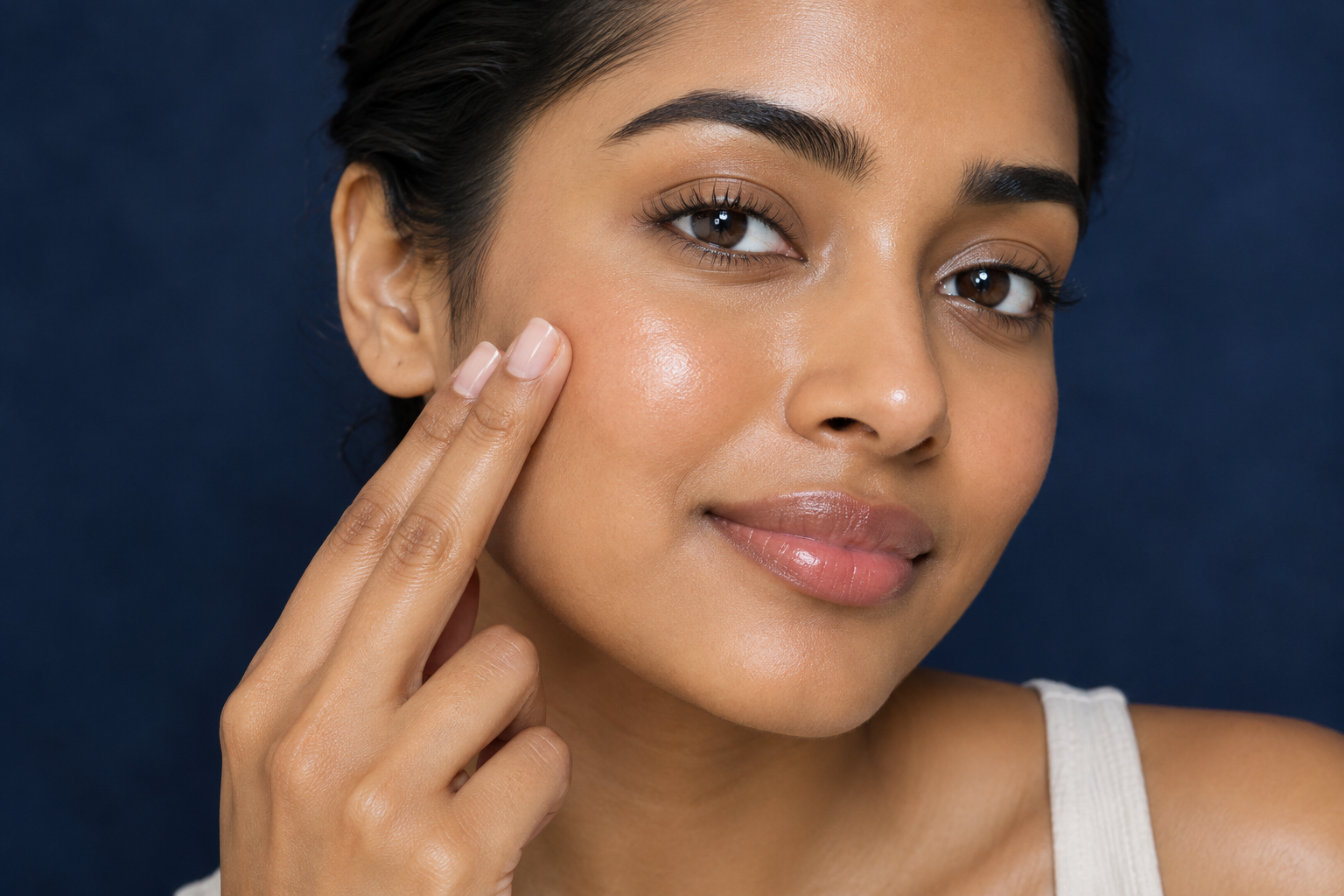
On a night without treatment, gently pat away excess water and apply moisturizer while your skin is still slightly damp. You want a little moisture left, not water dripping down your neck.
The AAD recommends damp-skin moisturizing for dry skin. This makes “moisturize after washing” more useful than waiting until your face feels tight.
Choose a texture you’ll comfortably use. A lighter lotion may feel better if rich formulas bother you; a fragrance-free cream may suit skin that feels dry. A familiar moisturizer doesn’t become unsuitable just because its label doesn’t say “night cream.”
If you’re applying a treatment, don’t automatically use the same damp-skin approach. Some treatments have specific drying or waiting instructions. Follow those first, then moisturize in the recommended order.
Choose extras for a reason, not an empty spot on the shelf
Before adding something, name the job you want it to do. Is it part of an acne treatment plan, an optional texture-focused product, or simply extra hydration? If you can’t identify its purpose, you can leave it out.
Retinol and other retinoids
Retinoids aren’t an age-based obligation. If you choose one, follow its directions for amount, frequency, and application conditions instead of borrowing a schedule from someone else’s routine.
For dryness, the AAD describes applying moisturizer first as an option. That doesn’t make a three-layer “retinol sandwich” mandatory, and prescription instructions still come first.
Avoid retinoids during pregnancy. If you’re pregnant, trying to conceive, or breastfeeding, review treatments with your clinicians rather than assuming an over-the-counter formula is automatically appropriate.
Exfoliants
Exfoliation is optional, not a nightly cleaning requirement. A rinse-off exfoliant and a leave-on acid have different directions, so don’t treat them as interchangeable.
Be particularly cautious about adding exfoliation when you already use retinoids or benzoyl peroxide. The AAD warns that aggressive exfoliation can irritate skin and worsen pigmentation, especially in darker skin tones.
Nighttime use doesn’t cancel sun sensitivity. The FDA notes that AHAs may increase sensitivity during use and for a week afterward. Keep daytime sun protection in place, including broad-spectrum SPF 30 or higher when outdoors.
Toners, serums, eye creams, and masks
None is a required category. A hydrating serum may feel pleasant, but you don’t need one simply because you own a cleanser and moisturizer.
Check ingredients before adding another active product: your moisturizer or toner might already contain one. Masks aren’t automatically gentler, either. Follow the label’s rinse-off or leave-on directions.
Make the tired-night version easy to reach
Keep your makeup remover, gentle cleanser, and moisturizer together. Put optional treatments somewhere separate so grabbing the essentials doesn’t turn into a bottle-by-bottle negotiation at bedtime.
If your skin is stinging or irritated, don’t add cosmetic extras to “finish” the routine. Stop the irritating cosmetic product and seek advice if the problem persists. Persistent acne, troublesome dryness, or an unexplained reaction deserves dermatologic guidance, not more layering. For prescribed treatments, ask your clinician about adjustments.
Your bedtime decision shortcut: remove what you wore, wash gently, moisturize, and use only the treatment you deliberately planned. The rest can stay on the shelf tonight.
