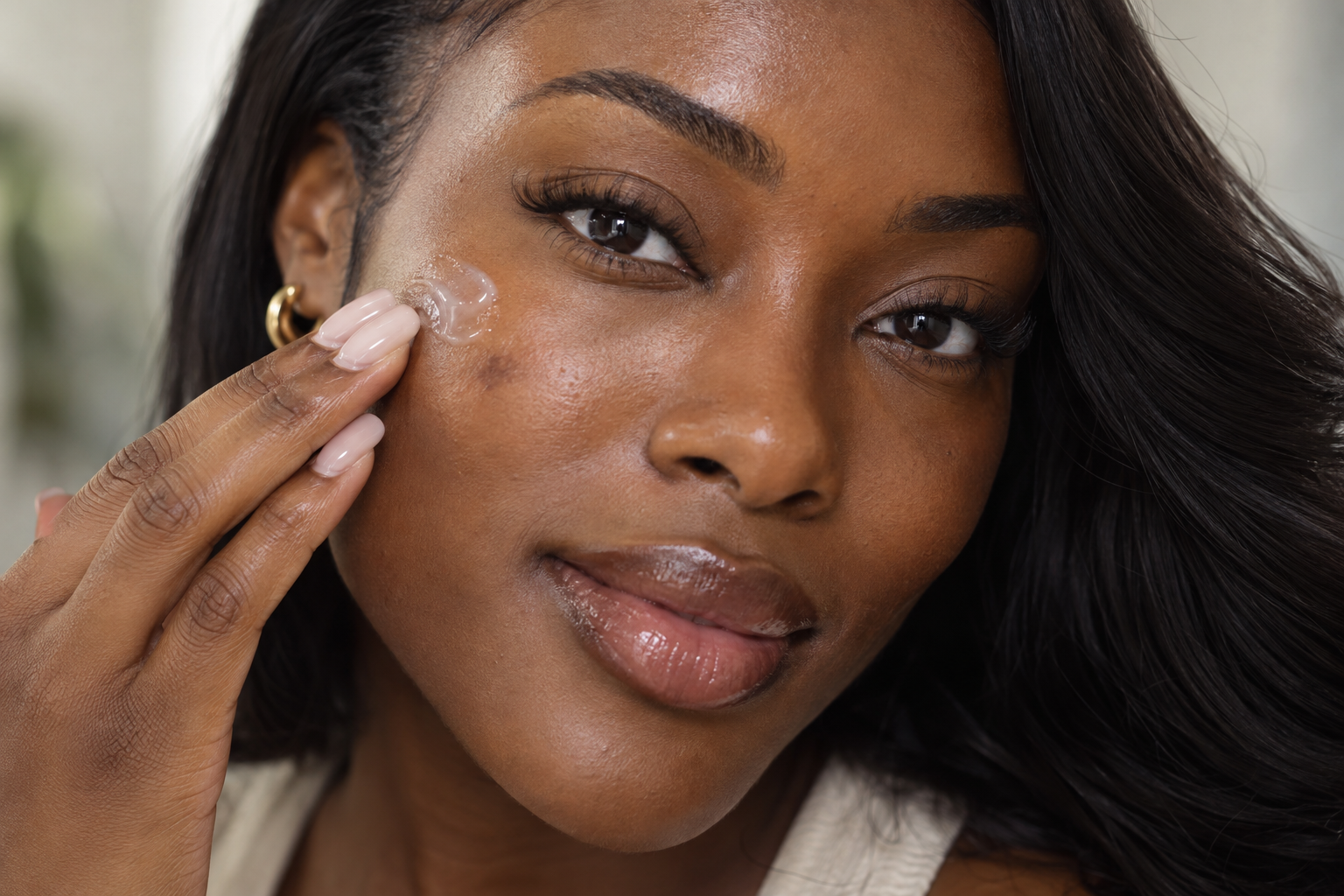
The pimple has flattened, but its dark mark is still showing through your usual makeup. Before adding another brightening serum, check the basics: a gentle routine can reduce irritation, support acne treatment, and help limit sun-related darkening. It won’t guarantee that existing marks disappear, but it gives your skin a less irritating foundation for care.
Quick answer: For post-breakout hyperpigmentation on Black skin, prioritize gentle cleansing, moisturizer, daily sun protection, and appropriate acne care. Targeted treatment may help, but more exfoliation isn’t necessarily better.
Understand what’s lingering after the breakout
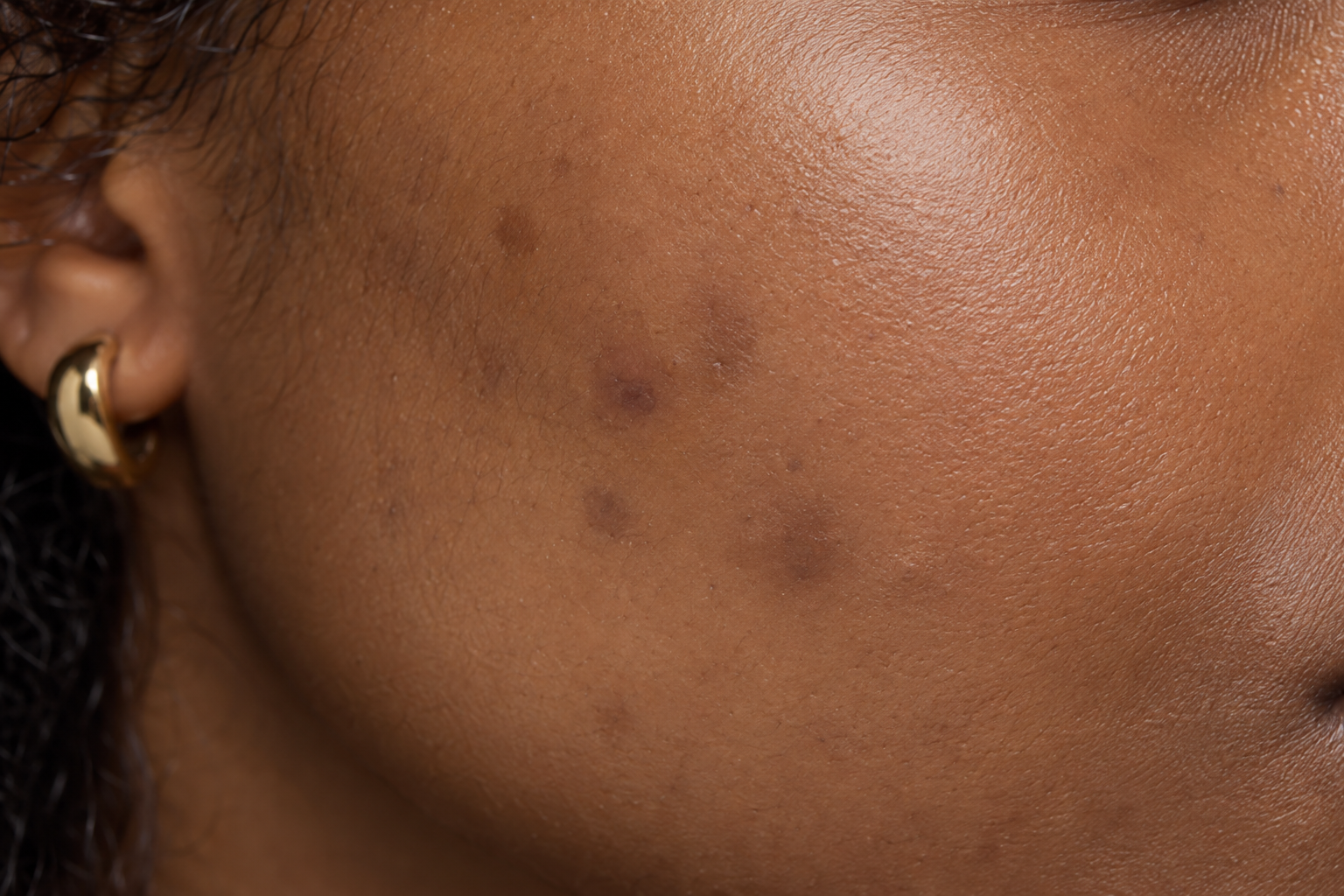
Post-inflammatory hyperpigmentation, often shortened to PIH, is extra pigment left after inflammation or injury. Acne is one possible trigger. According to DermNet, these marks can affect any skin tone but are often more pronounced and persistent in darker skin.
Color and texture are different concerns. A flat dark mark after a breakout usually isn’t the same as an indented or raised acne scar, although both can occur together. A lingering mark also doesn’t necessarily mean that the original pimple is still active.
The goal, if you want to address the marks, is less noticeable post-breakout discoloration, not a lighter natural complexion. Black skin includes many shades and skin types; your routine should reflect your skin’s comfort, not assumptions about how resilient or oily it “should” be.
Build a routine that doesn’t keep irritating your skin
The American Academy of Dermatology (AAD) recommends addressing acne and dark marks together. Otherwise, new breakouts can keep leaving new marks while you’re concentrating only on older ones.
Cleanse without the extra friction
Use a mild cleanser, lukewarm water, and your fingertips. Skip grainy scrubs, cleansing brushes, and vigorous washcloth rubbing over breakout-prone areas. Pat dry rather than polishing your face with the towel.
A squeaky-tight finish isn’t the aim. If cleansing consistently leaves your skin uncomfortable, reassess the formula rather than assuming that sensation means a deeper clean.
Use moisturizer for comfort, not as a fading treatment
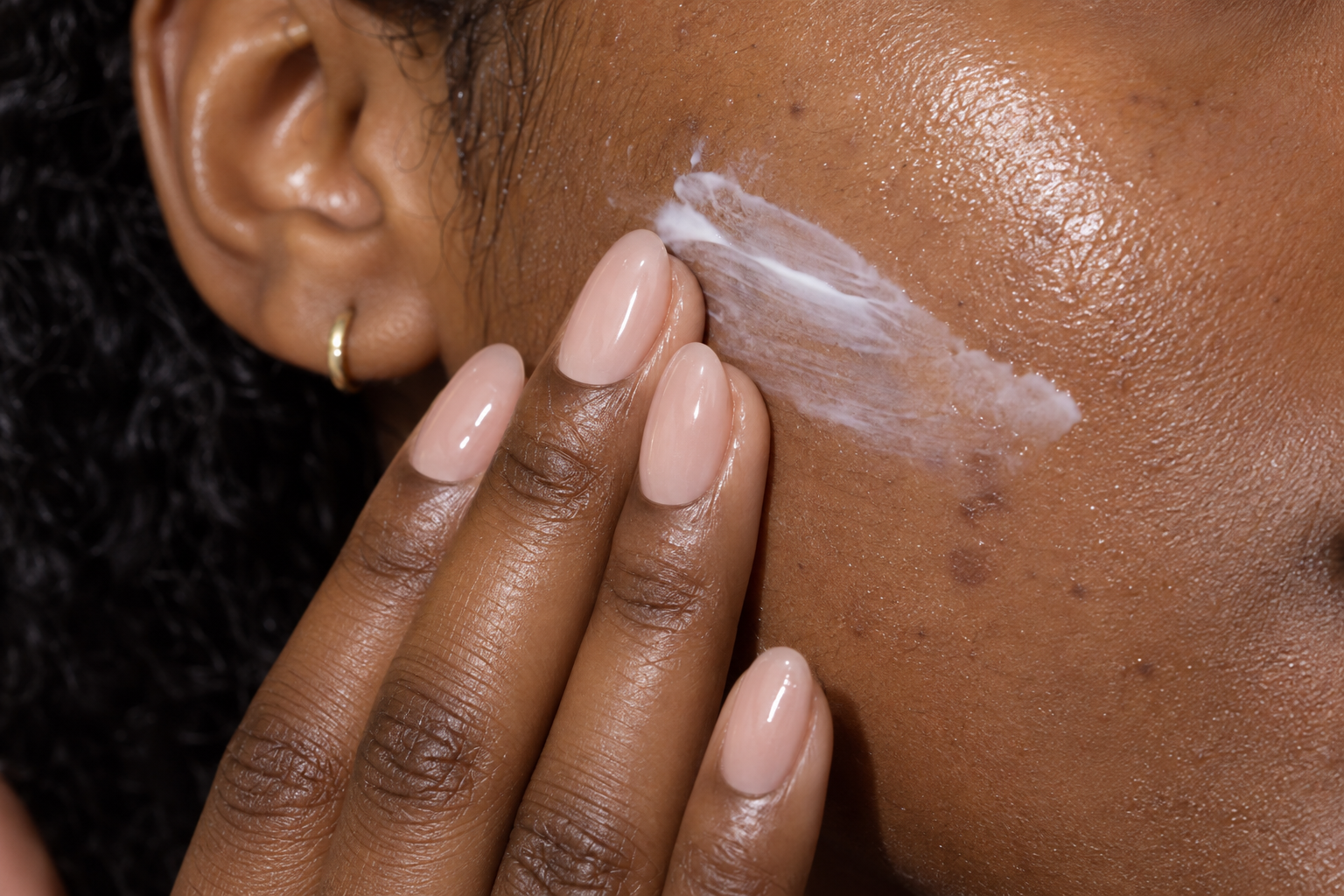
Choose a moisturizer labeled non-comedogenic, especially if you’re acne-prone. It supports hydration and can make drying acne treatments easier to tolerate; it doesn’t directly remove pigment.
Here’s a useful application detail: after washing, leave a little moisture on your skin before applying moisturizer. The AAD explains that this helps retain water. That’s a moisturizer technique, not permission to apply every treatment to damp skin. Medication instructions take priority.
Make sunscreen your morning finish
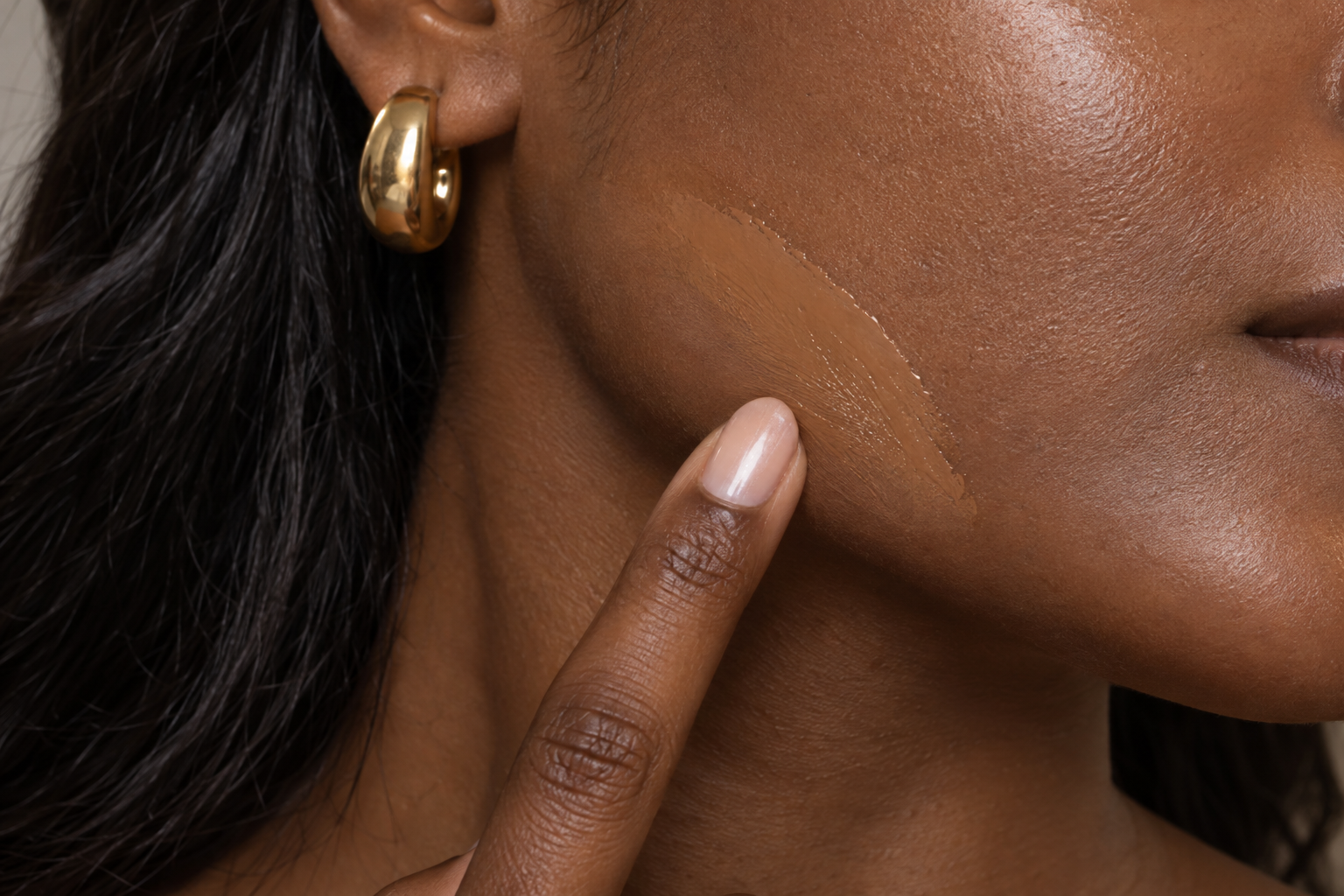
Black skin needs sun protection too. Choose broad-spectrum, water-resistant SPF 30 or higher, and use shade and a hat outdoors. Follow the sunscreen’s application directions, reapplying at least every two hours outdoors and after swimming or sweating as directed.
For dark marks, consider a tinted sunscreen containing iron oxide. The AAD’s dark-spot guidance explains that sunlight’s visible light can worsen pigmentation and recommends checking the inactive ingredients for iron oxide. SPF alone doesn’t tell you about visible-light protection.
The tint still needs to suit you. Check it along your jaw in daylight: a gray or orange cast can make a formula difficult to wear consistently. Tinted formulas aren’t all equivalent, and foundation isn’t a substitute for sunscreen.
Keep evenings simple
Cleanse, follow your existing acne-treatment directions, and moisturize in the order those directions specify. Gentle care doesn’t mean abandoning an effective treatment.
Avoid picking or squeezing breakouts. Also resist adding a scrub, peel, and new serum because one mark seems especially stubborn. Irritation can create more discoloration, which is a particularly frustrating return on all that effort.
Decide whether a targeted treatment belongs
Azelaic acid and retinoids are among the options used for dark spots, but they aren’t interchangeable or automatically suitable for everyone. If you already use acne medication, ask a dermatologist or pharmacist whether an additional treatment fits before layering it in.
Introduce one optional change at a time so you can tell what your skin tolerates. Follow its directions rather than inventing a stronger schedule. Stop a cosmetic that burns or stings; ask your prescriber about reactions to prescribed treatment.
Avoid retinoids during pregnancy. If you’re trying to conceive or breastfeeding, discuss treatment choices with your clinician; the AAD’s pregnancy guidance covers these considerations.
Know when a routine needs professional backup
Fading varies with factors including pigment depth and repeated inflammation. Sunscreen and moisturizer support care, but they can’t promise a deadline.
Seek dermatology advice for deep or painful breakouts, scarring, persistent irritation, or marks that aren’t improving to your satisfaction. Before peels or lasers, choose a dermatologist experienced with darker skin because procedure-related irritation can worsen pigmentation. Have unexplained, changing, or bleeding spots assessed rather than assuming they’re acne marks.
Tonight, audit what you already own: a comfortable cleanser, a suitable moisturizer, wearable sunscreen, and any directed acne treatment. Remove the irritating extras before deciding you need another bottle.