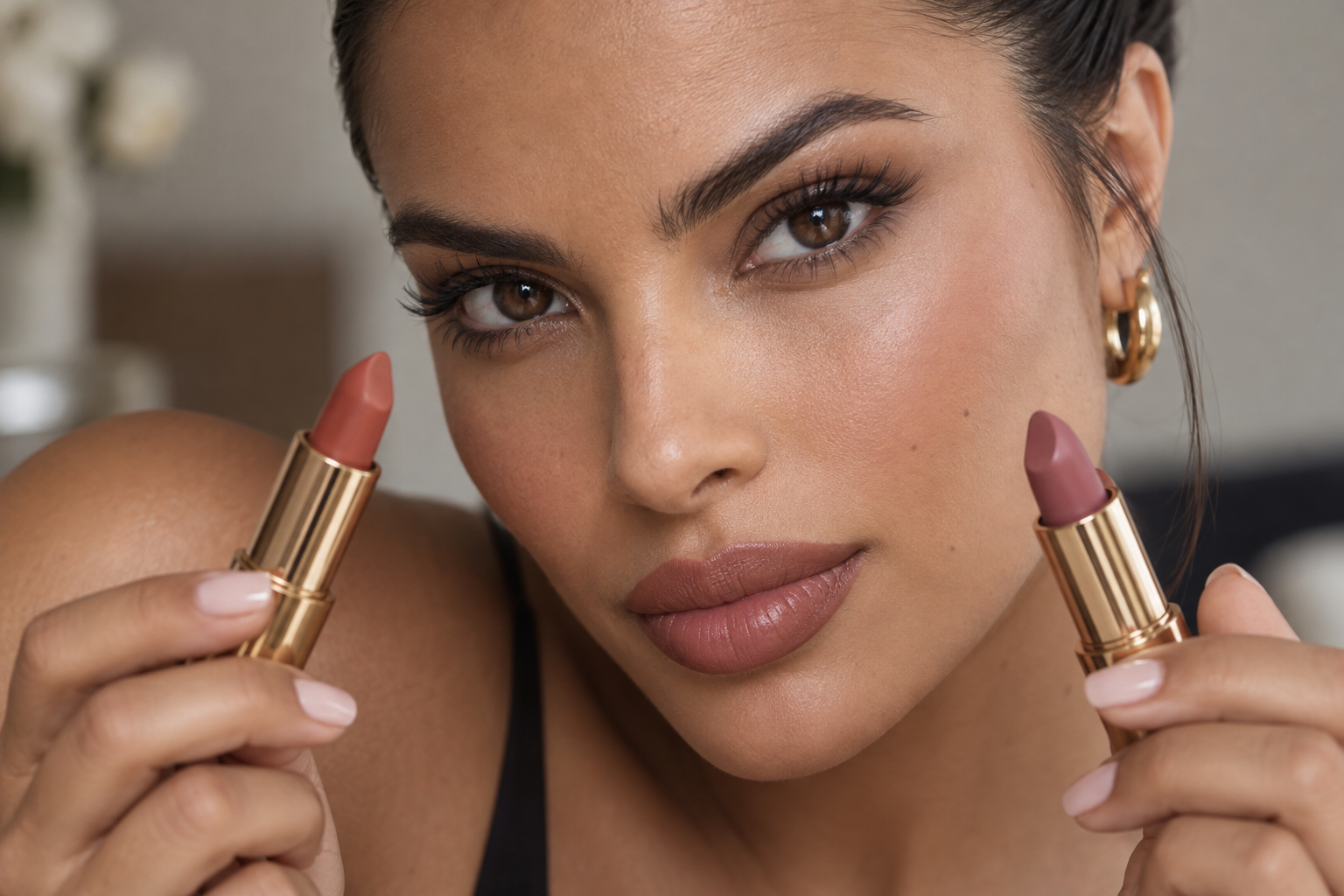
That rose nude looked lovely in the swatch, so why does it look peachy, pale, or almost purple on your lips? Choosing lipstick shades for medium skin works better when you consider undertone and your natural lip color, rather than complexion depth alone.
Start with warm rose or terracotta for warm undertones, rosy mauve or berry for cool undertones, and balanced rose-brown for neutral coloring. These are comparison points, not a dress code.
Quick answer: Choose a shade family by undertone, then check its depth and coverage on your lips. If something feels off, change one thing: go deeper, rosier, warmer, or more muted.
Separate your skin depth from your undertone
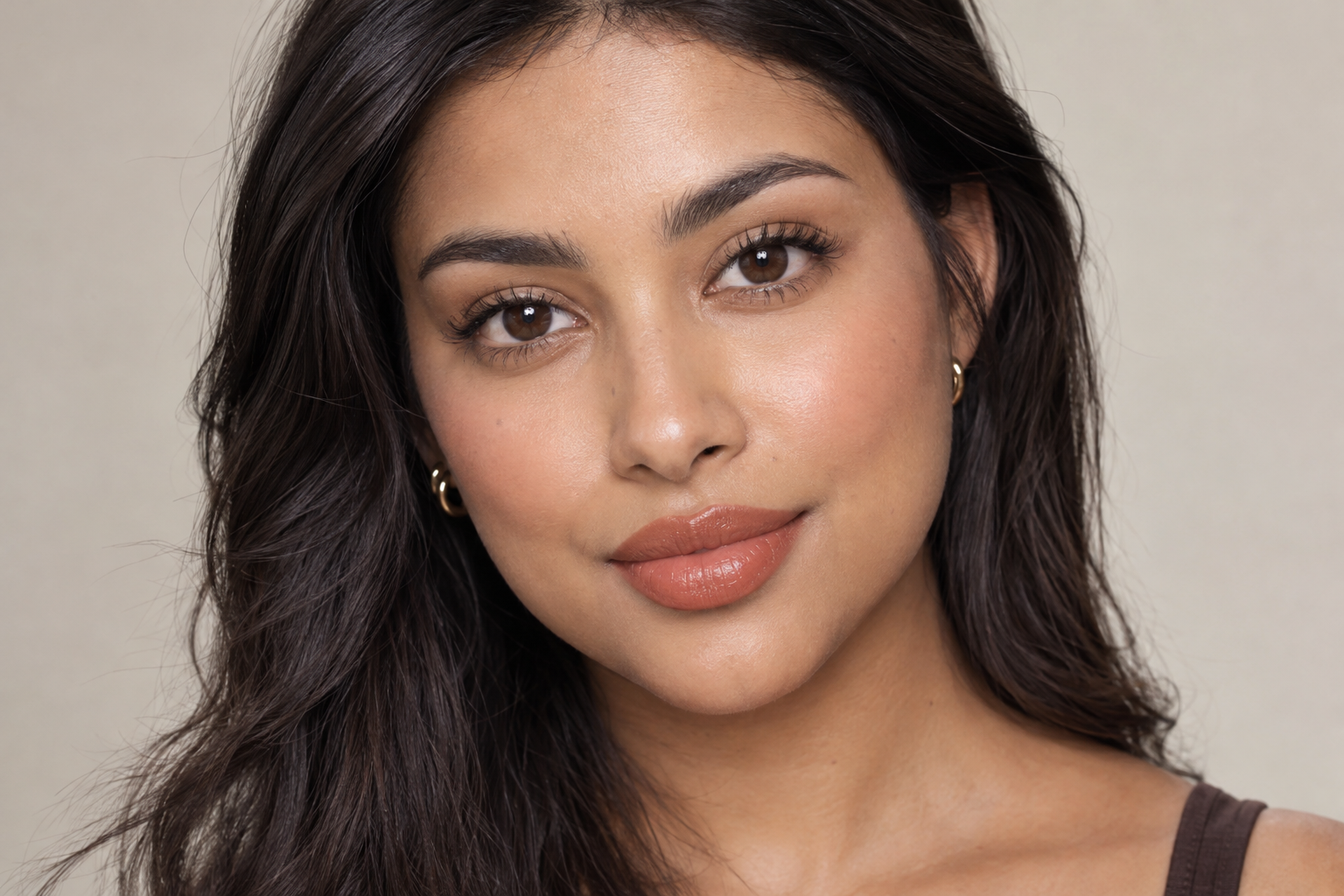
“Medium” describes skin depth. It doesn't tell you whether your coloring leans golden, rosy, neutral, or olive.
Undertone describes the underlying cast of your complexion. Warm coloring may look golden or peachy; cool coloring may look pinkish or rosy; neutral coloring may sit between them. Olive coloring can have a greenish or grayish cast and occurs across different skin depths. It isn't automatically warm.
You don't need to settle your undertone forever before wearing lipstick. If you're unsure, compare a peach-brown and a rose-brown of similar depth. Which gives you the effect you prefer?
Skip the pressure to pass a vein-color or jewelry test. Your response to actual lipstick is more useful for this decision than a label you can't confidently identify.
Lipstick shades for medium skin: where to start
Use this menu to narrow your options, whether you're browsing your makeup bag or considering a new shade.
| Your coloring | For a softer, everyday lip | For more color or contrast |
|---|---|---|
| Warm-leaning | Peach-brown, caramel rose, warm rose-brown | Terracotta, coral-red, brick |
| Cool-leaning | Rosy mauve, pink-brown, cooler rose-brown | Raspberry, berry, blue-leaning red |
| Neutral or uncertain | Balanced rose, rosewood, pink-brown | Balanced red, soft berry |
| Olive | Muted rose-brown, caramel, brown-berry | Terracotta, brick, deeper berry |
The olive row deliberately spans warmer and cooler choices. A muted brown-berry and a terracotta can create very different looks, and either may appeal to you.
Shade names aren't standardized, either. One brand's “rosewood” might look pink; another's might look distinctly brown. Look at the actual color rather than trusting the name to do all the work.
For a nude lip, start near your bare-lip depth, not automatically with beige. Rose-brown, soft brown, or mauve-brown may give you the understated effect you're after without looking noticeably pale. A lighter nude is still an option if you want that contrast.
Let your natural lip color join the conversation
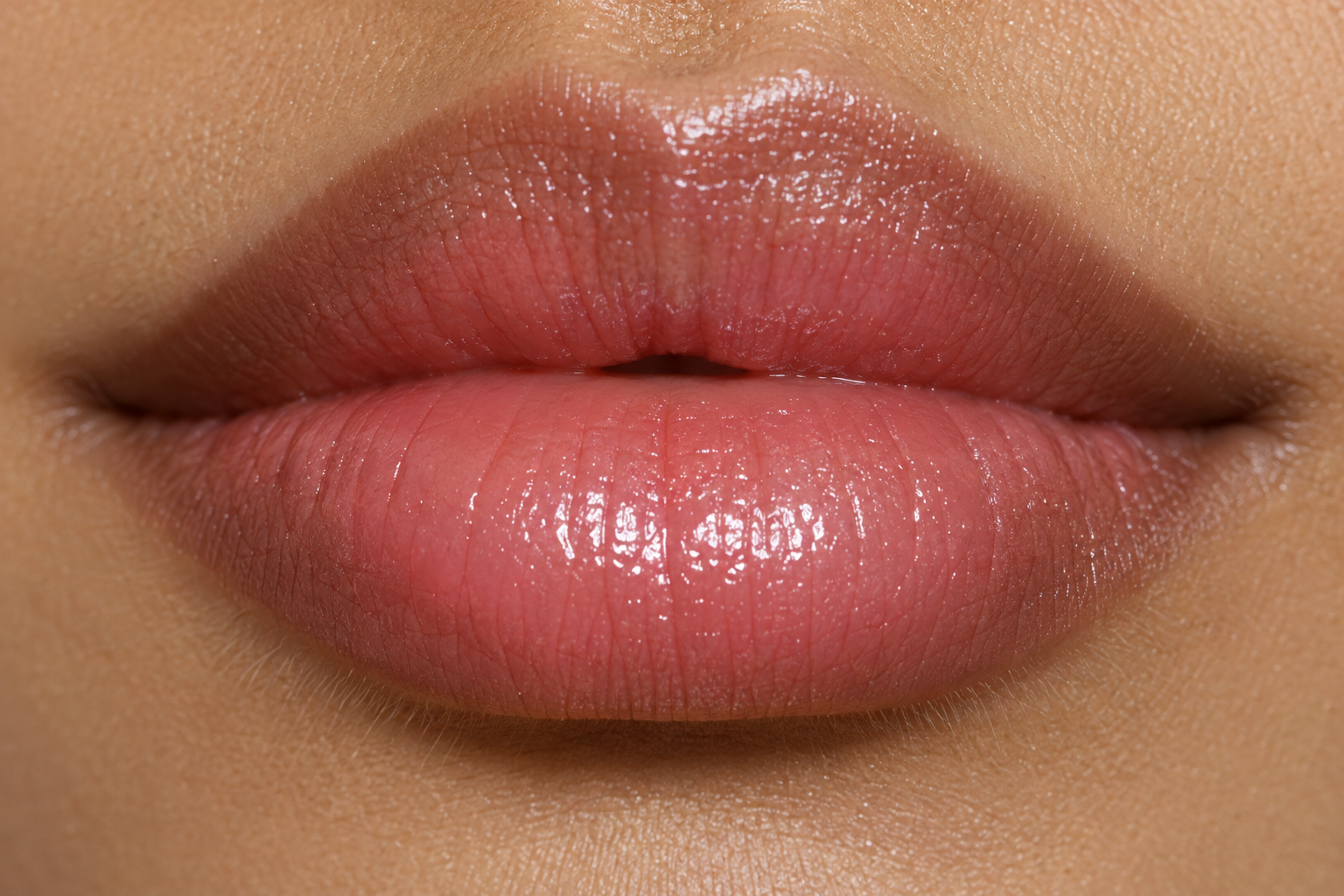
Your lips aren't a blank canvas. Their natural pink, brown, mauve, or mixed tones can remain visible through lipstick, especially with sheer coverage. That's one reason the same tube can look different on two people with similar skin.
Before applying anything, notice both the center and border of your lips. If they're different colors, a sheer lipstick may leave that variation visible. You don't need to conceal it.
Coverage and finish are separate choices:
- Sheer coverage lets more of your natural lip color show.
- Opaque coverage makes the lipstick's pigment more dominant.
- Matte, satin, and glossy describe finish, not a guaranteed level of coverage.
A shiny lipstick can be strongly pigmented; a matte formula isn't necessarily fully opaque. Check both qualities when comparing shades.
Compare two shades without confusing the result
Start with two lipsticks you already own, ideally in the same formula and similar depth. Comparing a pale sheer peach with a deep matte berry won't tell you much about temperature alone.
- Decide what you're choosing for. An understated everyday lip and a statement red don't need to meet the same criteria.
- Apply one shade, then view your whole face. Start near a window in indirect daylight, then check the lighting where you'll wear it. Don't judge only from a close-up of your mouth.
- Remove it before trying the second. Layering one shade over another changes the comparison. If repeated removal makes your lips uncomfortable, pause.
- Compare coverage where the formula allows. For a blendable bullet, tap color onto the center and spread it outward with a lip brush, including toward the border. Compare that light layer with fuller coverage.
For a setting liquid lipstick, follow its application directions and assess the intended finish. Don't keep rubbing or blotting once it begins setting.
Stop using a lip product that burns or stings, as the American Academy of Dermatology advises.
Change the mismatch, not your whole makeup bag
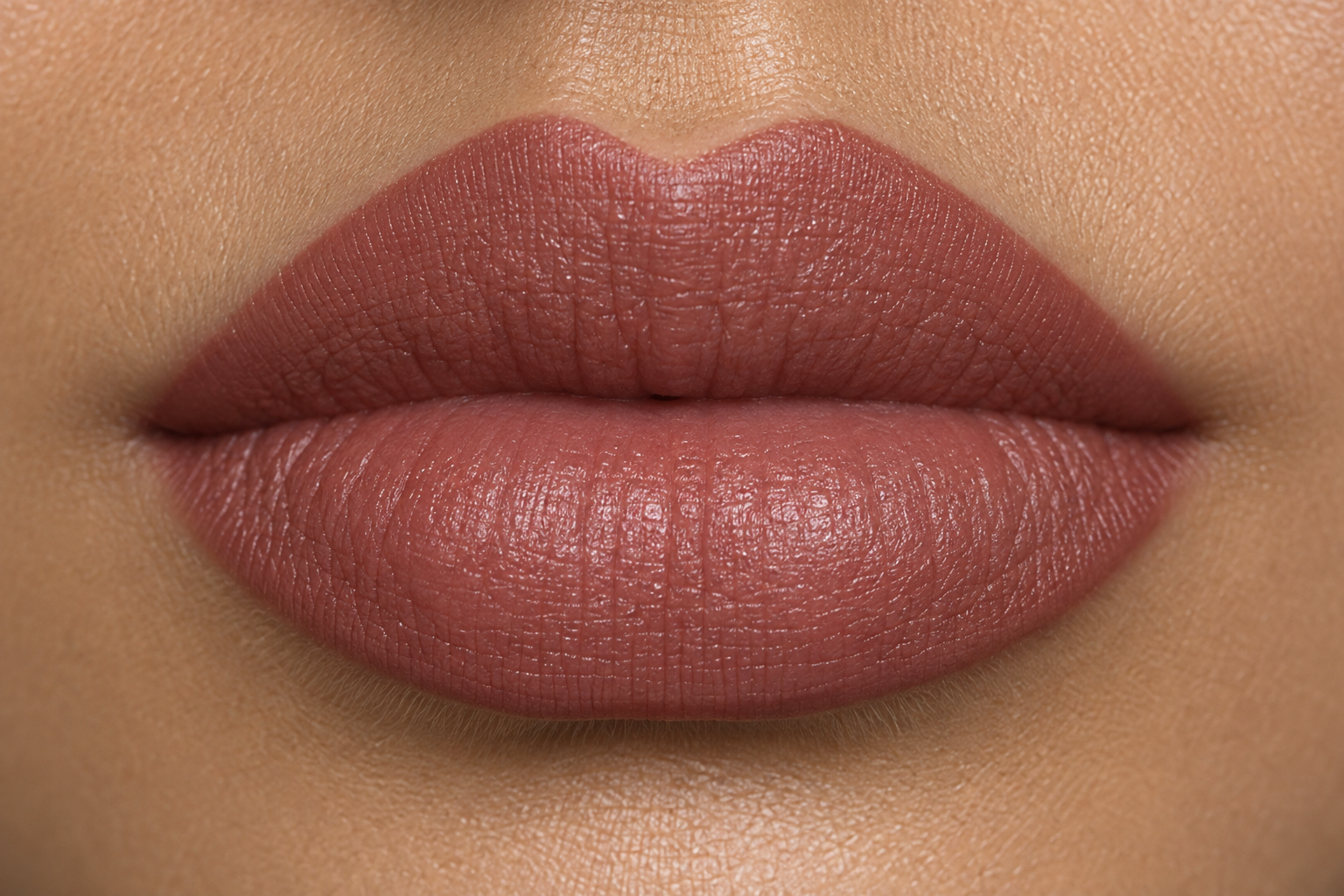
Use what you see to choose your next comparison:
- Too pale or chalky? Try a deeper version before abandoning the color family.
- Too orange? Compare a rosier version at similar depth.
- Too purple? Try a warmer rose-brown.
- Too vivid? Compare a muted version, or lighter coverage if the formula allows.
Keep one small note: “rose-brown, medium depth, sheer” tells you far more than “nudes don't suit me.” That's a useful starting point for your next lipstick, without turning your makeup bag into an undertone investigation.