
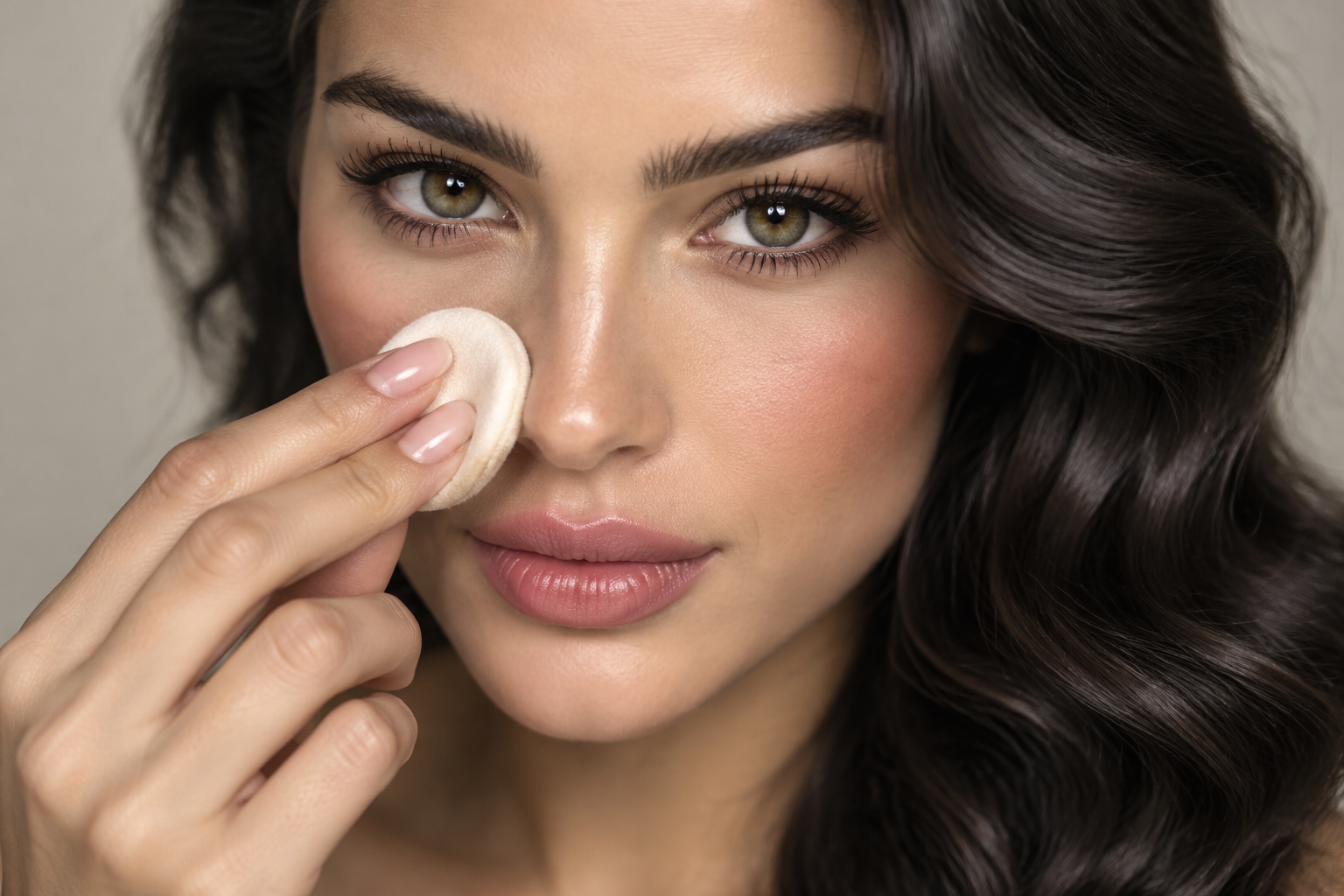
Your foundation looks lovely, then one extra sweep of powder makes the makeup more noticeable than you intended. The trick to matte makeup that still looks like skin is separating coverage from shine control: apply a thin base, build coverage only where you want it, and powder the areas that need it rather than treating your whole face alike.
You can keep a genuinely matte finish without erasing cheek color or chasing invisible pores. Skin-like means blended makeup with believable texture, not a face that never catches the light.
Quick answer: Use controlled foundation layers, press a little powder onto your shiny areas, and keep powder lighter on dry patches and outer cheeks. Add softly blended blush for dimension, then blot before deciding whether you need a touch-up.
Choose your finish separately from your coverage
Matte describes how reflective the makeup looks, not how much it covers. A soft-matte or semi-matte liquid can give lighter coverage; a fuller-coverage formula can still look relatively thin when you build it selectively.
Choose the coverage you enjoy, then consider the application:
- Liquid foundation: Useful when you want to blend a thin layer across the face and add coverage locally. Faster-setting formulas are often easier to handle in small sections.
- Powder foundation: Can provide both coverage and a matte finish. A fluffy brush generally gives a lighter application, while a suitable sponge or denser applicator can build coverage where needed. Follow your formula’s directions.
- Setting powder: Primarily helps set makeup and adjust shine. It isn’t automatically a substitute for foundation or concealer.
If you use powder foundation, don’t assume it needs another full-face layer of setting powder. Check the finish first. Your existing products may already do enough, so primer and setting spray can stay optional.
Prepare for comfortable makeup, not dry skin
Keep your familiar moisturizer and usual sun protection. A matte finish doesn’t require skipping moisture: the American Academy of Dermatology recommends moisturizer even for oily skin.
Let your preparation settle before applying foundation, rather than blending everything together while the surface is still slippery. Follow product directions, and don’t reduce your sunscreen application to make the base less shiny.
For flaky areas, moisturize rather than trying to scrub them smooth immediately before makeup. Use less mattifying product there. Don’t keep applying over burning or irritated skin; persistent or worsening dryness or irritation deserves dermatology advice.
Apply matte makeup in controlled layers
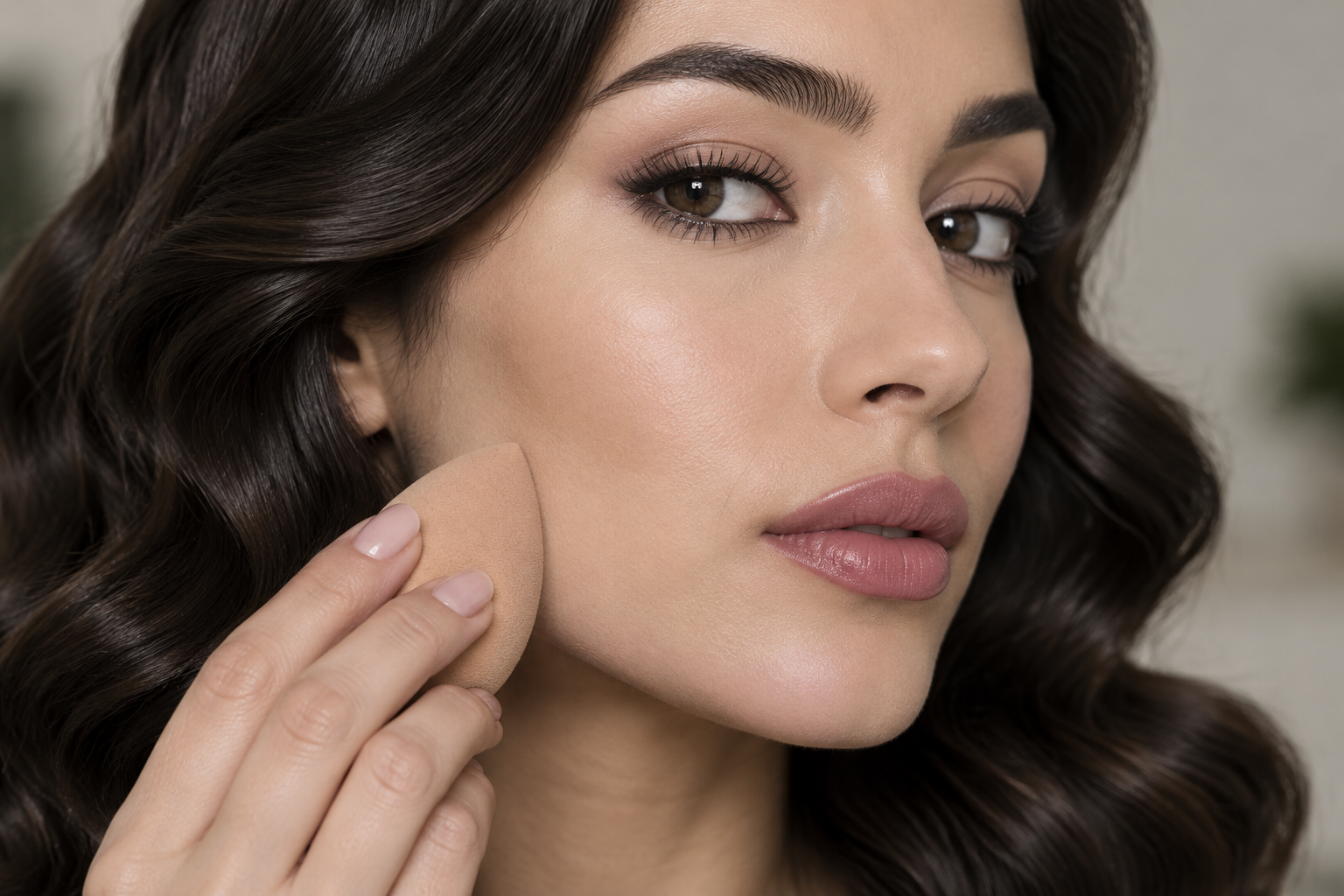
Use this sequence to separate evening out your complexion from controlling reflection.
Apply a thin first layer.
With liquid foundation, start where you want the most evening-out and blend toward the edges. Use the tool recommended for your formula; a damp sponge should be squeezed out well, not dripping. For powder foundation, begin with a light brush application if your product allows it.
Add coverage only after checking the first layer.
Let liquid foundation dry as directed before deciding what needs more. Tap concealer or another small amount of foundation onto those spots, blending the edges instead of re-covering the whole face. If you prefer fuller coverage throughout, build gradually rather than putting everything on at once.
Find your powder zones.
Inspect the center forehead, nose, and chin as a starting point, not a rule. Powder wherever unwanted shine actually appears. Keep the outer cheeks lighter if they already look comfortable, and be sparing around dry patches. Set concealer where it needs help staying in place, without automatically extending that powder across the cheek.
Remove excess powder before pressing it on.
For a powder suited to puff application, pick up a little product and press the puff onto the back of your hand first to distribute it. Then gently press and roll it onto the selected area. With a brush, tap off excess and use small, light placements rather than repeatedly sweeping over the entire face.
Around the nose, use the edge of the puff or a smaller brush. That gives you more control beside the nostrils without depositing an unnecessary stripe of powder onto the neighboring cheek.
Check the result before adding more. You’re looking for controlled shine, not a visible powder layer.
Keep dimension with color, not compulsory shimmer
A matte complexion can look dimensional through softly blended blush and optional bronzer. You don’t need a glossy cheek highlight to make the look feel alive.
Place blush where you enjoy it, then soften its edges into the base. A matte blush gives color without extra reflection; a satin finish adds a little softness without necessarily looking wet.
For cream blush, it’s usually easier to blend it before setting powder, unless the formula is designed to work over powder. Powder blush can follow your base setting step. Either way, build the color gradually so you don’t need vigorous blending that disturbs the foundation underneath.
If you use bronzer, keep it softly blended rather than making every edge equally defined. Turn your face slightly in ordinary daylight: cheek color and gentle shading should still be visible, even when the center looks matte.
Also check your powder’s color. “Translucent” doesn’t guarantee invisibility on every skin tone. If it leaves a pale or gray cast, reassess the shade and amount rather than adding more foundation over it.
Touch up the problem you actually have
Midday shine and missing coverage need different fixes. Before reaching for your compact, look closely:
- Shiny but still covered: Press blotting paper against the area for a few seconds, then lift without rubbing. Reassess before adding a little powder.
- Coverage has worn away: Repair that small spot with concealer or your base. Setting powder alone won’t necessarily replace missing pigment, though powder foundation can add coverage.
- Dry-looking or powdery: Pause the powder. Gently soften a visible edge with a clean applicator rather than immediately adding another layer.
A setting spray is optional, and it isn’t guaranteed to undo excess powder. Use one according to its directions if you like how it works with your makeup.
For your next wear, keep the touch-up kit simple: blotting paper, your suitable powder applicator, and a small coverage product if needed. Blot for shine, repair for coverage, and stop adding powder when the area already looks dry. That little distinction does more for a skin-like matte finish than carrying a bigger makeup bag.
