
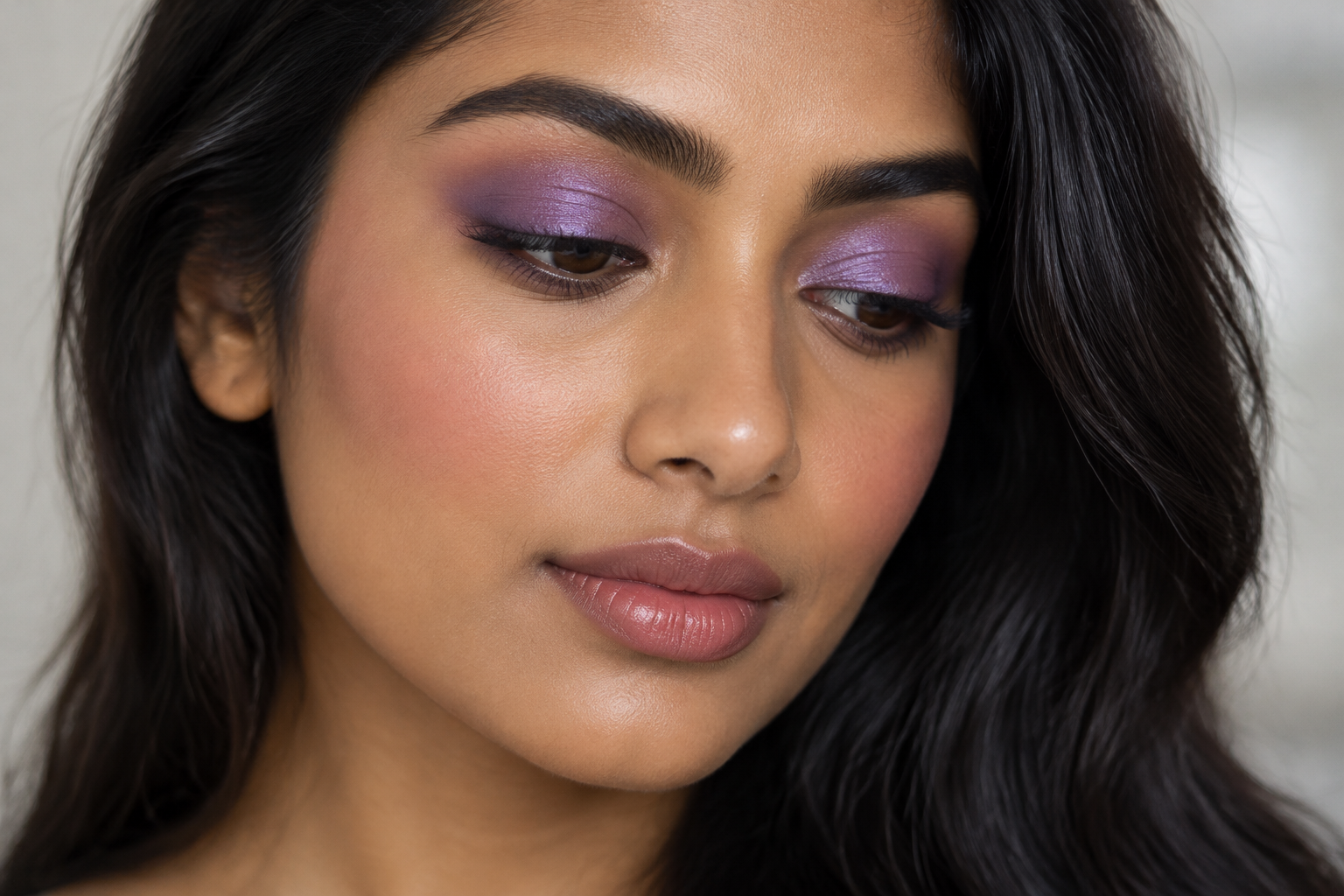
Purple looks lovely in the palette, then somehow ends up either barely visible or halfway to your brows. The easiest way into purple makeup is to decide where the color belongs before you start blending: keep a soft wash on the moving part of your lid, or use plum just along the upper lashes.
You don’t need three purples or a dramatic smoky eye. One shade, a controlled edge, and a familiar blush-and-lip combination are enough to get started.
Quick answer: Press purple onto the lid, soften only its borders, and check the placement with your eyes open. For less color, try a narrow plum upper-lash accent instead.
Choose a purple you actually want to see
Start with the amount of color you want, rather than rules about which eye colors “can” wear purple.
Muted mauve or plum can feel like a gentle step from brown eyeshadow. Lavender and violet make the color more obvious. Neither direction is more correct, and a wearable look doesn’t have to be almost beige.
Check the shade on your lid in ordinary light. If lavender looks chalkier than you intended, try a purple with less of a pale, white base, a deeper shade, or a different finish. That’s a shade choice, not a reason to abandon purple.
Matte gives a flatter color effect; fine satin adds a little sheen. Use whichever you enjoy. For powder, a small shader brush and a small blending brush are helpful. A cream may allow fingertip application, depending on its directions. Use what you already own if it’s suitable for the eye area.
Apply a soft purple lid wash, step by step
This version keeps the strongest color between your upper lashes and the fold above your lid. The upper border stays soft, but the purple itself should still be visible.
- Prepare without making the lid slippery.
Follow your shadow’s directions for bare lids or a compatible base. If you use primer, apply it as directed and let it set if required before adding powder. Check shade-specific warnings: a colorful palette isn’t automatically approved for every eye-area use. The FDA advises stopping an eye cosmetic that irritates and seeking medical advice if irritation persists.
- Place a light first layer.
For powder, pick up a little shadow, tap off loose excess, and press it onto the mobile lid, the part that moves when you blink. Start around the center and work toward the outer lid, keeping the initial application below the crease. Pressing helps deposit color where you want it instead of immediately sweeping it upward.
- Change tools before softening the edge.
Take a clean, small blending brush and use short, gentle movements along the top border and outer corner. Avoid repeatedly brushing across the whole lid. You’re softening the outline, not erasing the filling. If the brush becomes loaded with purple, wipe it on a clean tissue before continuing.
- Check with your eyes relaxed and open.
Look straight ahead rather than lifting your eyebrows. If a fold hides most of the color, extend the upper edge slightly where you want a hint to show. Make this adjustment with a small amount of product before adding intensity. A hidden lid wash doesn’t necessarily need more pigment; it may need slightly different placement.
- Restore color only where it’s missing.
If blending has made the center too faint, press a little more purple onto that spot. Don’t automatically add another layer from lashes to crease. Compare both eyes after each light layer so you can adjust without making both sides progressively larger.
- Finish with optional definition.
Add mascara or a thin line of your familiar brown or black liner if you like. Keep the lower lash line bare for your first attempt. That lets you judge the lid color on its own, without another band of purple changing the balance.
Using cream instead? Apply a small amount according to the formula’s directions, then soften the edges with a fingertip or suitable brush while it’s still workable. Work one eye at a time if it sets quickly. Once it has set, don’t keep rubbing to force it to blend.
Prefer a smaller accent? Try plum along the lashes
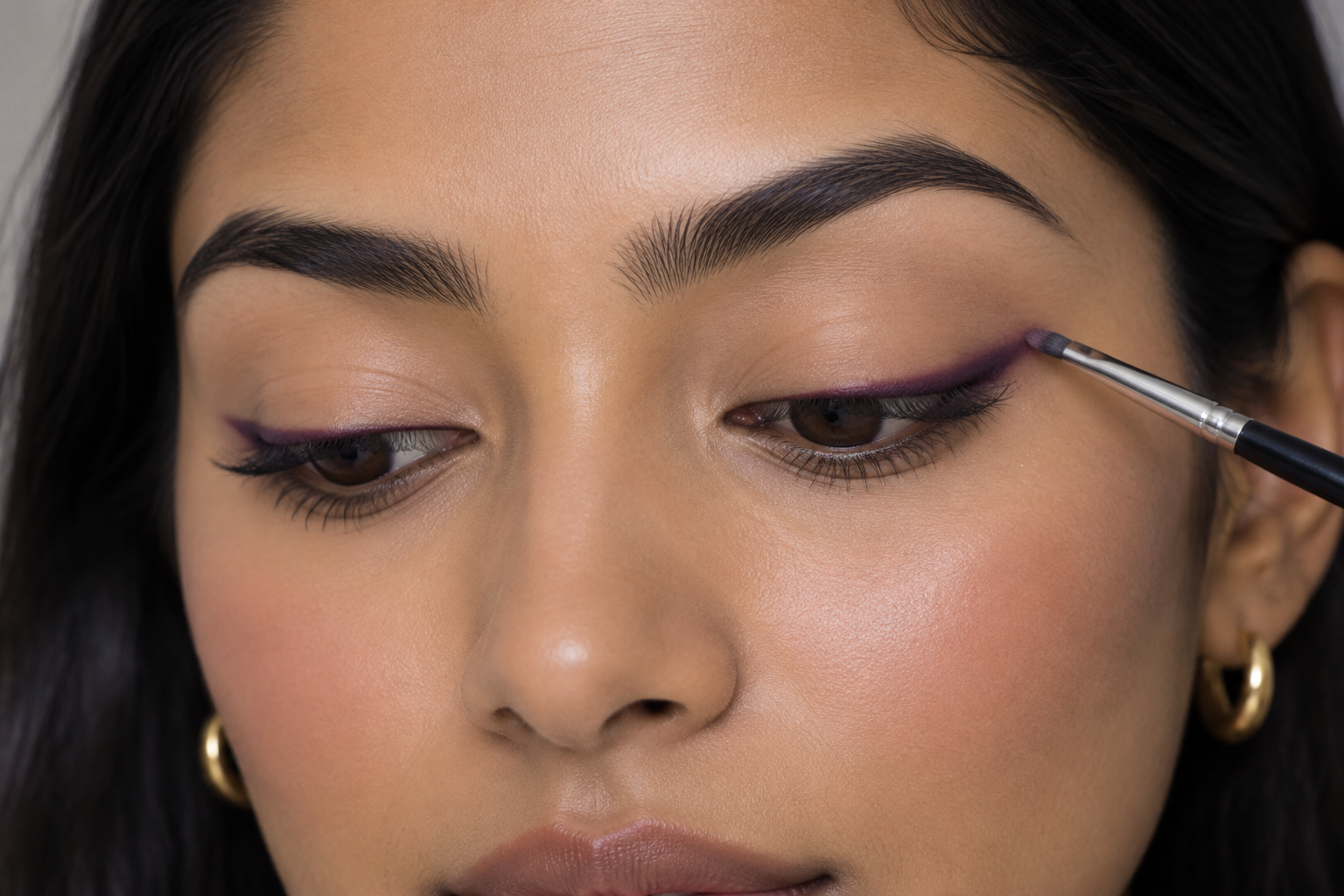
A plum lash line gives you a touch of purple without covering the whole lid. Choose an eye-area pencil, or a powder whose directions allow use as liner.
Make short strokes on the skin immediately above your upper lashes, starting around the middle and connecting them toward the outer corner. Keep the line narrow; there’s no need to add a wing.
While the formula is workable, lightly soften the top edge with a small appropriate brush. Leave the color closest to the lashes more concentrated. This is an external lash-line look, not a waterline technique.
Balance purple makeup with cheeks and lips
Try your usual blush and lipstick first. A familiar pairing makes it easier to tell whether you like the eye color, rather than changing everything at once.
If you want a starting point:
- Muted rose cheeks and rose-brown lips give you a softly coordinated option without repeating purple everywhere.
- Peach-brown cheeks and a warm neutral lip add warmth beside a cooler lavender or violet.
- Soft blush and sheer berry lips bring in more color while keeping the lip finish lighter.
These are options, not complexion rules. If the combination feels busier than you wanted, reduce either the blush intensity or lip opacity before changing the eyes. You can enjoy colorful eyes and colorful lips; they don’t need to compete at full volume.
Make small adjustments instead of restarting
Purple has almost disappeared: Add color back to the lid with a pressing motion. Then blend only any newly sharp border.
The outer edge has spread too far: Stop adding shadow. Use a clean brush to gently soften the excess, or remove the unwanted outer portion with a precise touch of eye-makeup remover. Let the area dry before reapplying.
The shade looks unexpectedly pale: Check it away from harsh bathroom lighting. If it still looks chalky, try a less white-based purple rather than piling on the same shade.
For your next attempt, keep everything except the placement familiar: one purple, your usual mascara, and a lip color you already like. Get the shape where you want it first. More color can come later.
