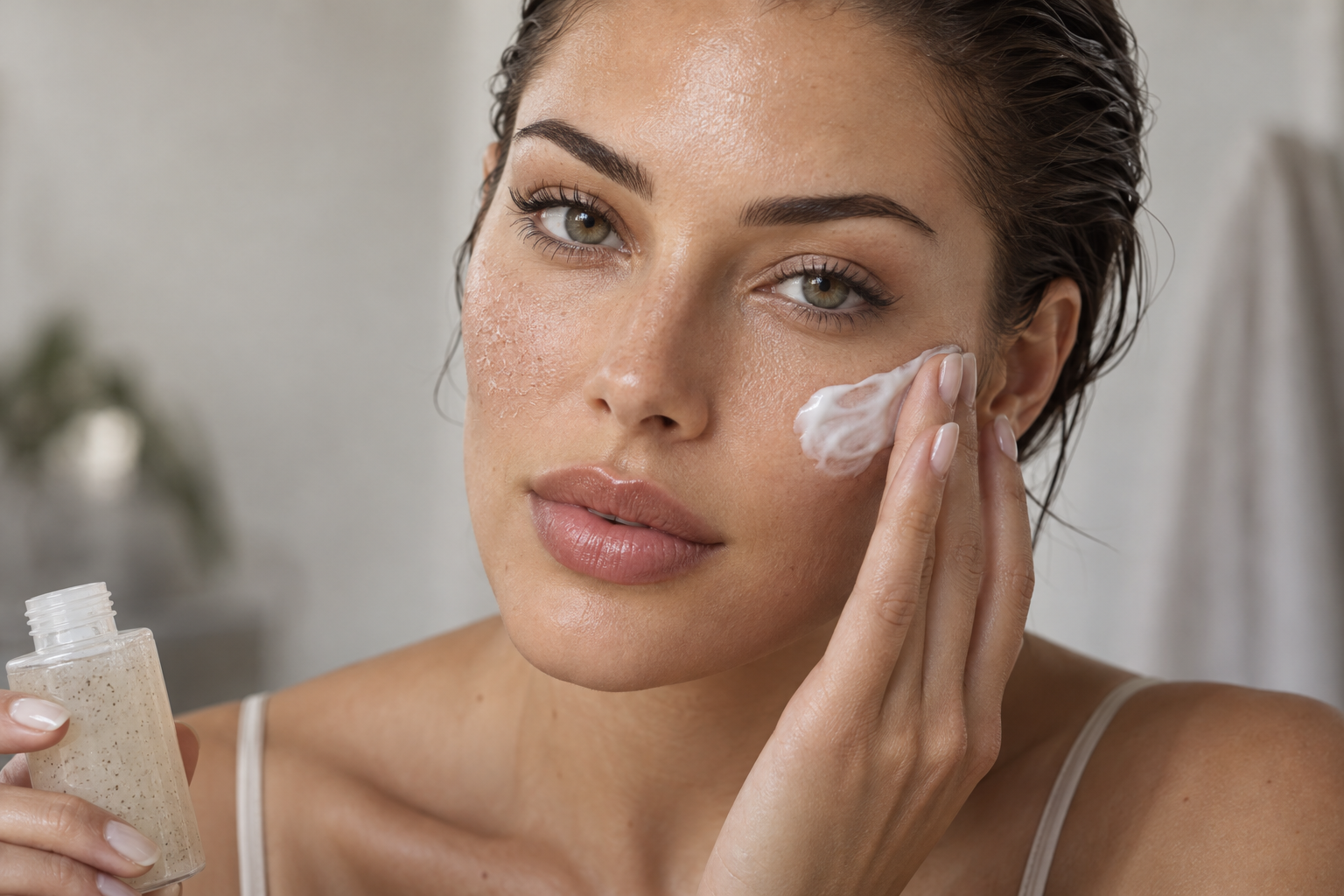
When your familiar moisturizer suddenly stings and foundation catches on fresh flakes, another exfoliating pass can feel tempting. Instead, skin barrier repair after over-exfoliating starts with subtraction: pause exfoliants, simplify to gentle cleansing, moisturizer, and sun protection, and wait for irritation to settle before considering a restart.
Stinging and flaking can accompany barrier disruption, but they don't confirm the cause. The goal is comfortable skin, not getting back to your acid toner by Friday.
Quick answer: Stop exfoliating irritated skin, keep a gentle routine, and restart only after ordinary care feels comfortable. Reintroduce one optional product at a time. There's no universal recovery deadline, and exfoliation doesn't have to return.
What to pause, including the easy-to-miss exfoliants

Set aside exfoliating acids, peels, scrubs, cleansing brushes, and textured pads. Check your cleanser and toner, too: the exfoliation in your routine may be spread across several bottles rather than one obvious treatment.
Don't buff away the flakes with a washcloth. Your skin's outer barrier helps hold in water and protect against outside exposures; Cleveland Clinic explains that over-exfoliation and harsh scrubbing can disrupt it.
Temporarily set aside cosmetic retinol and optional products that sting or worsen discomfort. Retinoids and benzoyl peroxide aren't interchangeable with exfoliants, but the American Academy of Dermatology (AAD) notes that combining them with exfoliation can increase irritation.
If a prescribed treatment seems involved, contact your prescriber about how to handle it rather than changing the schedule yourself. A generic skincare reset shouldn't replace medication guidance.
Build a skin barrier repair routine around the basics
You don't need a shelf of recovery serums. Start with products you already tolerate, keeping the routine simple enough to notice what feels comfortable.
Cleanse without adding friction
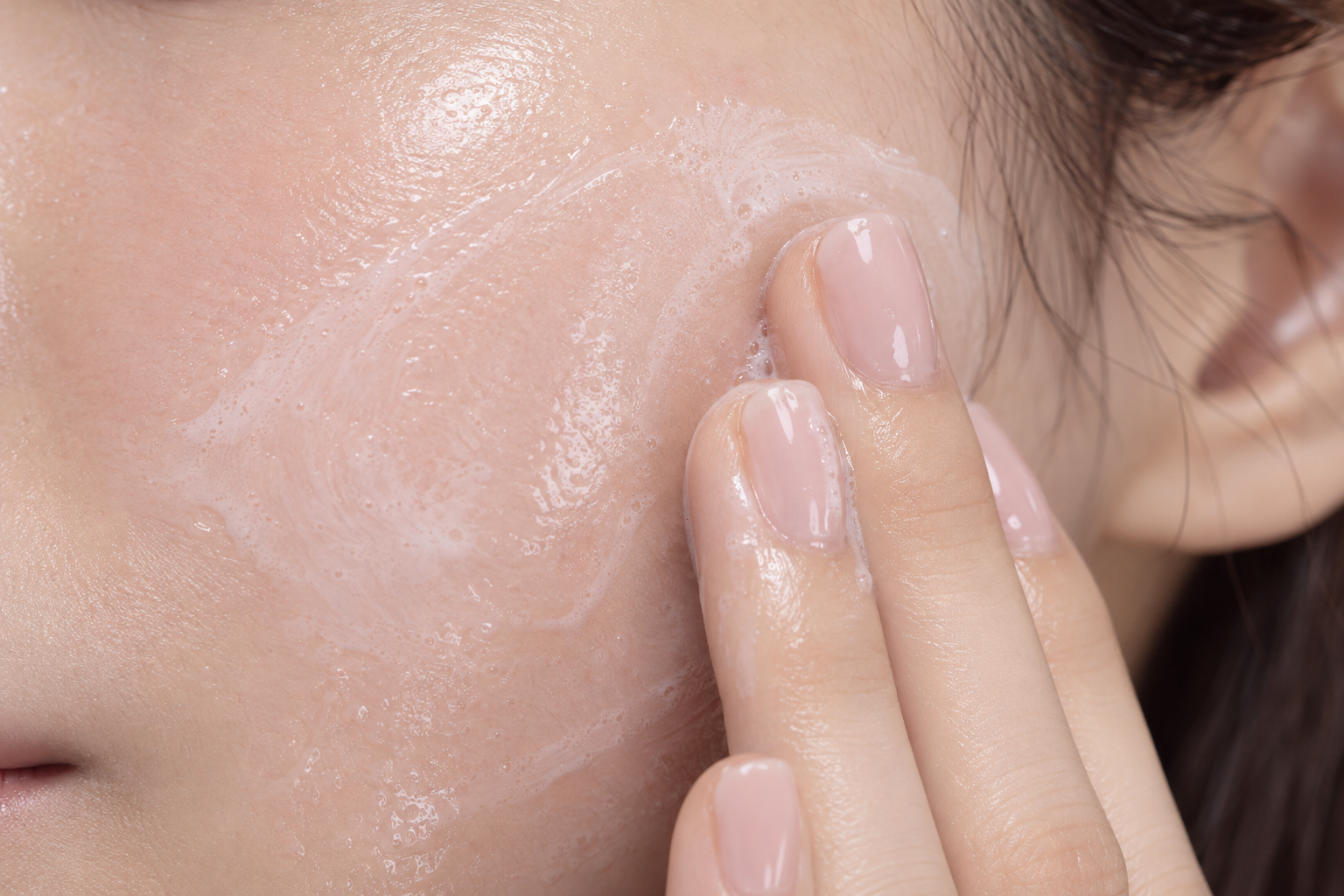
Use a mild, fragrance-free cleanser with lukewarm water and your fingertips. Skip scrubbing tools, hot water, and the extra cleansing pass intended to make skin feel squeaky-clean.
Pat gently afterward rather than rubbing with a towel. If cleansing leaves persistent burning, seek advice rather than repeatedly testing different formulas.
Moisturize while skin is slightly damp
After washing, lightly pat away excess water, then apply a tolerated, fragrance-free cream while your skin is still slightly damp. This follows the AAD's dry-skin guidance and makes moisturizer timing more useful than adding three new layers.
A cream or ointment may suit dry skin better than a light lotion. Ceramides are a reasonable feature to look for, but neither that ingredient nor a “barrier repair” label guarantees tolerance or a recovery timeline.
This damp-skin advice is for moisturizer, not exfoliating acids. If your basic moisturizer keeps burning, don't try to solve it by applying a thicker coat.
Keep sun protection in place

Use broad-spectrum, water-resistant SPF 30 or higher as directed, alongside shade and protective clothing. If sunscreen stings, lean on shade and clothing while you seek help finding an option you tolerate.
After alpha hydroxy acid use, the FDA advises sun precautions during use and for one week afterward. That week is a sun-sensitivity precaution, not a healing countdown.
Restart by comfort, not the calendar
The reviewed guidance doesn't establish a standard three-, seven-, or fourteen-day restart plan for over-exfoliated skin. A smoother or shinier appearance also isn't proof that barrier function has recovered.
A conservative approach is to wait until ordinary cleansing and moisturizing feel comfortable and flaking, tenderness, and other irritation have settled. These are practical checks, not a medical test of complete recovery.
If you decide to resume:
- Keep your basic routine unchanged. Don't introduce a new cleanser and exfoliant together.
- Choose one optional product. Follow its directions and, where permitted, use it less frequently than the routine that caused irritation.
- Observe before adding anything else. Don't layer a peel, exfoliating toner, and scrub because each seems gentle individually.
- Stop if irritation returns. Repeatedly provoking the same reaction isn't a way to build tolerance.
A lower acid percentage isn't automatically gentler; pH and the overall formula matter, too. More aggressive exfoliation can also worsen dark spots, especially in darker skin tones.
You're allowed to leave exfoliation out altogether. Comfortable basics are a complete routine, not a waiting room for stronger products.
When to get help instead of experimenting
Arrange dermatology advice if irritation persists, keeps returning, or makes basic care difficult. Don't assume a new rash is “just purging.”
The AAD recommends medical attention for a painful or rapidly spreading rash, blistering, raw skin, eye involvement, fever, or possible infection signs such as pus or golden crusting. Get emergency help for breathing or swallowing difficulty or swelling of the eyes or lips.
For tonight, check every cleansing and treatment step for hidden exfoliation, then set those products aside. Keep the comfortable basics within reach; the rest can wait.