
Your cheeks finally feel comfortable after switching to a richer cream, then foundation turns into little rolls around your nose. Before replacing your base, adjust the winter skincare routine underneath it: moisturize by area, remove one optional layer, and try pressing rather than repeatedly buffing.
The goal isn’t less care. It’s enough moisture without a stack of products that shifts when you blend.
Quick answer: Keep needed moisturizer and sunscreen, simplify extra serums or primer, let layers settle according to their directions, and apply foundation with fewer passes. Don’t scrub away the rolls or reduce sunscreen to make makeup behave.
First, separate product rolls from winter flakes
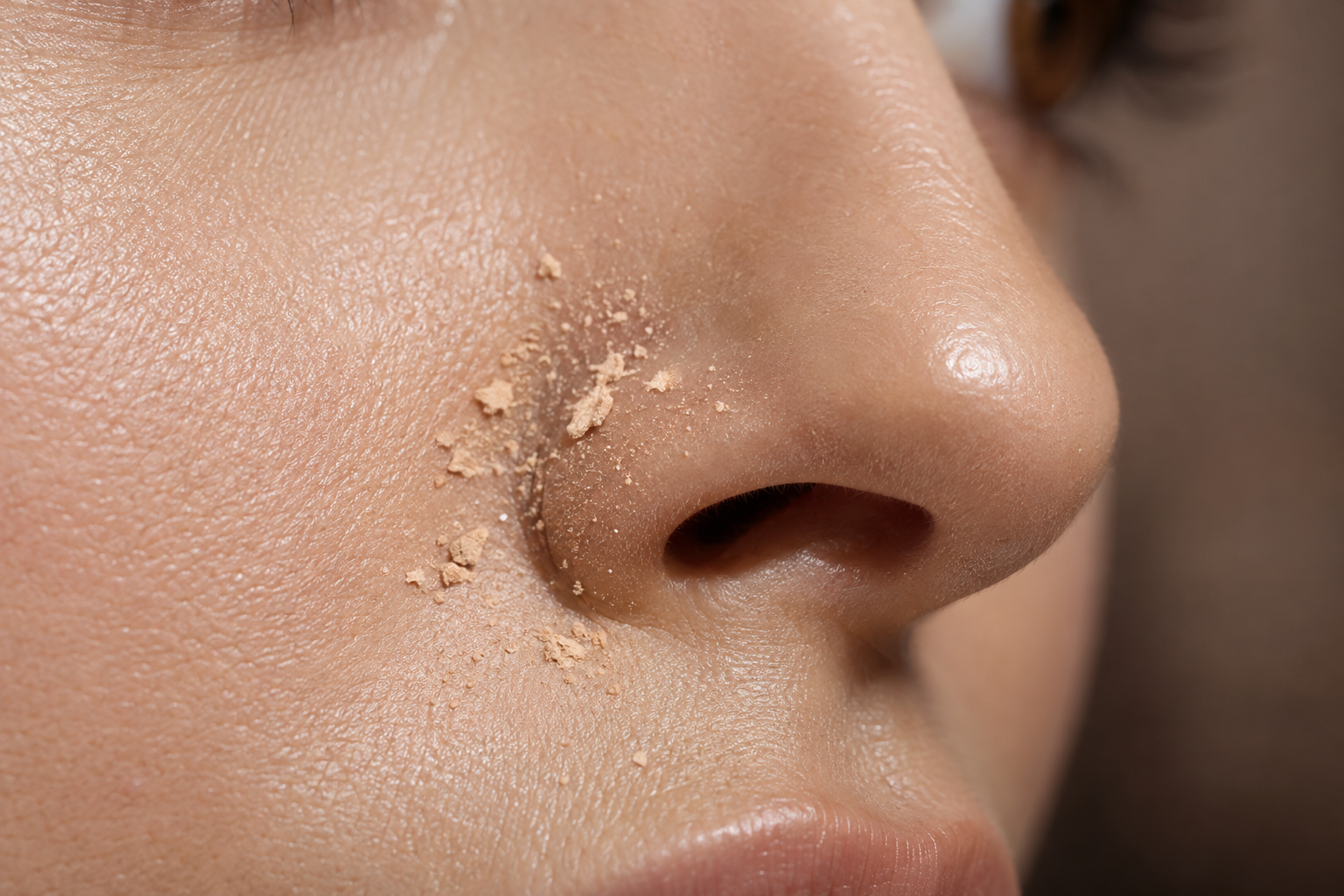
Look at your skin before applying anything. Flakes already visible after cleansing are different from little balls that appear as you spread skincare or makeup, although you can have both.
Notice when rolling first starts during normal application. If it happens before foundation, changing your foundation won’t necessarily solve it. If it begins only while blending makeup, the combination or blending motion is worth testing. Neither observation identifies a single guilty product.
Resist rubbing the area repeatedly to investigate. And don’t assume the answer is exfoliation: the American Academy of Dermatology advises against exfoliating dry, peeling winter skin.
Make your winter skincare routine richer where needed
Winter can call for more moisturizing care, but your whole face may not need the same amount. Give dry cheeks the attention they need rather than automatically adding another generous layer across your forehead, nose, and chin.
Apply moisturizer after cleansing while skin is still slightly damp, unless its directions say otherwise. The AAD recommends damp-skin moisturizing and adjusting care by facial area. That doesn’t mean putting foundation onto wet skincare.
If an especially rich optional balm or oil makes morning layering awkward, try reserving it for evening. Keep enough daytime moisturizer for comfort; very dry skin may still need a rich cream under makeup.
Persistent dryness, cracking, or irritation despite gentle care deserves dermatology advice, not more experiments with coverage.
Remove one extra, not every moisturizing step
Think back to what changed when the weather cooled. Was it a second serum, a heavier cream, facial oil, or a hydrating primer added “just in case”?
On your next makeup morning, leave out one optional addition while keeping everything else consistent. Start with an extra serum or primer, not prescribed treatment or sunscreen. If you change four things at once, you won’t know which adjustment helped.
Manufacturer guidance from The Ordinary identifies excess application, layering, and formula combinations as possible pilling contributors. That’s useful troubleshooting guidance, not proof that one ingredient always causes rolling.
You also don’t need to sort your entire routine into “water-based” and “silicone-based” camps. Those labels alone can’t reliably predict how finished formulas behave together.
Give layers a chance to settle, without watching a timer
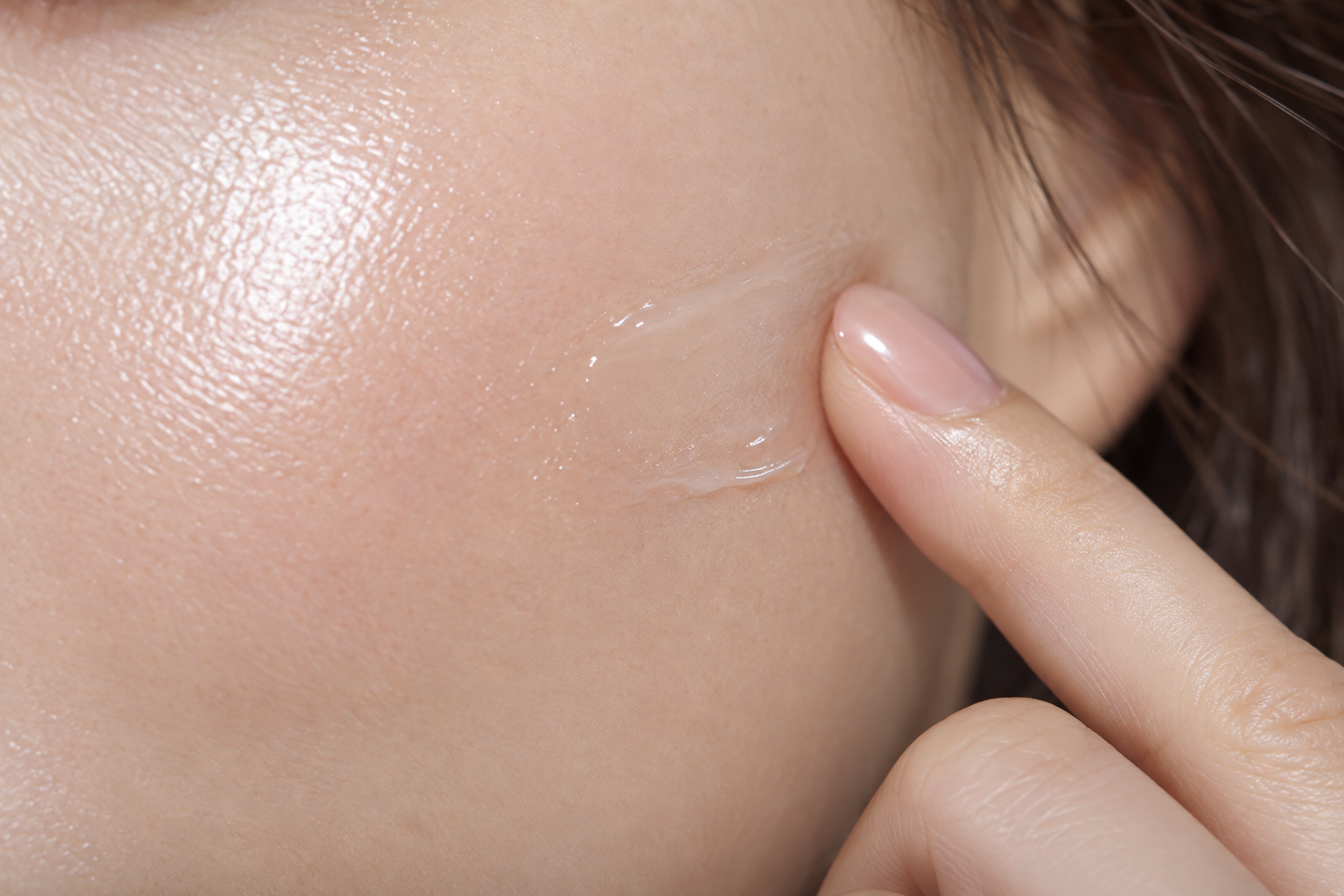
Keep the basic order straightforward: cleanse, use prescribed treatments as directed, moisturize, apply sunscreen, then makeup. Individual directions take priority over a rigid layering rule.
Before foundation, notice whether skincare is still visibly moving around under a light touch. If it is, pause rather than immediately blending another product through it. A slightly tacky finish isn’t automatically a problem, and some formulas intentionally leave a surface film.
There’s no universal five- or ten-minute wait that guarantees compatibility. A pause may help; it won’t rescue every combination.
Keep sun protection intact. The AAD recommends broad-spectrum, water-resistant SPF 30 or higher. Follow application and reapplication directions rather than using less to avoid pilling. Its advice to apply before going outdoors is not a mandatory makeup waiting interval.
Change how foundation meets your winter prep
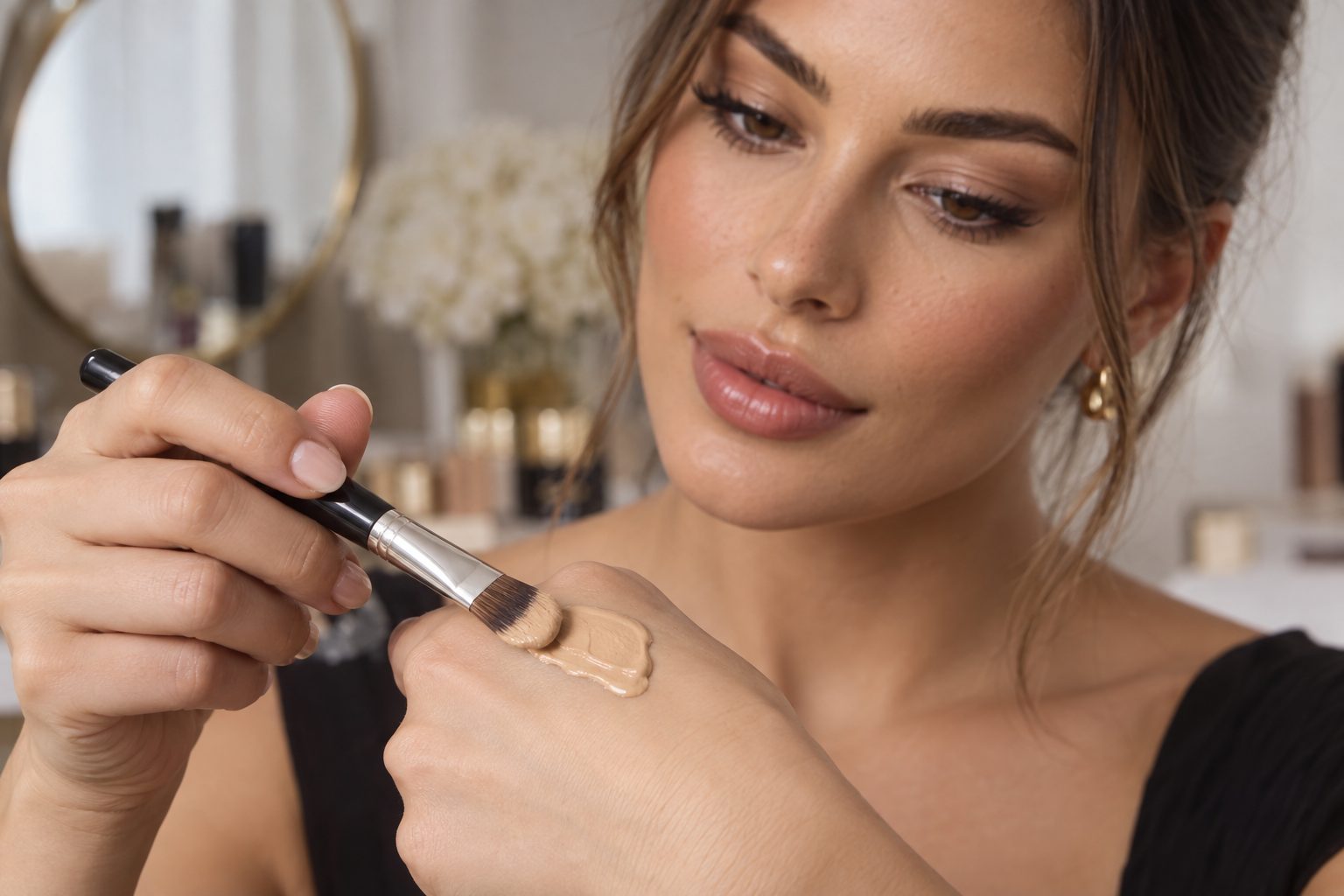
Try one cheek first instead of dotting foundation across your entire face.
For a fluid base, place a small amount on that area and press it in with fingertips or a sponge. For a thicker cream, pick up a little with your tool rather than dragging a dense stripe over moisturized skin. If your foundation sets quickly, finish one small section before moving on.
The useful change is fewer repeated passes over the same spot. Pressing is a technique to test, not a guarantee, but it avoids repeatedly working the skincare underneath.
If rolls appear, stop adding foundation. For a stubborn patch, removing and rebuilding that small area may be neater than continuing to blend. If removal takes off sunscreen, restore it according to directions before outdoor exposure; visible pilling alone can’t tell you how much protection remains.
For tomorrow, pick just one test: omit the extra serum, skip primer, or change your blending motion. Keep the moisture your skin needs. Your winter cream doesn’t need to be banished before you’ve checked what’s happening around it.