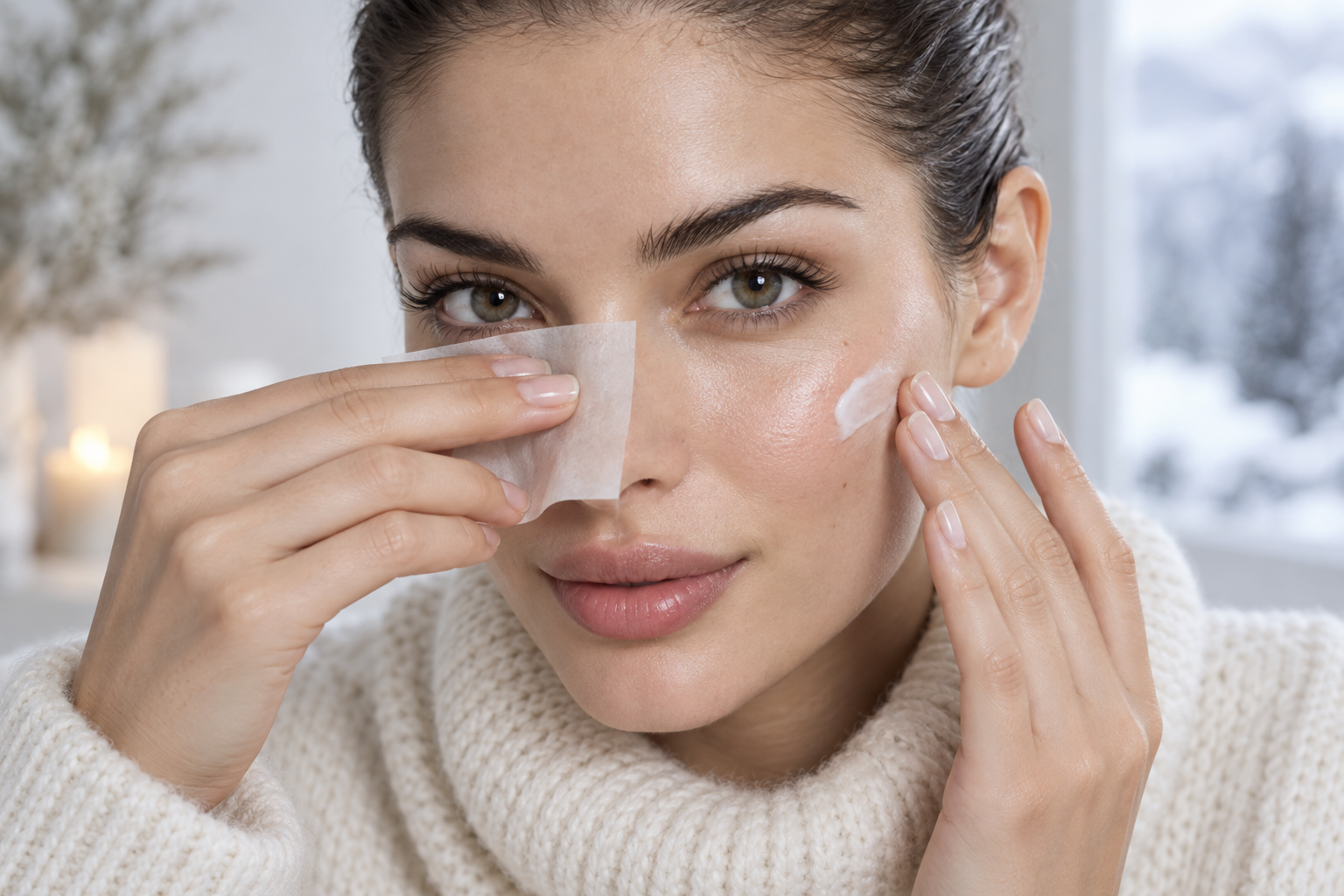
Your nose is shiny by lunch, but your cheeks feel stretched before you’ve even applied makeup. The answer isn’t necessarily a richer cream everywhere or a stronger cleanser. A useful winter skin care routine keeps washing gentle, gives tight cheeks extra moisture, and handles T-zone shine locally.
You can often start with what’s already on your shelf. Change where you apply moisturizer before deciding your whole routine needs replacing.
Quick answer: Gently cleanse, moisturize according to each area’s comfort, and apply broad-spectrum SPF 30 or higher every morning. At night, remove makeup, cleanse, and repeat your moisturizing steps. Blot midday shine instead of washing again.
Why shine and tightness need different responses
Cold weather, low humidity, and indoor heating can contribute to dryness, according to the American Academy of Dermatology (AAD). Meanwhile, your forehead, nose, and chin may still look oily.
That combination doesn’t prove your skin is dehydrated or that its barrier is damaged. Tightness is a sensation worth responding to, not a diagnosis.
Likewise, shine doesn’t mean you’re unclean or that you should strip away more oil. If you’d prefer less visible shine, treat that as a separate goal from making your cheeks comfortable.
Build your morning winter skin care routine
Cleanse without chasing a squeaky finish

Use a gentle, nonabrasive cleanser with lukewarm water and your fingertips. Rinse and pat with a soft towel rather than scrubbing with a washcloth.
The AAD’s face-washing guidance recommends limiting routine washing to twice daily, with washing after heavy sweating. A shiny nose alone isn’t a reason for an extra midday cleanse.
Notice how your face feels afterward. If tightness starts immediately after washing, review your cleanser and water temperature before adding another treatment.
Give your cheeks the richer layer
Apply moisturizer promptly while your skin is still slightly damp. Start with a formula you already tolerate.
If it feels comfortable across your whole face, there’s no need to introduce a second moisturizer. If your cheeks remain tight while your T-zone feels adequately moisturized, try a richer cream on the cheeks rather than spreading it everywhere.
For precise placement, dot that extra cream onto the outer cheeks and spread it over the tight-feeling areas. Don’t automatically sweep the remainder across your nose and forehead.
The AAD’s moisturizer guidance supports adjusting care for different facial areas. Gels generally feel lighter, while creams offer a richer option, but texture alone won’t predict how every formula behaves.
Your T-zone doesn’t need the same amount as your cheeks. A lightweight layer may suit it better; there’s no universal rule that every zone needs rich cream.
Keep sunscreen coverage even
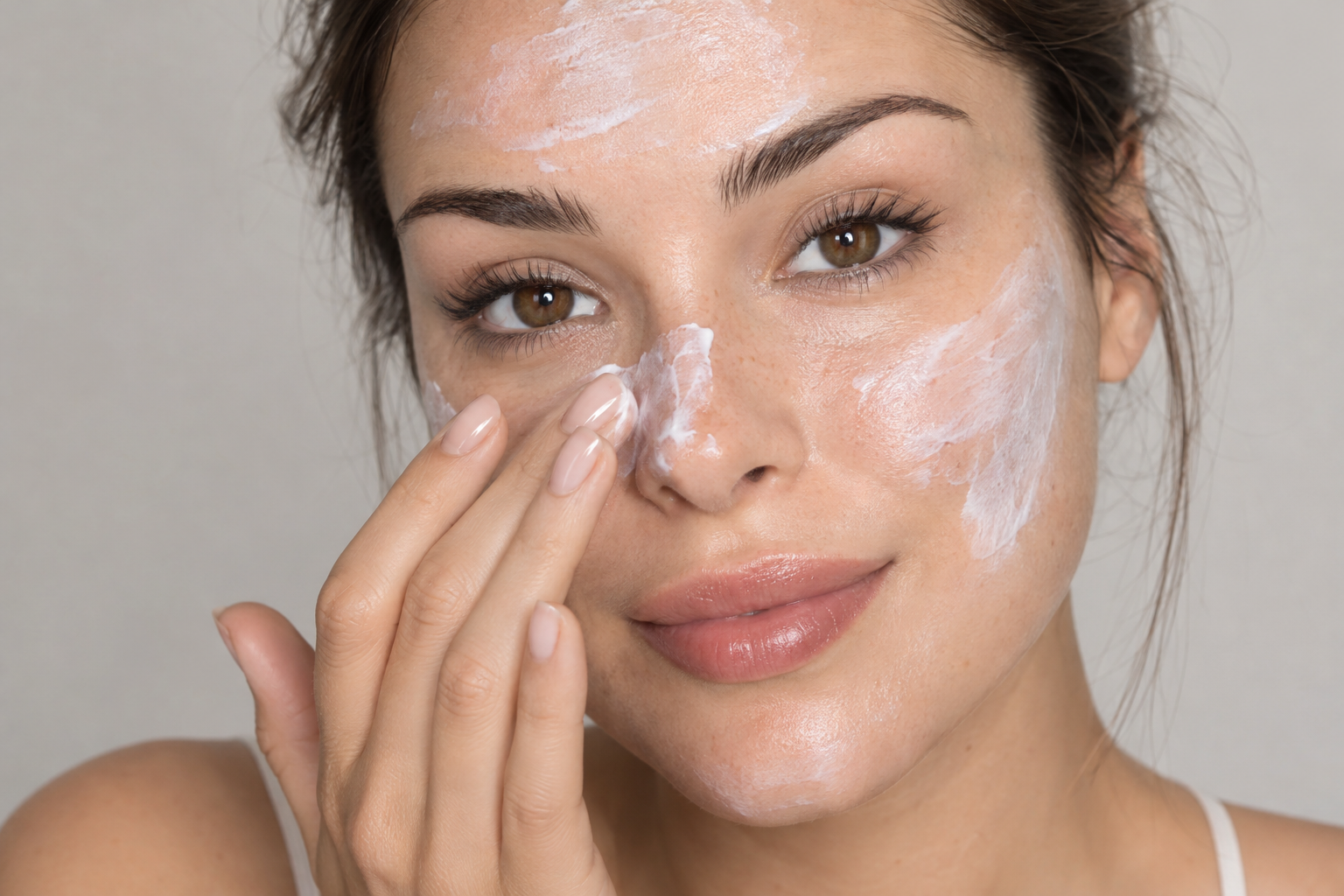
Finish with broad-spectrum SPF 30 or higher, following the product’s application and reapplication directions. Cover your whole face, including the oily center, plus other exposed skin.
Moisturizer placement can vary by zone; sunscreen coverage shouldn’t. If your sunscreen feels too heavy centrally, look for a texture you tolerate rather than applying less there.
Oil-free or noncomedogenic labels can be useful starting points if you’re breakout-prone, but they aren’t guarantees against breakouts.
Handle lunchtime shine without disturbing your cheeks
For optional shine control, press blotting paper against your nose, forehead, or chin for a few seconds, then lift it away. Move to a fresh section as needed instead of dragging the paper across your face.
This press-and-lift method comes from the AAD’s oily-skin advice. It removes some surface oil temporarily; it doesn’t treat acne or permanently change oil production.
Keep the touch-up local. Your comfortable cheeks don’t need another wash because your nose has become reflective.
Keep the evening routine short
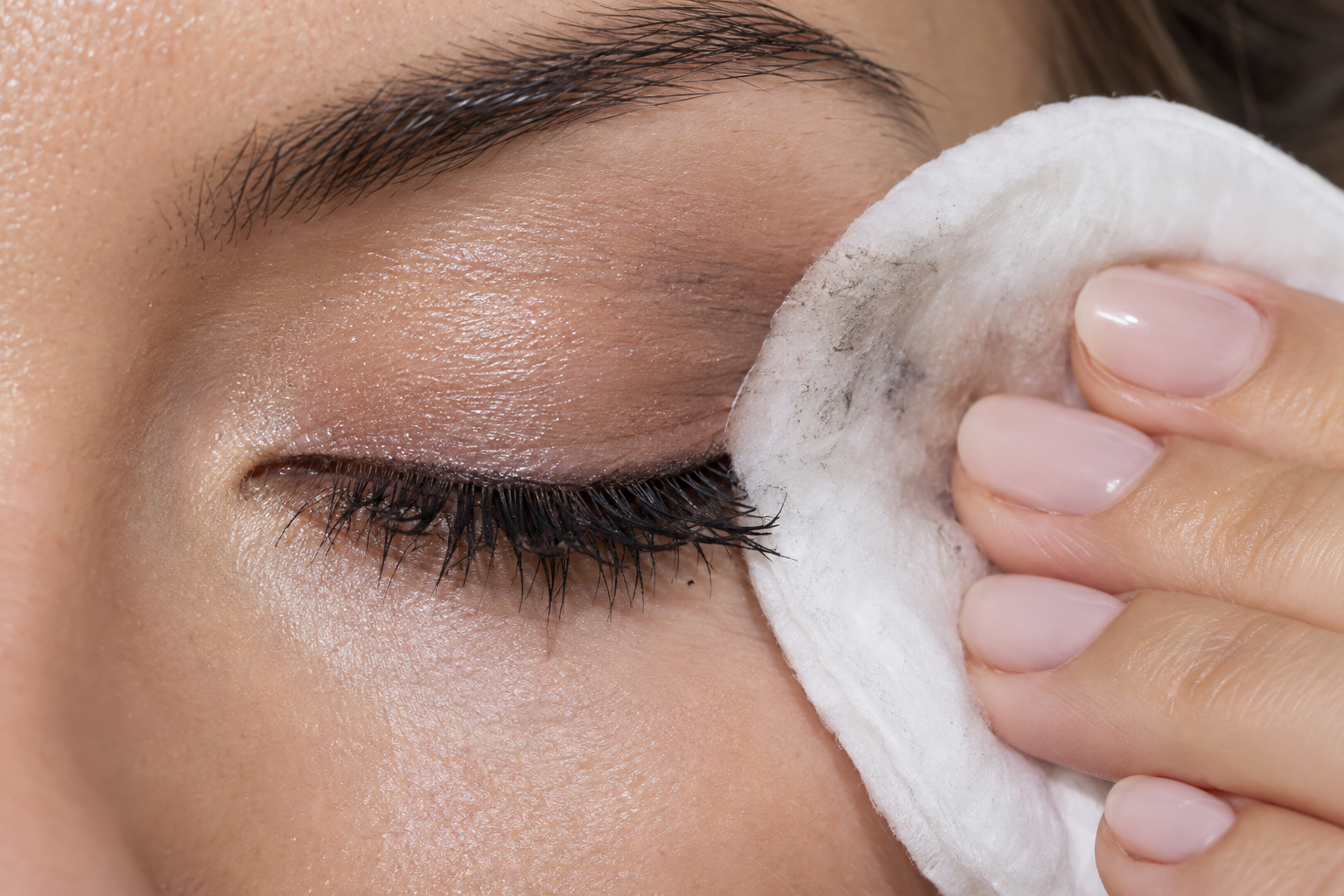
Remove makeup before bed and cleanse gently. Double cleansing isn’t a required winter step: use a removal method that handles what you’re wearing without repeated rubbing or leaving your skin uncomfortable.
Then repeat your moisturizer placement: lighter care where sufficient, richer care where needed. You don’t need to add a toner, serum, facial oil, or mask just because the weather changed.
If a richer formula causes persistent stinging or seems to worsen breakouts, reassess it rather than assuming heavier must be better.
Ease off irritating extras, not essential care
Flaking cheeks aren’t an invitation to scrub. Reduce or pause irritating nonprescription exfoliating products, including acids, while you simplify your routine.
Acne treatments can also contribute to dryness. If you use prescribed treatment, ask your prescriber about irritation rather than changing the schedule yourself.
Seek dermatologic advice for persistent or worsening dryness, painful cracking, bleeding, substantial irritation, or symptoms that don’t improve with gentle care.
For your next wash, make just two checks: Does cleansing leave you tight, and do your cheeks need more moisture than your nose? Those answers are more useful than adding another bottle.