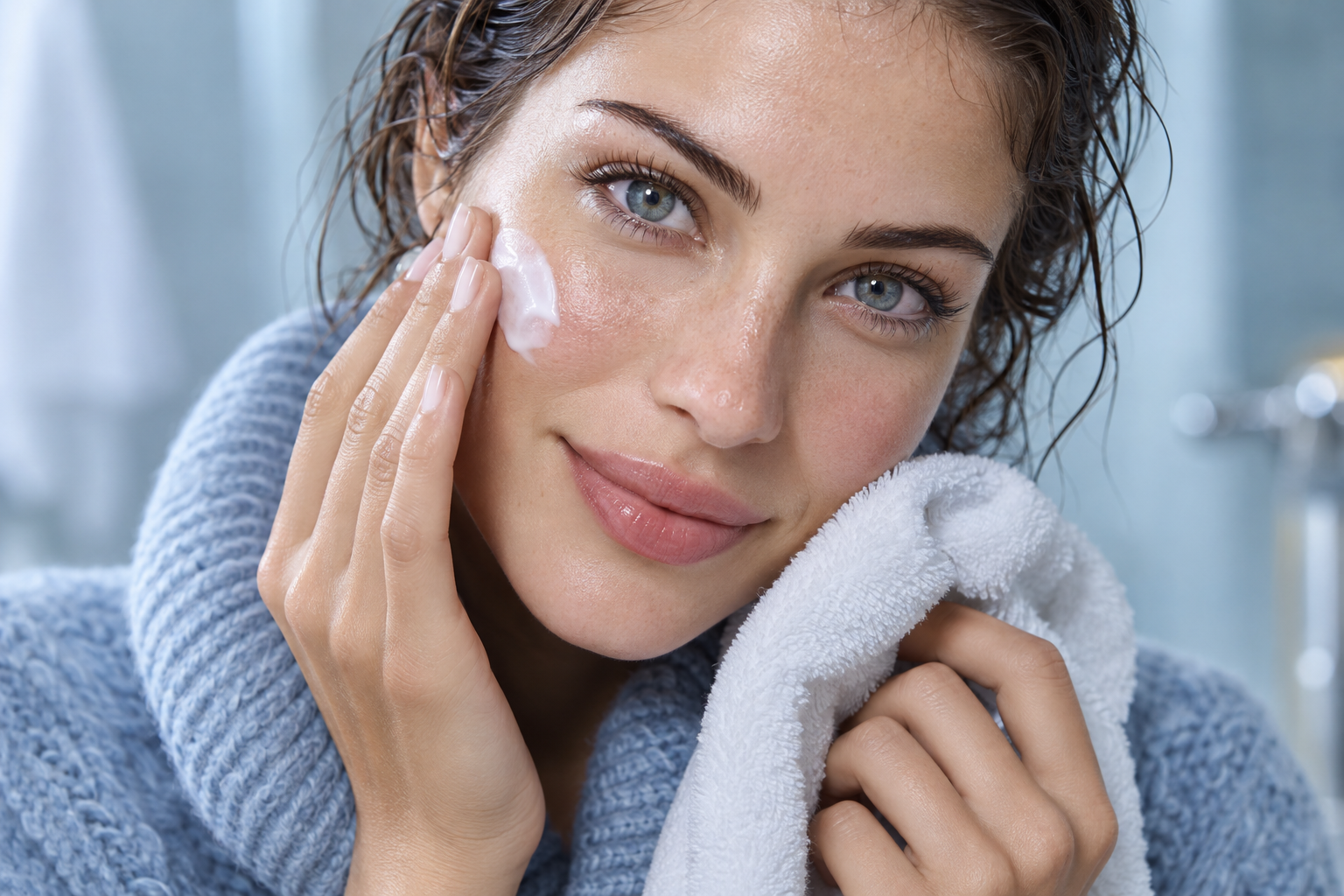
You’ve barely put down the towel, and your cheeks already feel a size too small. Before adding another hydrating serum, adjust the basics: use lukewarm water, cleanse gently, and apply moisturizer while your skin is still slightly damp. Winter skincare doesn’t necessarily require a whole new shelf.
Quick answer: Start with less heat and friction, a gentle fragrance-free cleanser, and prompt moisturizing. If a light lotion isn’t enough, try a richer cream on the tight areas rather than automatically switching your entire face.
Why your usual wash can feel different in winter
Low outdoor humidity and indoor heating can contribute to dryness, so a routine that felt comfortable in warmer weather may need a small adjustment. The American Academy of Dermatology (AAD) recommends gentler care and seasonal changes such as a heavier moisturizer when needed.
A tight, squeaky-clean finish isn’t something to aim for. But tightness alone also doesn’t tell you whether you have irritation, eczema, or a damaged skin barrier. Treat it as a reason to review your routine, not a diagnosis.
Make the wash gentler before replacing everything

Start with what happens at the sink. A cleanser change won’t address very hot water or an enthusiastic scrub with a washcloth.
The AAD’s face-washing guidance recommends lukewarm water, a gentle non-abrasive cleanser, and fingertips rather than scrubbing tools.
For your next wash:
- Turn the water down from hot to comfortably lukewarm.
- Use your fingertips instead of a brush, scrub, or rough cloth.
- Rinse gently, then pat rather than rub with your towel.
- Skip extra washes added just to feel fresh or remove shine.
You don’t need to chase a particular cleansing duration. Follow your cleanser’s directions and avoid extending the wash in pursuit of that stripped feeling.
Choose a cleanser for comfort, not a “deep clean” promise
If gentler technique still leaves your face uncomfortable, review the cleanser itself. Look for a gentle, non-abrasive, fragrance-free formula rather than treating “deep clean” as a benefit your winter skin needs.
A cream or lotion cleanser may be worth considering, but texture alone doesn’t tell you how gentle a formula will be. Likewise, foam isn’t automatically the problem. Your skin’s response to the complete formula matters more than a blanket rule about one format.
Check for fragrance-free, not just “unscented.” The AAD notes that unscented products may still contain ingredients that mask fragrance. Neither label guarantees tolerance, so stop using a new product if it irritates your skin.
Shorten the gap between towel and moisturizer

This is the small habit worth making easy: keep your moisturizer beside the sink.
After rinsing, gently blot away excess water, leaving your face slightly damp, then apply moisturizer. You’re aiming for a little remaining moisture, not water dripping down your neck. There’s no precise countdown to beat.
The AAD recommends moisturizing damp skin to help retain moisture. Let moisturizer be the next step rather than air-drying while you sort out the rest of your routine.
This advice is specifically for moisturizer. It doesn’t mean every treatment or active ingredient should go onto damp skin; follow those products’ directions separately.
Make the dry cheeks richer, not necessarily the whole face
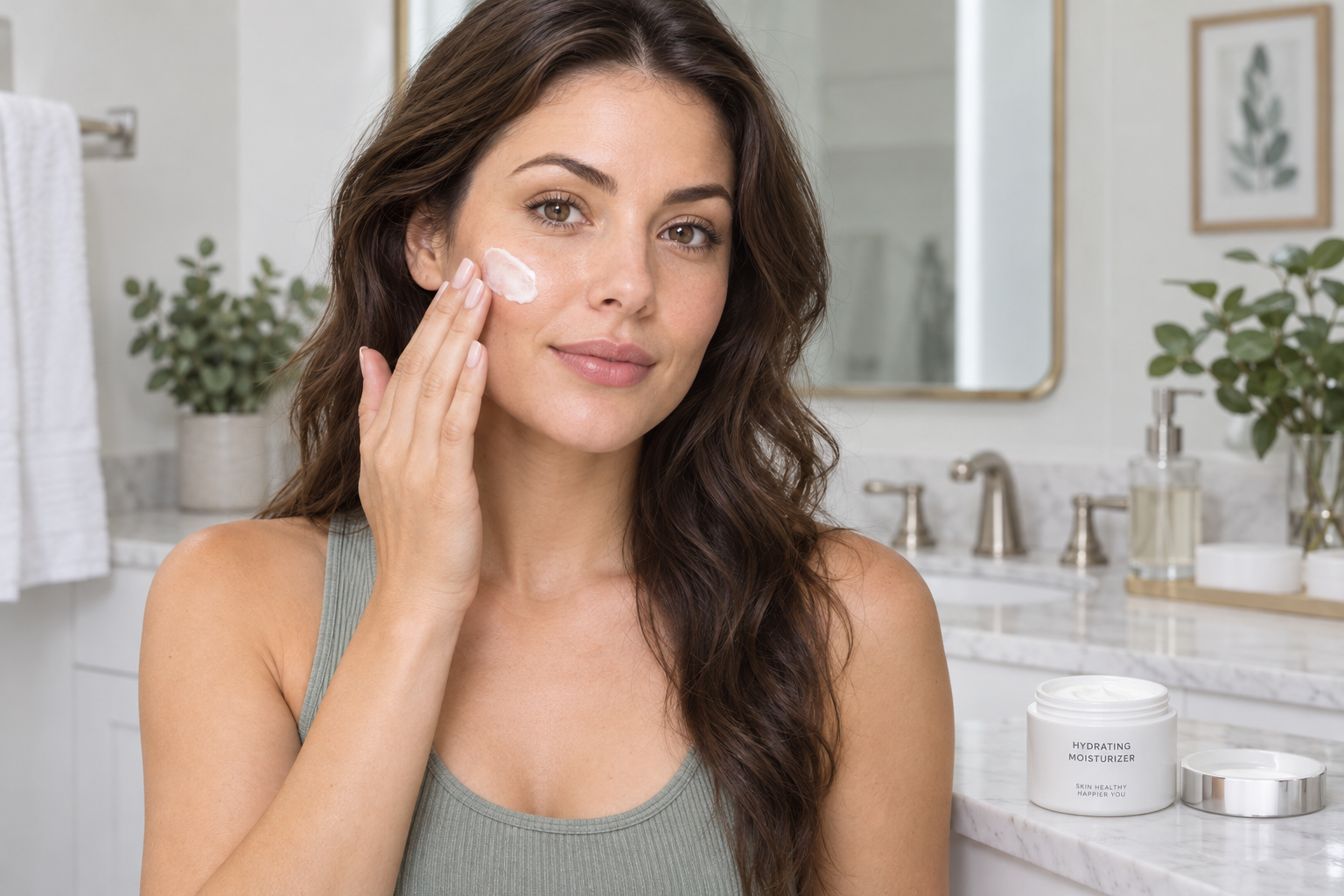
If your current lotion leaves you comfortable, you don’t need to replace it simply because it’s winter. If tightness returns despite prompt application, a fragrance-free cream may suit those dry areas better.
Combination skin gets to have a combination approach. Try a richer texture on uncomfortable cheeks while keeping a lighter moisturizer on areas where it feels sufficient. You don’t have to give your forehead the same treatment as your cheeks.
The AAD’s moisturizer guidance supports tailoring texture to skin type and facial area. If you’re acne-prone, introduce changes cautiously rather than assuming the richest option is automatically best.
In the morning, keep broad-spectrum SPF 30 or higher in your routine. Cold weather doesn’t replace sun protection.
Give optional exfoliation a break
Flakes can make exfoliation feel tempting, especially when makeup catches on them. But scrubbing or adding more acid exfoliation can worsen winter dryness.
Pause optional scrubs and exfoliating acids while your skin feels uncomfortable. Review nonprescription retinoids too, following their directions for irritation rather than pushing through stinging.
If you use a prescribed acne treatment or have an eczema care plan, ask your clinician about adjustments instead of changing medication on your own. You don’t need to replace removed steps with more serums; keep the routine simple enough to notice what feels comfortable.
Know when routine tweaks aren’t enough
Seek advice from a dermatologist or another appropriate clinician if dryness persists despite gentle care, worsens, or comes with painful cracking, bleeding, substantial itching, or a rash. Repeated burning when you apply moisturizer also deserves attention, not another layer of product.
For tonight, keep the change simple: cooler water, gentle fingertips, and moisturizer within reach of the towel. Then decide whether your cheeks need a richer texture before buying anything else.