
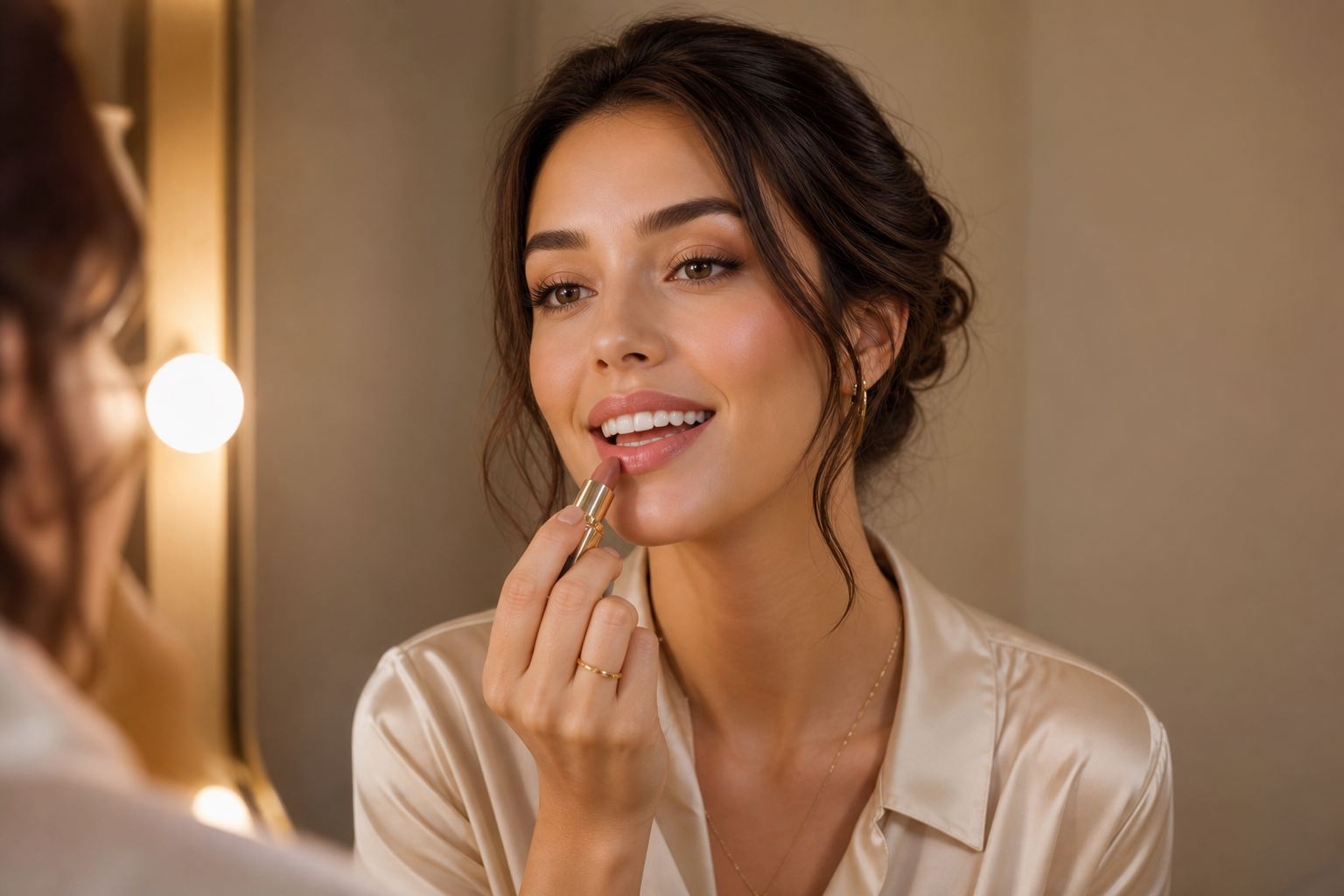
If you are wondering how to make your teeth white fast, start with your deadline. Meaningful bleaching cannot be guaranteed overnight. If your event is tonight, focus on making your smile look brighter with clean teeth, prepared lips, makeup contrast, and flattering light. With several days, you may have time for one label-directed whitening regimen. For the fastest actual bleaching option, ask a licensed dentist whether in-office whitening is appropriate for you.
The most useful white teeth tips at home depend on the time available and the kind of change you want. If you are researching how to get whiter teeth or how to make teeth whiter at home, remember that tooth whitening at home can address some stains or natural-tooth color, while makeup and lighting only change how bright your smile appears. The best whiter teeth tips begin with realistic timing rather than an overnight promise.
Quick answer: For an event within 24 hours, use appearance-based changes rather than aggressive whitening. With several days or weeks, follow one peroxide product’s complete directions or consult a dentist. Never stack treatments to force a faster result.
How to make your teeth look whiter fast, based on your countdown
If your event is within 24 hours
Keep your routine gentle and familiar. Brush with fluoride toothpaste and clean between your teeth to remove visible debris, but remember that routine cleaning does not necessarily change the natural color of enamel.
Avoid starting an intensive treatment on the morning of your event. Even an appropriately used whitening product can cause temporary tooth sensitivity or gum irritation, which may be more distracting than the shade you wanted to change.
For an immediate cosmetic effect:
- Apply a comfortable, non-irritating lip balm, then blot away excess before lipstick.
- If you enjoy lipstick, try a shade with cooler visual contrast and check it against your natural tooth shade.
- Look at your smile using the venue lighting or the same phone flash likely to be used in photos.
- Skip harsh lip scrubs if your lips are already dry, cracked, or uncomfortable.
Lipstick and lighting can change how bright your teeth appear, but they do not whiten them. Results also vary with skin tone, natural tooth color, camera settings, and surrounding light.
If your event is several days away
An adult with healthy teeth and gums may consider one over-the-counter peroxide whitening treatment. Hydrogen peroxide and carbamide peroxide bleach natural teeth, while whitening toothpastes mainly help remove external surface stains.
Read the entire package before starting. A treatment described as a “30-minute” or “60-minute” option may still require repeated sessions over multiple days. Contact time for one session is not the same as the full treatment timeline.
Use only the frequency, amount, and wear time listed on that specific label. Stop and follow the product guidance or contact a dental professional if you experience burning, significant gum irritation, or concerning sensitivity.
The American Dental Association’s consumer whitening guidance notes that at-home bleaching may take anywhere from several days to several weeks. That range is more realistic than expecting a dramatic overnight change.
If your event is one to two weeks away
Depending on the product, this may be enough time to complete an over-the-counter course exactly as directed. Look for clear instructions covering session length, total treatment days, suitability, and sensitivity.
An ADA Seal can provide additional information about an accepted whitening claim, but the program is voluntary. A product without the Seal is not automatically unsafe, and a Seal does not guarantee a specific result for every person.
If speed is especially important, a dentist can evaluate your discoloration and discuss professional whitening. In-office care may be completed more quickly than a home regimen, but cost, suitability, sensitivity, and results vary. No responsible provider can promise an exact shade change for every smile.
More whitening product is not a faster plan
Do not double the daily sessions, extend the wear time, sleep in a treatment unless directed, or combine strips, gels, pens, and abrasive toothpaste. Tooth sensitivity and gum irritation are possible adverse effects, not evidence that a product is working better.
Avoid DIY shortcuts involving household bleach, lemon, vinegar, charcoal, abrasive powders, or improvised mixtures. According to the ADA’s natural whitening guidance, acids and overly abrasive scrubbing can wear enamel, while evidence for charcoal whitening is insufficient.
Teeth naturally come in many shades. The goal is a result that feels polished to you, not digitally white teeth that are unrealistic in person.
Check restorations and unusual discoloration first
Whitening products work on natural teeth. Crowns, veneers, implants, dentures, tooth-colored fillings, and bonding do not bleach in the same way. Whitening the surrounding teeth can make a front restoration look more noticeable rather than creating an even result.
Contact a licensed dentist before whitening if you have tooth pain, gum problems, cracked teeth, untreated decay, substantial sensitivity, extensive dental work, or a single tooth that has recently become darker. Professional guidance also matters if you have questions about whitening during pregnancy or breastfeeding.
These are not just event-preparation details. A painful, damaged, or changing tooth should not be treated as a simple cosmetic stain.
Your practical next step
Count the days until your event, then choose one lane: appearance-only preparation for tonight, one label-directed home regimen for the coming days, or a dental consultation when speed, restorations, sensitivity, or uneven discoloration complicates the decision. A brighter-looking event smile should never require discomfort or risky shortcuts.
