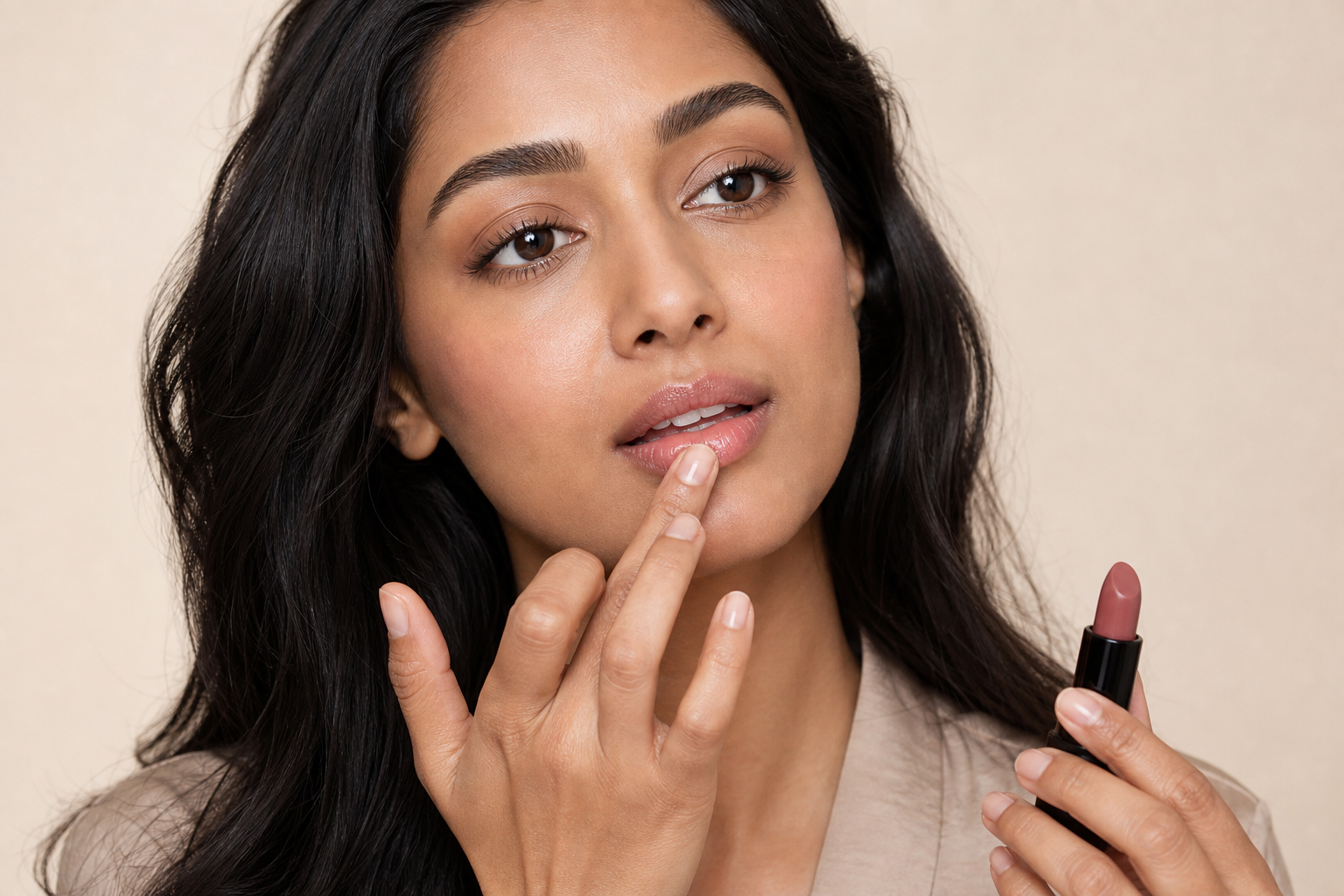
To prepare dry lips for lipstick, apply a bland, non-irritating balm or ointment, let it soften the surface while you finish the rest of your makeup, then gently blot away excess slip. Apply a comfortable lipstick in thin layers, pressing rather than repeatedly dragging color over flaky areas.
Skip the scrub. Removing every visible flake may create a temporarily smoother surface, but aggressive exfoliation can leave already-dry lips more irritated.
Quick answer: Soften with a gentle balm, let it sit while you finish the rest of your makeup, blot without rubbing, and press on a thin layer of creamy lipstick.
Check Your Lips Before Applying Color
This routine is intended for mildly dry, intact lips. Tightness, fine lines, and a little superficial flaking can often be managed with gentle cosmetic preparation.
Leave lipstick off for now if your lips are:
- Bleeding or split open
- Significantly cracked, crusted, or swollen
- Blistered or unusually painful
- Affected by an unexplained or persistent sore
- Showing signs of a possible infection
Makeup can adjust how mild texture looks, but it does not treat the cause of damaged or inflamed lips. Covering an open area may also make it harder to notice whether the problem is worsening.
How to Prepare Dry Lips for Lipstick
1. Stop licking, biting, and picking
Resist pulling at a tempting flake before starting your makeup. Picking can expose tender skin before it is ready, while repeated lip licking can make dryness worse.
If a flake does not lift with extremely light blotting, leave it alone. A small amount of visible texture is preferable to creating a sore spot.
2. Apply a bland balm or ointment
Smooth on a fragrance-free, non-irritating lip balm or ointment. The American Academy of Dermatology suggests thick white petroleum jelly as one option for very dry, cracked lips, although no single ingredient suits every person or allergy history.
Apply enough to reduce tightness, but do not massage or scrub the product into the lips.
3. Give the balm time to soften the surface
Put on your lip balm before doing the rest of your makeup, hair, or getting dressed. This gives it time to soften dry areas without introducing a harsh last-minute exfoliation step.
There is no required waiting period. Even a few quiet minutes are more useful than immediately rubbing the balm back off.
4. Blot away excess slip
Press a clean tissue lightly against your lips. The goal is to remove enough surface product to stop lipstick from sliding, not to make your lips feel dry again.
Avoid rubbing from side to side. If your lips immediately feel tight after blotting, you probably removed too much.
5. Apply a thin layer of lipstick
Start with less color than you think you need. Creamy, satin, balm-like, and softly glossy formulas tend to be more visually forgiving of texture than very dry, transfer-resistant finishes.
Press the lipstick onto the lips with light pressure. On rough areas, you can pat color into place with a clean fingertip or lip brush instead of repeatedly dragging a firm lipstick bullet across the same spot.
6. Build only where needed
Check the finish before adding another coat. Extra layers can collect around flakes and make texture more noticeable, especially with opaque or long-wear formulas.
If you want more depth, add a second thin layer to the center and other areas that need it. Accepting a little transfer and doing a touch-up later may be more comfortable than forcing maximum wear from already-dry lips.
Should You Exfoliate Before Lipstick?
Exfoliation is not a necessary part of same-day lip prep. Sugar, salt, coffee grounds, toothbrushes, acids, and vigorous washcloth rubbing can irritate a dry surface rather than gently “polish” it.
The AAD cautions that improperly exfoliating dry or sensitive skin can cause further irritation and advises against exfoliating skin with open cuts or wounds. Cleveland Clinic also notes that manual lip scrubs and pulling at flakes can disrupt the lips’ protective surface.
If your lips are cracked or sore, focus on gentle care instead of trying to remove all visible texture. A smoother-looking finish does not necessarily mean the skin underneath is healthier.
Pay Attention to Burning or Recurring Dryness
Burning, stinging, or tingling is not proof that a balm, lipstick, or plumper is working. Remove a product if it causes discomfort or makes your lips feel tighter.
Repeated “dryness” can sometimes be irritation or an allergic reaction to a cosmetic. The FDA explains that cosmetics can cause reactions, with possible signs including itching, flaking, peeling, irritation, and facial swelling. Check ingredient declarations, especially if the problem returns after using the same lipstick, balm, plumper, or flavored product.
Terms such as “natural,” “sensitive,” and “hypoallergenic” do not guarantee that a formula will suit you. Your own reaction history matters more than front-label marketing.
Seek advice from a dermatologist or another appropriate licensed clinician if cracking or scaling keeps returning, does not improve after roughly two to three weeks of gentle care, or comes with bleeding, persistent sores, significant pain, swelling, crusting, or spreading redness. Lip or facial swelling accompanied by trouble breathing or swallowing requires urgent medical help.
For today, apply a gentle balm, give it time to soften the surface, and reassess before adding color. If your lips still feel sore, choose comfort and postpone the lipstick rather than forcing a smooth finish.