Your makeup looked fresh when you left home, but now your nose is shiny and another dusting of powder is making everything look heavier. Summer makeup is easier to manage when you keep coverage selective, choose a colorful focal point, and touch up only what’s changed.
You don’t need an entirely new makeup bag or a completely matte face. Keep the finish you enjoy, apply cosmetic layers with a lighter hand, and leave room for sunscreen reapplication.
Quick answer: Apply sunscreen first, build coverage only where you want it, and add a bright lip, cheek, or eye accent. At touch-up time, check for dampness, oil, or missing coverage before reaching for more makeup.
Prepare for the day you’re actually having
An air-conditioned workday and an afternoon outdoors ask different things of your makeup. For swimming, heavy perspiration, or frequent sunscreen reapplication, a simpler look means less makeup to repair.
Keep skin preparation focused: your usual comfortable moisturizer if needed, followed by sunscreen before makeup. Let the surface settle enough that applying your base doesn’t drag it around, following product directions rather than a universal waiting time.
The American Academy of Dermatology recommends broad-spectrum, water-resistant SPF 30 or higher, applied about 15 minutes before going outdoors. Cover exposed areas, including ears and neck, and use SPF 30 or higher lip protection. That outdoor timing isn’t a mandatory 15-minute pause between sunscreen and foundation.
Light makeup shouldn’t mean a light sunscreen application. Follow the sunscreen’s directions, and don’t mix foundation into it to create a tint. Shade, protective clothing, a hat, and sunglasses belong in your outdoor plan, too.
Build your summer makeup in four controlled steps
These steps work with products you already enjoy. Sheer coverage is an option, not a summer dress code.
Step 1: Place your base where you want coverage
Start with a small amount of your familiar foundation or skin tint around the areas you’d like to even out, then blend toward the edges. Check the result before adding more. If you prefer fuller coverage, build it gradually rather than applying a thick first layer.
Concealer can handle a small area without another layer across your cheeks. Tap it onto the spot you want covered, then soften the perimeter. You can also skip an all-over base and use concealer alone.
Step 2: Give cheeks color without disturbing the base
For cream blush, pick up a little on a fingertip or brush, tap it onto the cheek, then soften the edges with lighter taps. Start on the outer part of the cheek and blend inward if you prefer color away from the center of your face.
For powder blush, use a lightly loaded brush and gentle sweeps. Blend fast-setting liquids one cheek at a time so you’re not trying to move dried color. Neither cream nor powder is automatically better for summer; choose the finish and application you find easiest.
Step 3: Choose a bright accent you’ll enjoy refreshing
A coral, pink, orange, or berry lip can provide most of the color in an otherwise simple look. Pick a shade you like on yourself, not one assigned to your skin tone. A sheer formula makes a softer statement; an opaque lipstick gives more definition but may need more careful renewal after eating.
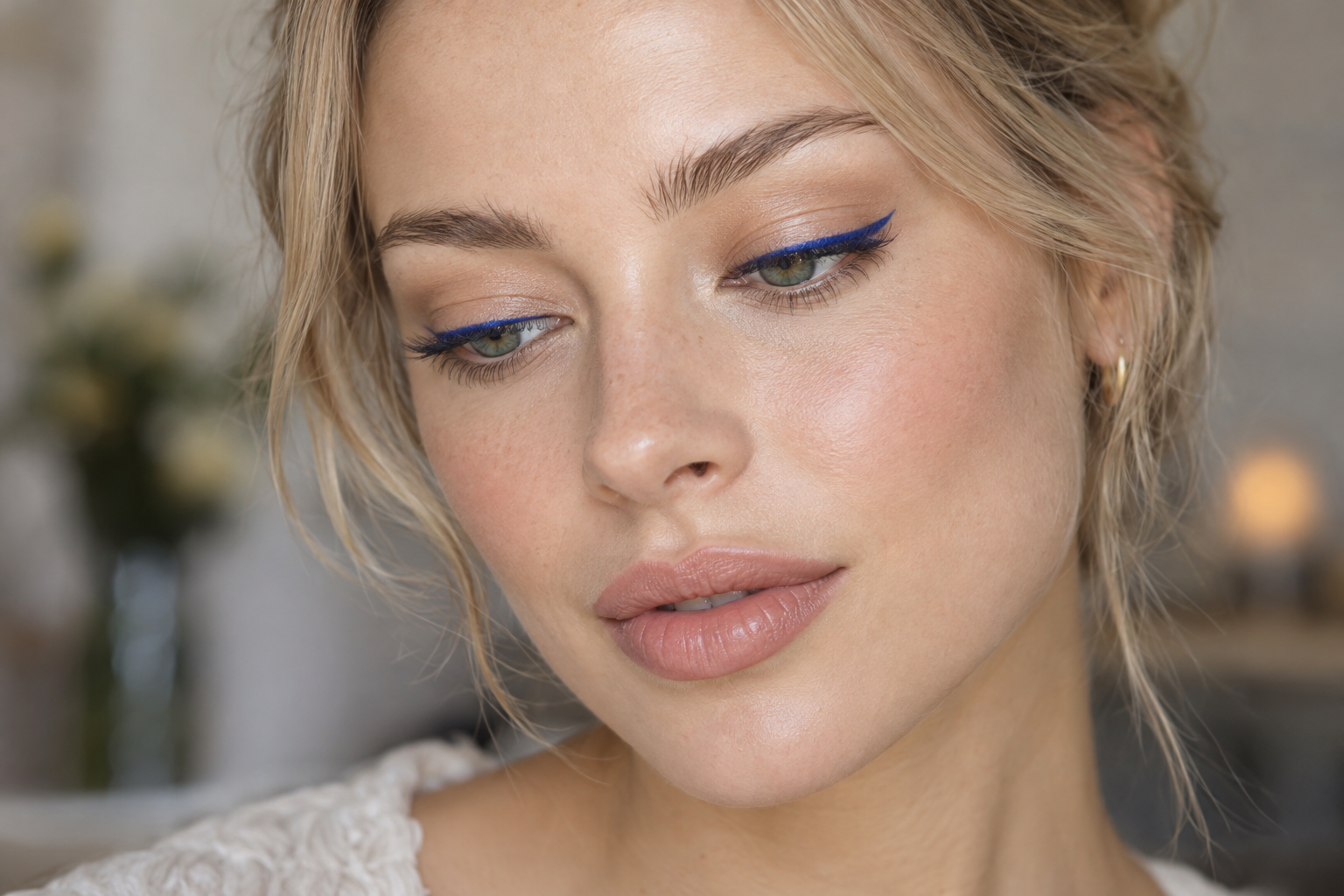
Prefer quieter lips? Try a narrow line of colorful eyeliner along the upper lashes, or let blush be the main accent. You can combine colors, but you don’t have to make every feature equally bold.
Step 4: Set selected areas, then finish the eyes
Press a small amount of powder onto areas where you want less shine, such as the sides of the nose, central forehead, or chin. Leave comfortable, non-shiny cheeks alone. Powder foundation already adds coverage, so another pigmented layer can change more than the finish.
Keep eyes as simple as you like with a familiar eye-safe liner, shadow, and mascara. Waterproof or water-resistant cosmetic labels can guide your choice, but they don’t guarantee all-day wear through heat, rubbing, or perspiration. Follow removal directions, too.
If a product irritates your skin or eyes, stop using it rather than covering the reaction. Persistent or recurring irritation deserves professional advice.
Match your touch-up to what you see
Before opening a compact, look closely. Damp skin, surface oil, and worn-away makeup need different responses.
If your face is damp
Gently press a tissue against perspiration rather than wiping across your face. Let the area dry before adding makeup. Powder applied over damp patches can become uneven, and even gentle pressing may lift a little coverage.
There’s no need to repair everything immediately. Once the surface is dry, you may find the makeup still looks fine.
If shine is the only change
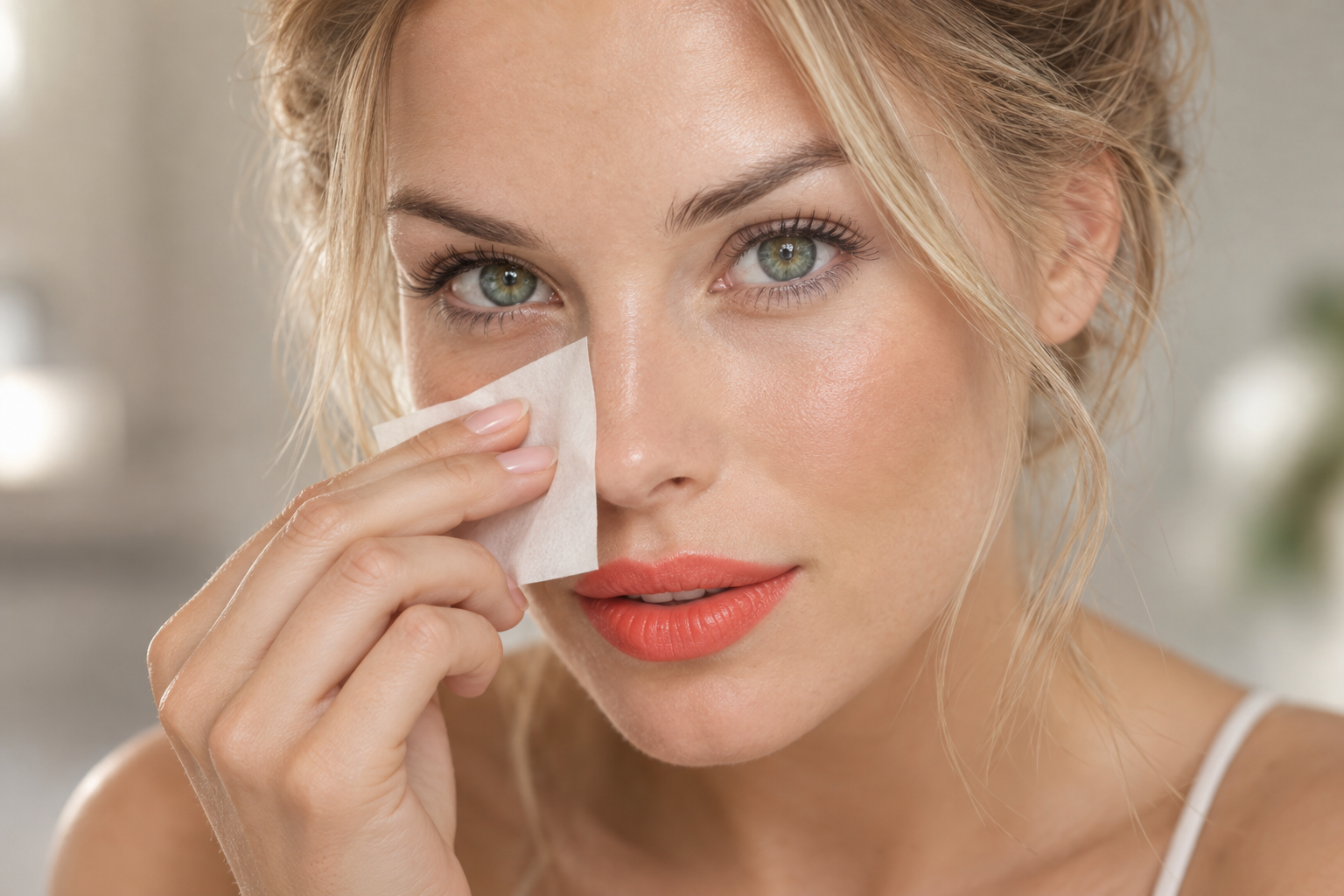
Press blotting paper onto the shiny area without rubbing, then check again. Add a little powder only if you still want a more matte finish.
This is particularly useful around the nose: powdering the whole face to address one shiny patch can dull cheek color you liked. If your base is already a powder formula, use a light hand with any additional layer.
If coverage has worn away
On a dry surface, tap a tiny amount of your original base or concealer onto the missing patch. Blend the edge where it meets intact makeup rather than spreading the repair farther out.
Liquid or cream applied over substantial powder may look uneven. A powder base may be easier to refresh with its own lightly loaded applicator. If the area is clumping or pilling, stop adding product; simplifying that patch is more useful than building another layer over it.
If it’s time for sunscreen
Sun protection takes priority over preserving an untouched finish. The AAD advises reapplying outdoors about every two hours and after swimming or sweating, following the bottle’s directions.
Blotting, setting spray, and a light dusting of SPF makeup aren’t substitutes for adequate sunscreen application. Reapplication may move your makeup, so plan for that possibility instead of using less sunscreen. Restore a little coverage afterward only if you want to.
For faded lipstick, smooth out uneven remnants before renewing the color rather than coating a patchy layer.
Pack a small kit with a clear job for each item
Bring sunscreen, a mirror, tissues or blotting paper, and your chosen lip product. Add powder or concealer if you actually use it for repairs; you don’t need to carry every step of the morning routine.
Before an important outdoor day, try your sunscreen and makeup combination during an ordinary outing. Notice where shine appears and how easily coverage refreshes. Then pack for those specific changes, not for every possible makeup mishap.