
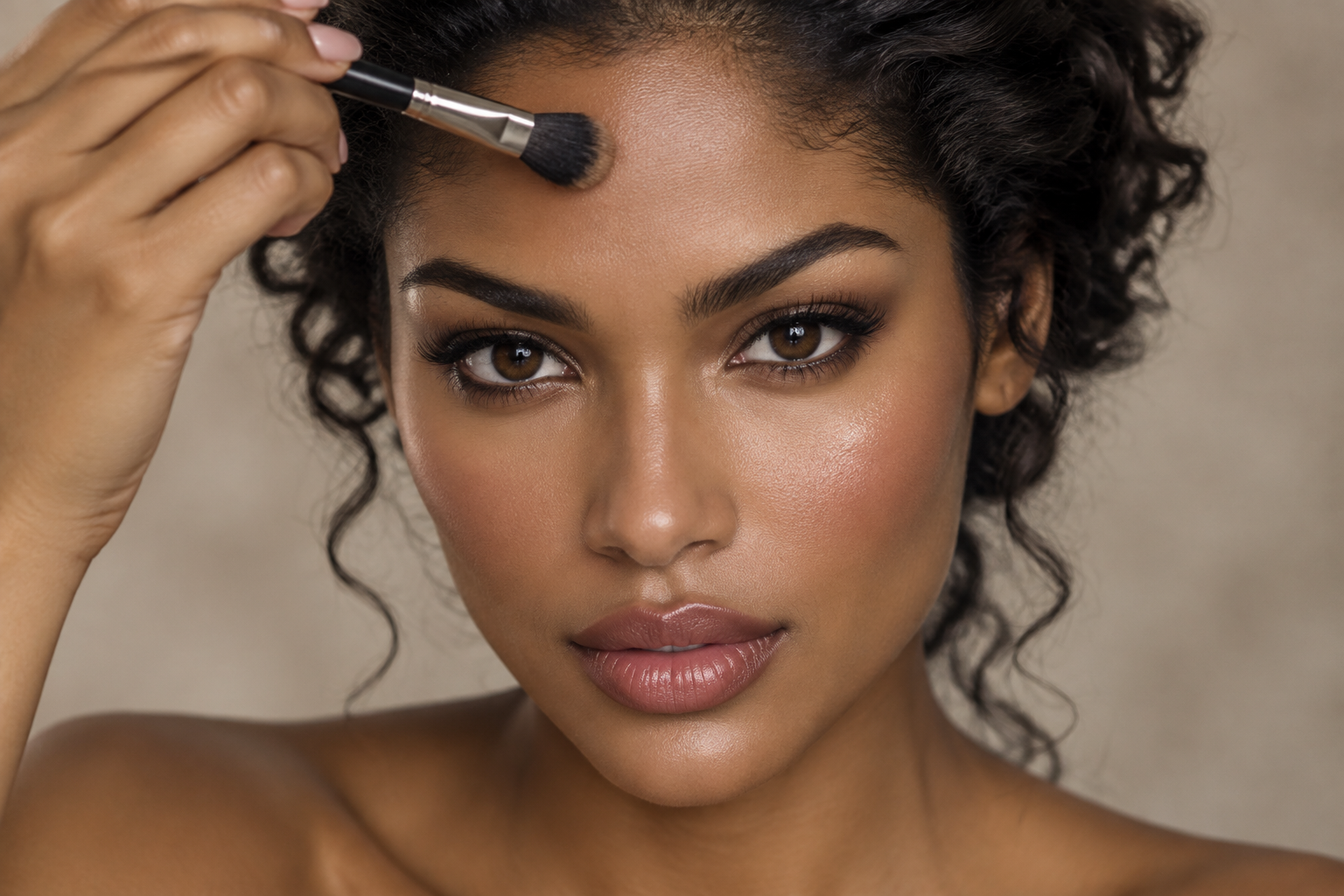
Your cheeks have that lovely soft sheen, but then your forehead, nose, and chin join in. Powdering everything fixes the shine and takes the pretty finish with it.
The trick to dewy makeup is treating those areas differently: use a controlled base, keep extra luminosity mainly on your upper cheekbones, and set only the spots that need it. You don’t need every product in your routine to say “radiant.”
Quick answer: Start with a natural, satin, or matte base, add a little cheekbone sheen, and lightly powder unwanted shine. Dewy makeup can absolutely include setting powder.
Choose a base that leaves you room to add glow
A familiar foundation or skin tint is a better starting point than an entirely new lineup of illuminating products. A natural or satin finish makes it easier to choose where the reflection goes. If you prefer a matte base, you can still create dewy-looking cheeks with targeted highlight.
Keep your usual moisturizer. The American Academy of Dermatology notes that oily skin still needs moisturizing, so skipping it isn’t the answer to unwanted shine. For daytime makeup, keep your sunscreen application unchanged and follow its directions.
Apply foundation in a light layer, then add coverage only where you want more. Thin application doesn’t have to mean sheer coverage everywhere.
Before reaching for highlighter, check what your base and blush already do. If your cheek looks softly luminous, you may be finished there. A radiant primer, dewy foundation, glossy blush, and illuminating spray can create more reflection than you intended, especially through the center of your face.
Check your layers before doing the whole face
If your makeup tends to roll into little crumbs or turn patchy, test your usual preparation and foundation on a small cheek or jaw area first. This is a layering check, not an allergy test.
Look for pilling, uneven coverage, or a base that lifts when you touch it. If the combination misbehaves, don’t keep rubbing in hopes of blending it into submission. On your next attempt, remove one optional layer, such as primer or an all-over illuminator, while keeping sunscreen use label-led.
“Water-based goes with water-based” isn’t a reliable guarantee of compatibility. The finished formulas and how you apply them matter more than that shortcut.
Cream and liquid cheek products are usually easier to work with before powder, but that isn’t an absolute rule. Some creams are designed to layer over powder. Check the directions for yours and trial a small amount before committing to both cheeks.
If a product causes irritation, stop using it rather than treating discomfort as part of getting the finish.
Place dewy makeup where you want the light
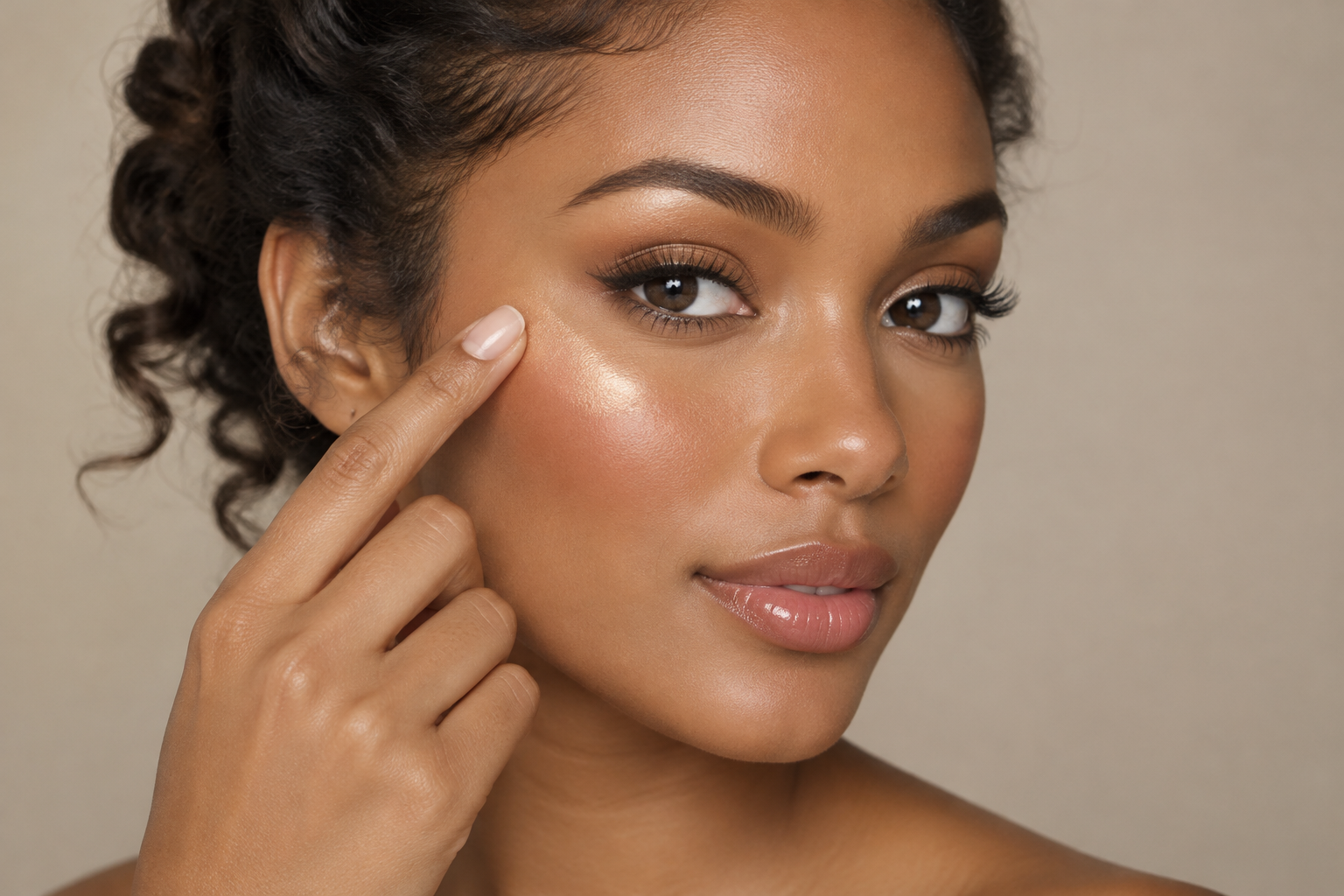
For this look, aim for a soft sheen rather than a metallic stripe or a wet-looking face. That’s an appearance choice, not a measure of skin hydration or health.
Start with the upper cheekbone, toward the outer part of your cheek. You don’t have to highlight your nose tip, chin, or forehead just because they appear on a standard placement diagram.
Use this short sequence:
- Check your cheek without extra highlight. Turn slightly in ordinary light. Notice whether your foundation or blush already catches the light where you want it.
- Place a small amount on the upper cheekbone. Start with a short area rather than spreading product across the whole cheek. Blend the edges, keeping the strongest sheen where you first placed it.
- Look straight ahead, then turn again. You want a reflection you enjoy as you move, not necessarily an obvious pale patch when facing forward. Add more only if needed.
For cream or liquid highlight, pick up a little product on your fingertip, sponge, or brush rather than drawing a large stripe directly onto your face. Pat it into place with light contact; repeated rubbing can disturb the base.
For powder highlight, use a small brush and lightly sweep over the cheekbone once the underlying layers have settled. Build gradually instead of loading the brush.
Check the shade on your own skin. If it looks chalky or leaves a stripe, try less product or a different depth and undertone. There’s no universal champagne shade everyone needs.
Use a smaller powder tool, not a full-face dusting
Powder isn’t the enemy of dewiness. It just needs a more precise assignment.
Identify your actual shine areas: perhaps the center forehead, sides of the nose, or chin. You might need all three, only one, or a little setting where makeup tends to move.
Choose a small soft brush or use a controlled corner of a puff. A big fluffy brush can cover your glowing cheeks while you’re trying to reach the nose. The smaller tool helps you keep those decisions separate.
Pick up a small amount, remove the excess, then press or lightly sweep according to the powder’s directions. Keep contact gentle rather than scrubbing over the foundation. Check the result before adding another layer.
You don’t need to bake or create a fully matte center to get a balanced finish. Start with enough powder to soften the reflection that bothers you.
Also, check powder in ordinary light on your skin. “Translucent” doesn’t automatically mean invisible on every skin tone.
Adjust by area, not just by skin type
If you get oily quickly, a less luminous base with cheek-only highlight may be easier to manage than an all-over dewy foundation. Set the areas that become shinier than you like, leaving your chosen highlight alone.
If some areas feel dry, don’t powder them simply because you’re setting elsewhere. A combination face can have a powdered nose and an unpowdered cheek.
Accidentally flattened your cheek sheen? If your cream highlight permits use over powder, try a tiny amount with light tapping. Stop if it lifts the base. Otherwise, a light touch of powder highlight may be the simpler option.
Touch up without restarting your makeup
When shine appears later, blot before deciding whether you need more powder. The AAD recommends gently pressing blotting paper against skin for a few seconds rather than rubbing.
Reassess afterward. You may only need a small powder touch-up beside the nose, not another layer across your face.
A useful touch-up kit is simple: blotting papers, a powder that suits your skin, and a small applicator. Keep the cheekbone sheen you chose; adjust only the reflection you didn’t.
